
Legal explainer
The Safeguard Mechanism
Part 2: What is it actually delivering
Australia’s Safeguard Mechanism is supposed to help drive down climate pollution from the country’s biggest industrial facilities.
But two years into the reformed scheme, companies are overwhelmingly buying carbon credits to meet their pollution caps, rather than reducing climate pollution at their facilities.
In this blog, we’ll dive into the nitty-gritty of what the policy actually delivers – spoiler alert: it’s not genuine decarbonisation. We’ll look at the problems with carbon credits and how the Safeguard Mechanisms ' design is limiting its efficacy as a climate policy.
For more on what the Safeguard Mechanism is and how it works, read Part 1 of this explainer here.
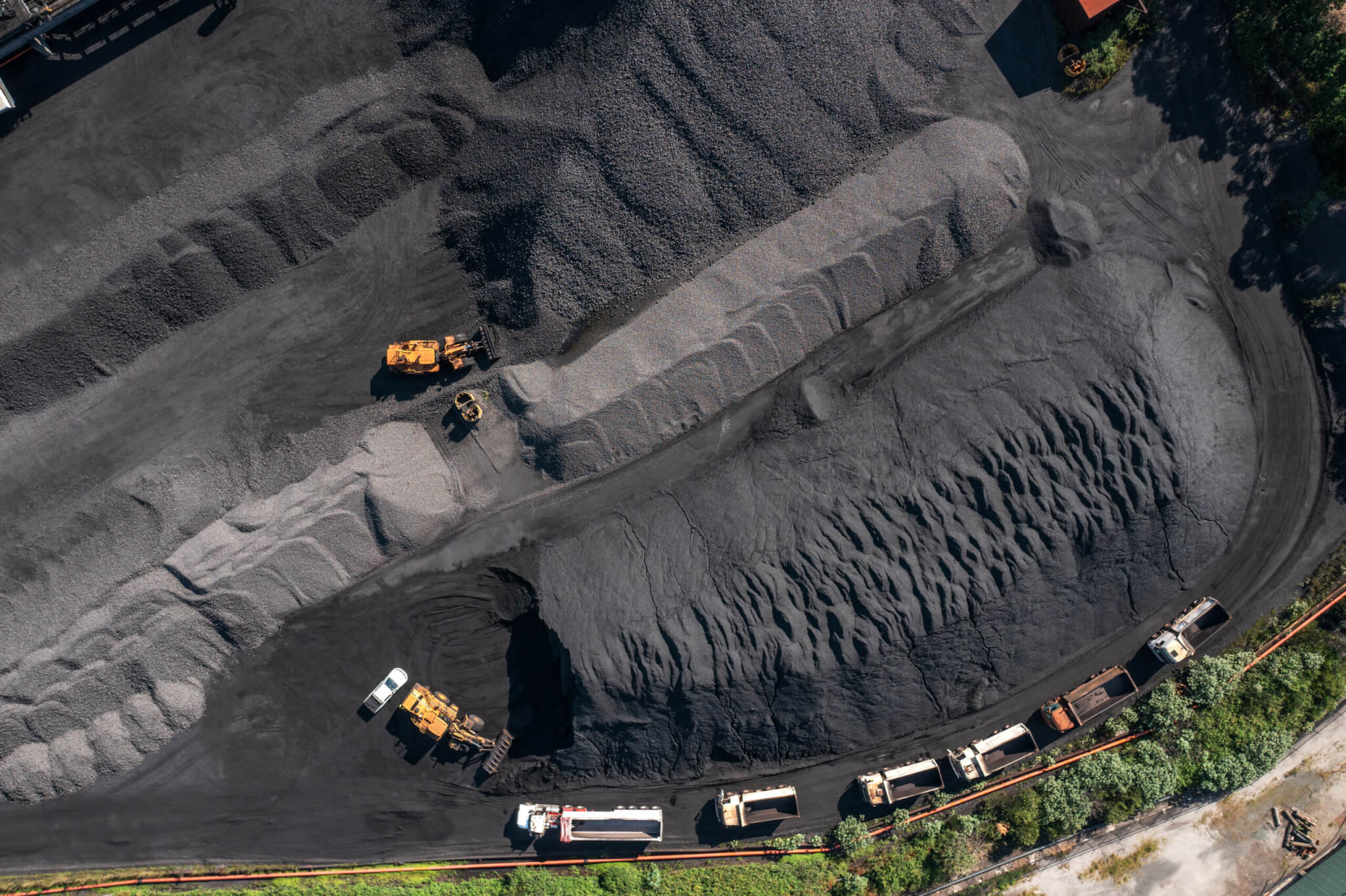
The Safeguard Mechanism is not stopping greenhouse gas pollution from Australian industry
The numbers are startling.
In 2024/5, companies under the Safeguard Mechanism used 10.8 million tonnes worth of carbon credits, while delivering just 0.5 million tonnes of actual pollution reduction at their facilities. The proportion of offset use to onsite pollution reduction was similar in 2023-24.
That points to a fundamental problem with the way the policy works: companies can continue polluting and buy offsets to comply with the scheme, instead of changing their operations.
So far, the Safeguard Mechanism has not led to any substantial reduction in greenhouse gas pollution from Australian industry.
This is not surprising. There is no requirement under the Mechanism for companies to invest in direct pollution reduction, and carbon credits are often a cheaper and easier way to comply. The problem is that this means that the Safeguard Mechanism isn’t, so far, leading to any real reduction in climate pollution from Australian industry.
The Safeguard Mechanism is not creating a meaningful incentive to decarbonise.
By linking pollution limits to production, the Safeguard Mechanism focuses on what’s known as “emissions intensity”.
In theory, companies subject to Safeguard Mechanism pollution caps that want to maintain or increase their production should have an incentive to invest in cleaner technologies that decrease the pollution created by their operations – in other words, to reduce their emissions intensity.
But this only works if the pollution limit is a real limit: in other words, if companies have to reduce their pollution.
That’s not how the Safeguard Mechanism works. Instead, companies can keep polluting as much as they want – they just have to buy and surrender carbon offsets to meet their pollution limits.
The Safeguard Mechanism is a market-based system: the idea is that if you create the right commercial conditions, companies will invest in pollution-reduction technology because it makes business sense to do so.
But because carbon credits are often cheaper than changing operations, and because companies have a free choice between the two options, the Safeguard Mechanism is not sending companies a strong commercial incentive to decarbonise – even where lower pollution options are readily available, such as mining companies investing in electric trucks and machinery.
The Safeguard Mechanism does not recognise the need to phase out coal and gas
Australia has signed the Belém Declaration on the Just Transition Away from Fossil Fuels. This means we have formally recognised that the continued production of fossil fuels is not compatible with a safe future for Australian communities and ecosystems.
But the need to move away from fossil fuels is not reflected in the Safeguard Mechanism.
Instead, the Safeguard Mechanism treats coal and gas production in the same way as other industries: the rules around pollution limits and access to carbon credits are the same for fossil fuel sites as for other facilities (with a couple of exceptions). Although the Mechanism is supposed to help drive Australia’s transition towards a climate-safe future, it does not distinguish coal and gas facilities from industries that will continue to play a role in Australia’s future – like manufacturing, freight and aviation. These industries need to bring down their climate pollution, but keep operating – unlike coal and gas production, which needs to wind up as soon as possible.
The fact that the Safeguard Mechanism doesn’t differentiate between fossil fuels and other industries also confuses the policy signal. If we want to support industries to decarbonise while phasing out coal and gas production, why do we apply the same pollution reduction requirements to both?
Carbon pricing frameworks like the Safeguard Mechanism are intended to recognise that fossil fuel pollution creates significant costs for our economy, communities, infrastructure and ecosystems.
By incorporating some of those costs into products and processes that rely on fossil fuels, these frameworks should create a market incentive to move towards cleaner alternatives.
However, the Safeguard Mechanism allows industrial polluters to buy cheap and low-integrity carbon offsets, rather than reduce pollution. For many companies, it is still cheaper to keep using fossil fuels than to invest in reducing onsite pollution.
Why using tree or soil-based carbon credits is not a climate solution
There is also a fundamental problem with using tree or soil-based carbon credits to compensate for fossil fuel pollution.
When coal and gas are extracted and burned, greenhouse gases are released into the atmosphere from carbon that had been stored deep underground for hundreds of millions of years.
Without human intervention, that carbon would have remained deep beneath the earth – and out of the atmosphere – for a very long time.
Carbon stored in trees, plants and soil is different. It forms part of the active carbon cycle and is released back into the atmosphere much faster.
That creates a fundamental problem when land-based carbon credits are used to offset fossil fuel production: temporarily storing carbon in trees or soil is not equivalent to preventing carbon stored underground for millions of years from being released in the first place.
Most carbon credits generated in Australia represent the short-term storage of carbon in the land sector, in soil or plants.
Using these credits to compensate for releasing fossil carbon doesn’t make sense: we’re still overall adding much more carbon to the atmosphere than is being removed and stored over the long-term. Carbon credits are really just kicking the can down the road.
This is why carbon credits are supposed to be a band-aid solution to level out emissions in the short-term while green alternatives to fossil fuel-reliant systems are worked out and implemented.
The Safeguard Mechanism doesn’t use credits this way: instead, the use of carbon credits is can be the end-goal of how the Mechanism operates, and there’s no real push for companies to reduce carbon emissions at the source. This fundamentally undermines its effectiveness as a climate policy.
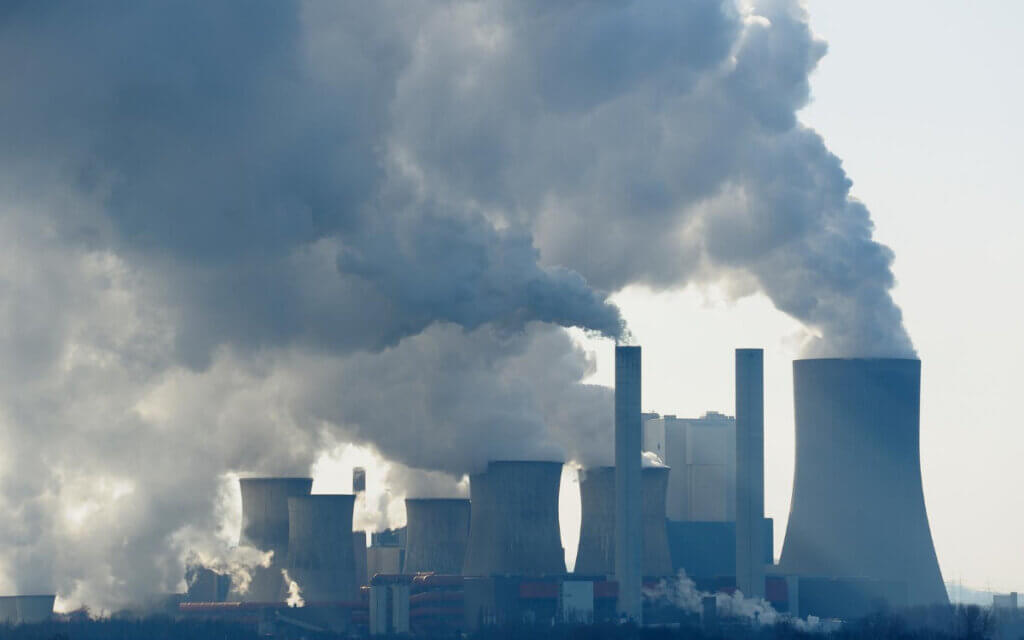
The Safeguard Mechanism can – and should – do more
A climate policy aimed at reducing industrial climate pollution should create a strong incentive for companies to actually reduce that pollution.
And a policy designed to support Australia’s transition to a climate-safe future needs to recognise the fundamental differences between industries we need to decarbonise, and the fossil fuels we need to phase out.
The Safeguard Mechanism is now under review. That creates an important opportunity to ask whether its rules are delivering the pollution cuts Australia needs – and what needs to change if they aren't.
Read more about our work for a safe climate



Make a difference
The challenges we face are vast. The time to push for large-scale system change is now.
Our financials
We have a long-standing commitment to sound fiscal management, accountability and transparency.
We encourage you to investigate before you donate.
Join us
The law is a powerful tool to disrupt the status quo and make governments and corporations accountable.
Join us and let's build a radically better world.