Legal explainer
The Safeguard Mechanism
Part 1: What is it and how does it work?
The safeguard mechanism is currently up for review
Have your say before 18 September
The Australian government claims the Safeguard Mechanism is its key climate policy.
But what does it actually do? What pollution does it cover? And what happens when a company exceeds its pollution limit?
EJA climate lawyer Sam Moorhead explains.

What is the Safeguard Mechanism?
Climate change is driven by greenhouse gas pollution, mostly from the production and use of coal and gas. Addressing the causes of climate change means bringing down the amount of greenhouse gas pollution added to the atmosphere.
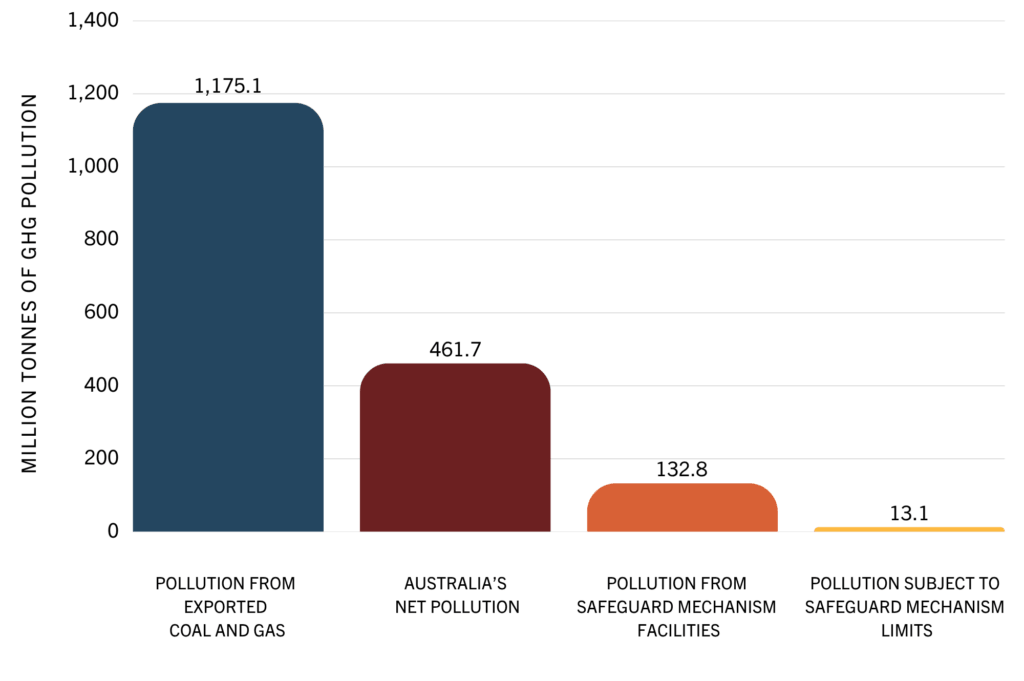
The Safeguard Mechanism makes a small and incomplete contribution to this goal by requiring some companies operating in some parts of Australia’s industrial sector to either reduce or offset some of their greenhouse gas pollution.
The sectors covered by the Safeguard Mechanism include mining, manufacturing and freight. Companies in these sectors whose facilities create more than 100,000t of direct greenhouse gas pollution in a year are covered by the Safeguard Mechanism in that year.
Currently, that’s about 210 mines, factories and other facilities around Australia.
Importantly, the Safeguard Mechanism only applies to the greenhouse gas pollution that comes directly from a company’s operations – such as pollution from a mining company’s diesel machinery, or from a cement company’s manufacturing process.
It does not cover pollution caused when Australian coal and gas are burned overseas, or pollution from using fossil fuels to generate electricity for Australia’s public grid.
Only 0.8% of Australia’s total climate pollution was affected by the Safeguard Mechanism in 2024/25.
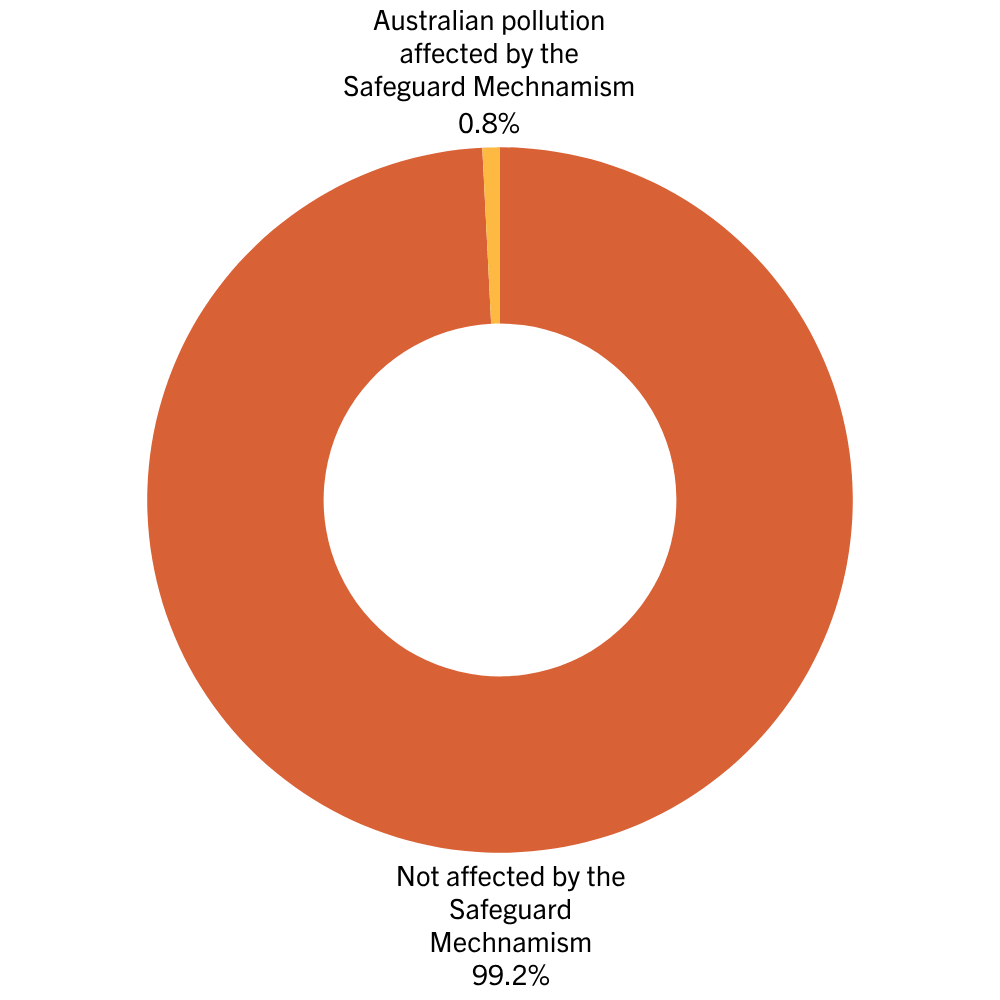
Effect of the Safeguard Mechanism on Australian GHG pollution (2024/25)
How does the Safeguard Mechanism work?
Where a company’s “facility” – which could be a factory, a mine or set of activities – is covered by the Safeguard Mechanism, a pollution limit or “baseline” applies to that facility.
These limits decrease each year in line with pollution reduction targets that apply to the Safeguard Mechanism as a whole.
There is no legal obligation on companies to reduce pollution at their facilities to meet these limits.
Instead, they choose to either change their operations to reduce pollution, or use carbon credits – also known as carbon offsets. There is no limit on how many offsets companies can use to meet their Safeguard Mechanism limits, and no requirement for companies to invest in pollution-reduction technology.
A facility’s pollution limit is calculated depending on how much it produces – for example, the amount of fertiliser, cement, coal or gas produced over the year.
This means that if a facility increases production over a year, the amount of pollution it is allowed to release will also increase – balanced against the overall annual decrease in pollution limits.
If a facility reports less pollution than its limit for a financial year, its owner receives ‘Safeguard Mechanism Credits’.
The company can bank these credits to use in future years or sell them to other companies covered by the Safeguard Mechanism.
So is the Safeguard Mechanism reducing climate pollution?
That’s the crucial question.
If the Safeguard Mechanism isn’t addressing the causes of climate change, is it really an effective climate policy?
The Safeguard Mechanism has several legislated goals: meeting specified pollution reduction targets, incentivising polluting companies to invest in reducing pollution, and to support the competitiveness of trade-exposed industries through the net zero transition.
Key aspects of the current Safeguard Mechanism legal framework mean it is unlikely to meet these goals any time soon.
The key issue is the lack of any requirement or real incentive to invest in pollution reduction technology: so far, companies have overwhelmingly relied on carbon credits rather than reducing pollution at their facilities.
In Part 2, we’ll look at what the Safeguard Mechanism is actually delivering – and the design choices that are limiting its effectiveness as a climate policy.
Read more about our work for a safe climate



Make a difference
The challenges we face are vast. The time to push for large-scale system change is now.
Our financials
We have a long-standing commitment to sound fiscal management, accountability and transparency.
We encourage you to investigate before you donate.
Join us
The law is a powerful tool to disrupt the status quo and make governments and corporations accountable.
Join us and let's build a radically better world.