Beyond fines
What restorative justice could mean for environmental harm
When environmental laws are broken, punishment matters. But a landmark NSW case shows justice can also ask a bigger question: what would it take to meaningfully repair harm to Country, culture, and community?
In August, Environmental Justice Australia and the Nature Media Centre brought together Gumbaynggirr leaders, lawyers, researchers, and community advocates to unpack what the Wild Cattle Creek case can teach us about restorative justice – and the practical pathways communities may be able to use in future.
Watch the webinar below, explore the key takeaways, and access further resources on environmental restorative justice and amicus curiae participation.

What happened in the Wild Cattle Creek case?
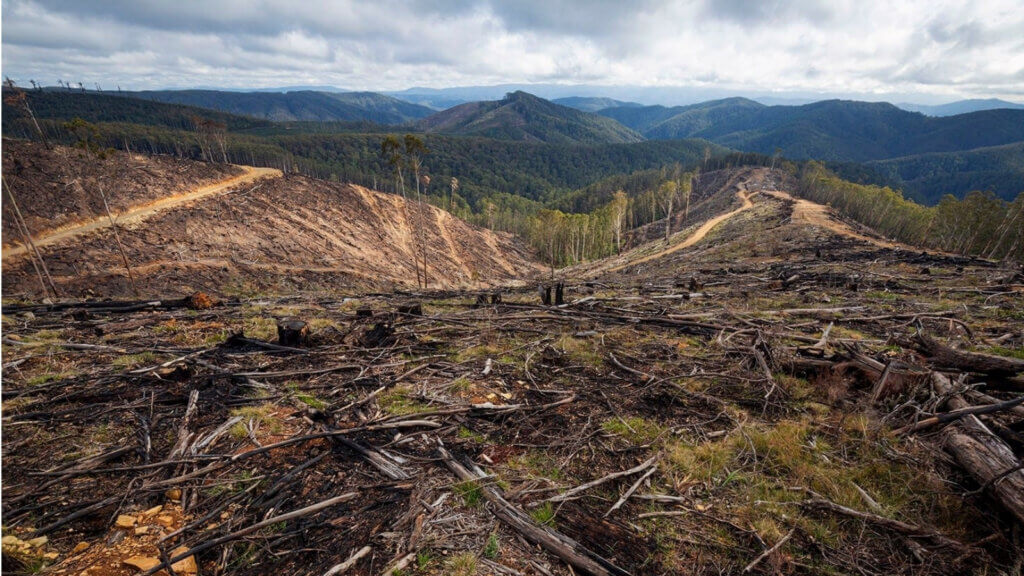
In 2020, Forestry Corporation of NSW unlawfully felled protected giant and hollow-bearing trees in Wild Cattle Creek State Forest on Gumbaynggirr Country.
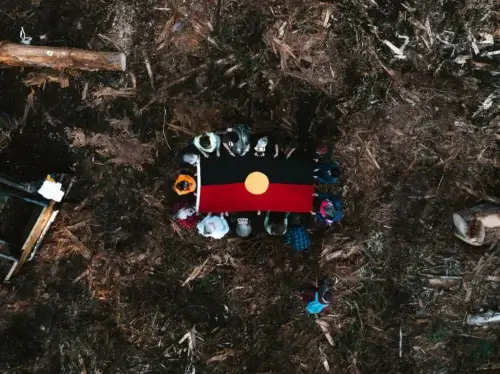
Almost six years later, the NSW Land and Environment Court sentenced Forestry Corporation in a way that went beyond a conventional fine. The process included a restorative justice conference involving Gumbaynggirr representatives and resulted in $450,000 being directed to Yurruungga Aboriginal Corporation for restorative justice and biocultural repair projects.
These include a healing ceremony, ecological restoration, cultural mapping, and a Gumbaynggirr Guardians ranger program. Forestry Corporation was also required to independently audit relevant processes and engage with Gumbaynggirr people in future harvesting planning.
The case matters because it demonstrates another way the justice system can respond when environmental offending causes harms that a financial penalty alone cannot repair.

Why this matters for environmental law
EJA Special Counsel Kip Frawley said the Wild Cattle Creek case stood out because the Court recognised the cultural harm caused by the logging and took Traditional Owners’ evidence seriously.
Kip noted that we talk often about reoffending and community safety in other areas of criminal law, but much less about repeat environmental offending. As he explained, the case points to a broader question: how can environmental law deliver greater accountability, transparency and responsibility when shared places such as forests, waterways, and oceans are harmed?
What is environmental restorative justice?
Restorative justice looks beyond the question of what rule was broken and what punishment should follow.
Instead, it asks:
- Who or what has been harmed?
- Who is responsible?
- Who needs to be heard?
- What could meaningful accountability and repair look like?
- What needs to change so the harm does not happen again?
In environmental matters, that can mean recognising harm to ecosystems alongside impacts on Country, culture, communities, relationships, future generations and the wider natural world.
Panelist Professor Miranda Forsyth from the Australian National University is one of Australia's leading researchers on environmental restorative justice. She documented the Wild Cattle Creek restorative justice conference, and explained the process that unfolded over two days. Participants first built a shared understanding of what had happened and who had been harmed, before turning to what needed to change in future.
A key point from her reflections was that restorative justice is not only about responding to past harm. It can also ask: what went wrong, and what needs to change so it does not happen again?
It can recognise harms the courtroom often misses
Traditional court processes can narrow environmental harm down to the particular conduct or objects involved in an offence.
But the Wild Cattle Creek process created space to discuss a much wider picture, including the cultural impacts of logging, harm to animals and the forest itself, harm to relationships and communities, and the longer history of damage to Country.
That mattered deeply to the Gumbaynggirr people involved.
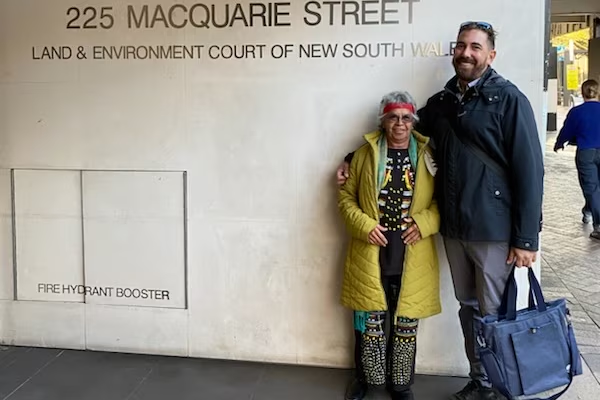
In a recorded reflection, Dean Kelly, CEO of Yurruungga Aboriginal Corporation, described the outcome as a small step towards Traditional Owners having a voice in decisions about their Country, while stressing that generations of damage cannot be repaired by one outcome alone.
Senior Gumbaynggirr lore woman Aunty Alison Buchanan also shared a recorded reflection. She spoke about the cultural significance of the giant trees and the importance of Gumbaynggirr people having a say in what happens to their homelands.
Her message captured one of the strongest themes of the evening: environmental justice cannot separate people from the places and living systems to which they belong.
Restorative justice does not replace accountability
One concern raised during the webinar was whether restorative justice could become a softer alternative to enforcement. The discussion made clear that it should not.
Restorative justice sits alongside legal accountability. It can deepen accountability by requiring those responsible to hear about the consequences of their actions, understand harms that may otherwise remain invisible and contribute to concrete steps towards repair.
What is an amicus curiae – and could communities use it?
Another distinctive aspect of the Wild Cattle Creek case was the involvement of the Bellingen Environment Centre as amicus curiae, meaning “friend of the court”.
An amicus is not one of the parties to a case. Instead, with the Court's permission, they can provide information or perspectives that may assist the Court.
Panelist Dr John Corkill OAM, who represented the Bellingen Environment Centre, described seeking amicus status as a “gamble”: whether the Centre would be allowed to participate was entirely at the Court's discretion.
The Centre sought to draw attention to harms and community perspectives the Court might otherwise not hear, without purporting to speak on behalf of Gumbaynggirr people.
For other community groups considering this pathway, John's central lesson was simple: identify what useful information you can put before the Court that it might not otherwise receive. That might concern social, cultural or environmental impacts.
There are real limitations. Permission is discretionary, applications may face opposition, and what an amicus can contribute depends on what the Court considers useful.
But Wild Cattle Creek provides a practical example communities can now learn from. John has kindly prepared a step-by-step outline* of the process, drawing on Bellingen Environment Centre's experience, because, as he put it, they were largely working it out as they went.
Could this happen elsewhere in Australia?
Possibly, but the legal pathways differ between jurisdictions.
EJA Special Counsel Kip Frawley explained that restorative justice remains unusual in environmental law partly because most courts do not have the same specialist structures or specific mechanisms as the NSW Land and Environment Court. In Victoria, the Environment Protection Act allows proceedings to be adjourned for a restorative justice process, while courts and tribunals around Australia already use other forms of alternative dispute resolution, including mediation and conciliation. Kip also noted that the federal EPBC Act may leave room for remediation-focused or restorative approaches in some environmental matters, although EJA is not aware of that pathway being tested in this way to date.
The NSW Land and Environment Court itself has only used restorative justice processes sparingly. Wild Cattle Creek was the third such process of its kind in the Court, and Dr John Corkill shared that it was the first time an amicus curiae had been recognised in a criminal matter before it.
Professor Miranda Forsyth also pointed to an earlier Victorian restorative justice conference connected to an enforceable undertaking, showing that these approaches may sometimes be introduced without a dedicated statutory process.
Internationally, Aotearoa New Zealand has a more established practice of incorporating restorative justice into environmental sentencing, although it remains far from routine.
This means that Wild Cattle Creek does not create a binding rule requiring other courts to follow the same approach. But it does offer an important example of what may be possible, and of the different legal pathways communities, lawyers and regulators could explore.
An important step – not the end of the story
The webinar also resisted presenting restorative justice as a neat solution.
Dean Kelly and Rev Dr Jason John, a Forest Chaplain and a local environmental advocate involved in supporting the community through the Wild Cattle Creek case, both spoke about continuing environmental harm and the need to scrutinise whether commitments made through restorative processes actually translate into changes on the ground.
Professor Miranda Forsyth echoed this in closing: for restorative justice to be meaningful, what is agreed must actually be followed through.
That leaves an important lesson: restorative justice can create space for voices, knowledge and harms that conventional legal processes often miss, but its value ultimately depends on meaningful participation, genuine accountability, and what happens next.

Further resources
1. Watch and share the full webinar
Beyond fines: rethinking justice for crimes against nature
Hear reflections from Aunty Alison Buchanan and Dean Kelly, followed by a discussion with Professor Miranda Forsyth, Dr John Corkill OAM, EJA Special Counsel Kip Frawley and Rev Dr Jason John.
2. Explore amicus curiae resources
Dr John Corkill has kindly prepared a practical step-by-step Outline resource, General Points summary, and has shared the Amicus Curiae Brief submitted by Bellingen Environment Centre Inc for the Wild Cattle Creek proceedings as amicus curiae.
These resources are designed to help community groups think through what they may be able to offer a court, how to begin approaching the process, and some of the obstacles they may encounter.
*Please note, these resources provide general information only and are not legal advice. Whether an amicus application is available or appropriate will depend on the particular court, proceeding, and circumstances.
3. Read Growing Restorative Regulation
Professor Miranda Forsyth, Felicity Tepper, Deborah Hollingworth, and Alistair Nairn's 2026 open-access book explores how restorative principles can reshape environmental regulation – from punishment towards dialogue, learning, accountability, and repair.
Read Growing Restorative Regulation here (free to read online or purchase in print)
4. Download the Environmental Restorative Justice Practice Guide
Restorative Justice Approaches for Environmental Harm: Practice Guide brings together practical guidance, checklists, and case studies from Australia and around the world. Professor Miranda Forsyth is an author and ANU's Felicity Tepper edited and co-authored the guide.