Rights for nature
Rivers as living entities
What if the law treated rivers as living beings, not just resources?
It might sound radical, but it’s already happening.
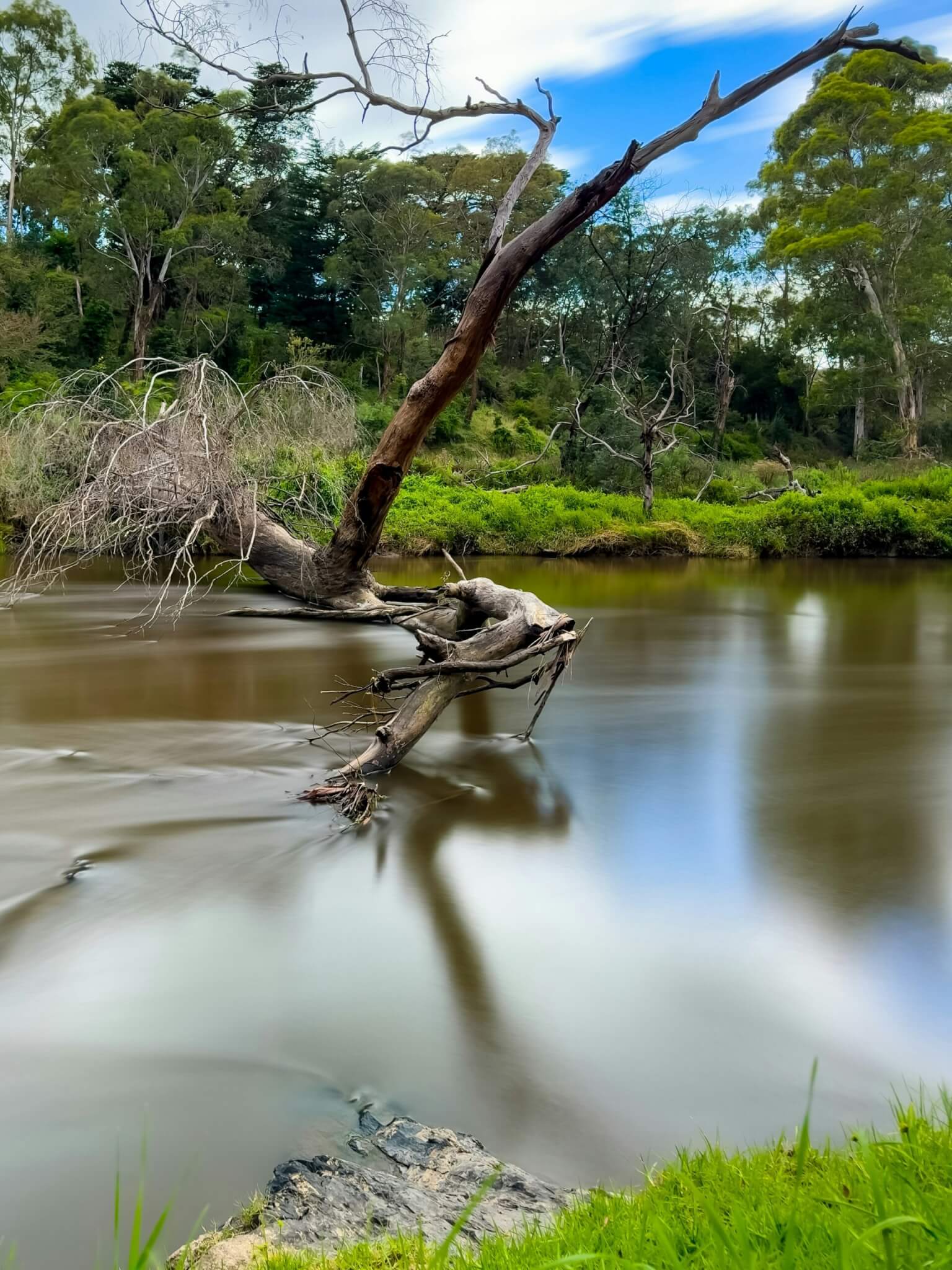
In 2017, Victorian legislation recognised the Birrarung/Yarra River as “one, integrated and living entity.” The idea sits within a growing global legal movement known as the rights of nature, where ecosystems are increasingly being recognised in law.
At its core, the rights of nature asks a simple question: what would change if the law required us to consider what ecosystems need to survive and recover – not just what we can take from them?

EJA lawyer, Elke Nicholson, recently joined the podcast More Than Human to explore a big legal question:
What does it mean for a river to be alive in law?

In the episode, Elke speaks with host Tim McIntosh-Hannah alongside water law experts Dr Erin O’Donnell, and Dr Michelle Maloney from the Australian Earth Laws Alliance.
Together they explore how legal systems around the world are experimenting with new ways to recognise and protect nature, and why the story of Birrarung is part of a much bigger shift in how the law understands the natural world.
RIGHTS FOR NATURE
A growing global movement
Across the world, communities and governments are experimenting with ways to recognise nature in law.
Some places grant ecosystems legal personhood. Others recognise rivers or landscapes as living entities. While the legal tools differ, the underlying idea is similar:the natural world shouldn’t be treated purely as property or a resource.
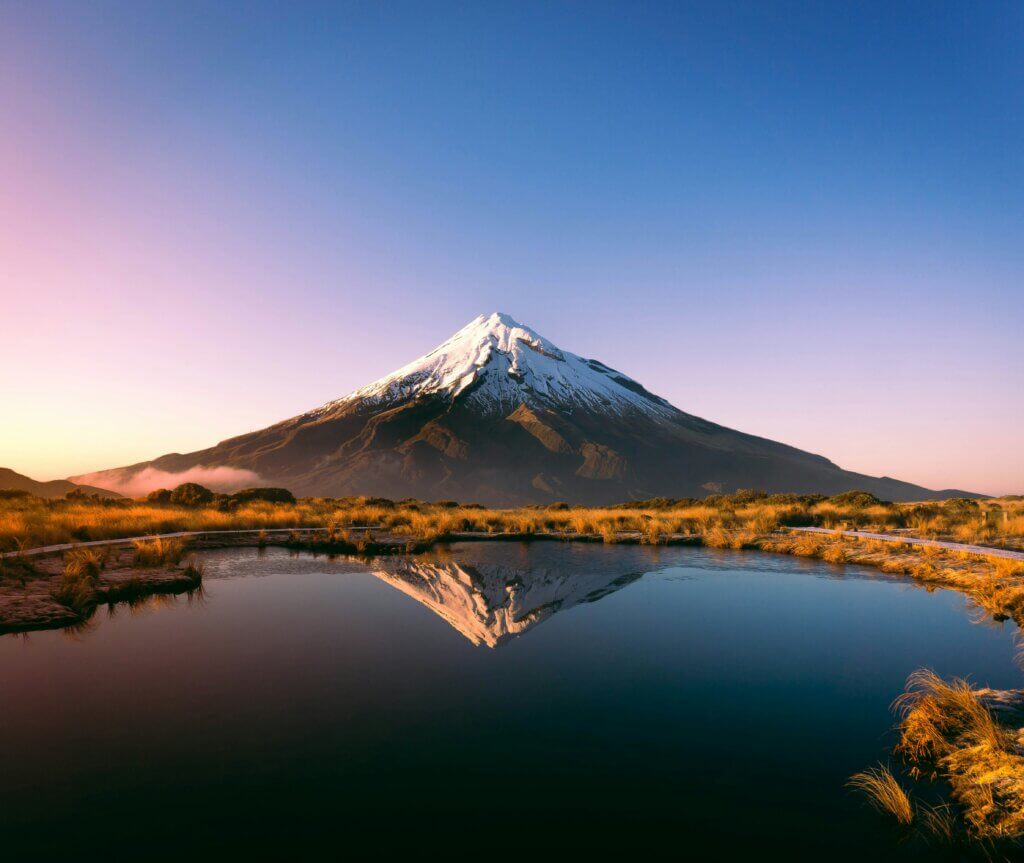
In Ecuador, this shift has been written into the Constitution, recognising nature’s right to “exist, thrive and evolve”. In Aotearoa/New Zealand, the Whanganui River has been granted legal personhood, with guardians appointed to speak on its behalf, as has Taranaki Maunga/Mount Taranaki (pictured) and the Te Urewera ecosystem. Courts and governments in countries including Canada, Spain, and Colombia have also recognised rivers, lagoons, and forests, respectively, as rights-bearing entities, reflecting a growing global willingness to rethink how law relates to the natural world.
But this way of thinking isn’t new. What’s new is the attempt to bring these ideas into Western legal systems.
“Across the world, many First Nations communities have held a deep sense of connection with nature for thousands of years. It’s embedded in culture, in traditional law, and in how decisions are made as a society.
Elke Nicholson
Recognising the rights and needs of nature in human decision-making isn’t new – it’s something that’s been practised for a very long time...”
RIGHTS FOR NATURE
How the law can recognise nature
Western legal systems already recognise non-human entities.
Corporations, trusts and even nation states can hold legal rights – despite not physically existing in the world. That creates a pathway for recognising nature in similar ways.
Elke explains that similar legal mechanisms can help give nature a voice. However, translating a fundamentally different worldview into those systems isn’t straightforward.
ELKE NICHOLSON"The novelty comes from trying to get Western legal systems to recognise and act on a deeply holistic, interconnected way of understanding the world that First Nations cultures have held for a very long time.”
RIGHTS FOR NATURE
Why is this shift happening?
The push for rights of nature hasn’t come out of nowhere. It’s grown out of a growing recognition that, despite decades of environmental law and regulation, the systems we rely on are still under pressure.
Across the world, ecosystems continue to decline. Laws designed to protect nature often struggle to keep pace with the scale of environmental harm… or fail to prevent it in the first place.
“Over the past couple of centuries, we’ve seen widespread degradation of our natural systems. While environmental laws have been introduced over time, many haven’t been strong enough to truly protect the environment.
ELKE NICHOLSON
The rights of nature movement comes from the need to profoundly shift how we look at nature – how we give it a voice that has real meaning in our system, so it actually gets the protection it needs. Not just a tick-box approvals process, but something that genuinely changes the way we look after the environment”
These challenges point to a deeper problem. Many environmental laws focus on managing harm, such as assessing impacts, approving developments, and mitigating damage, rather than fundamentally changing how decisions are made in the first place.
The rights of nature movement reflects a growing sense that something more structural is needed. Which is why movement has gained traction globally. Since Ecuador’s constitutional reform in 2008, dozens of countries have introduced some form of rights of nature recognition – through national laws, court decisions or local ordinances. Each reflects a different legal system, but a shared concern: that existing frameworks are not enough to protect the living world.
Beyond better laws, it’s recognition of the need a different starting point, one that recognises nature not as a resource to be managed, but as something with its own standing and value.

RIGHTS FOR NATURE
The role of the Birrarung
The recognition of Birrarung/Yarra River as a living entity sits within this global shift. But the approach taken in Victoria is distinct.
Rather than granting the river full legal personhood, the law takes a different path. It formally recognises the river and its lands as alive, and in doing so, opens up a different way of thinking about our relationship with it.
This recognition is profound in itself, it shifts how the river is understood in law and in practice: it says the river is not just a resource for human domination and exploitation, it is a living being with whom we are in a relationship.
That shift has practical consequences. It has shaped planning controls along the river, influenced long-term strategy through the Yarra Strategic Plan, and created new governance structures like the Birrarung Council – an independent body that acts as a voice for the river.
But just as importantly, it reflects something deeper.
The legislation: Yarra River Protection (Wilip-gin Birrarung murron) Act 2017, the first to include Aboriginal language in Australia’s history, emerged from decades of advocacy by Traditional Owners and community groups, particularly Wurundjeri Woi-wurrung leaders who have always understood the river as a living being. Bringing that understanding into Victorian law represents a meeting point between legal systems, and a recognition that cultural change must sit alongside legal reform.
RIGHTS FOR NATURE
A movement still evolving
Rights of nature laws are still developing, both globally and in Australia. There’s no single model, and no clear end point. Instead, change is happening gradually; shaped by local contexts, legal systems and community leadership.
Elke believes it's going to be incremental changes carried along with a little bit of cultural change followed by more incremental changes. That pace can feel slow. But it also reflects the scale of what’s being attempted.
Recognising nature in law isn’t just a technical legal reform. It challenges long-standing assumptions about ownership, value and responsibility. It requires legal systems to adapt, but also for communities, governments and institutions to rethink their role.
In that sense, each new law or recognition – whether it’s a river, a forest or a broader legal principle – becomes part of a larger process of experimentation and change.


RIGHTS FOR NATURE
More reform... and hope
For many environmental lawyers, the rights of nature movement offers something rare: a sense of possibility.
Law reform is often slow and difficult to communicate. But this is different. As Elke explains: “When we talk about rights of nature, people get really excited and people respond, and I think that's because it speaks to a sense of hope or excitement that we might actually be able to upend this system.”
That response matters. Because alongside the legal detail, this movement is also about imagination, about asking whether the systems we rely on can be reshaped to better reflect the relationships people already have with the natural world.
And while current laws may feel partial or incomplete, they are part of a longer trajectory. Seen this way, the recognition of rivers like Birrarung is not the final outcome, but a crucial step in a bro
"All the piecemeal ways we’re introducing rights of nature laws internationally aren’t the end point. They’re stepping stones on a path to where the rights of nature are embedded across our whole legal system."
ELKE NICHOLSON