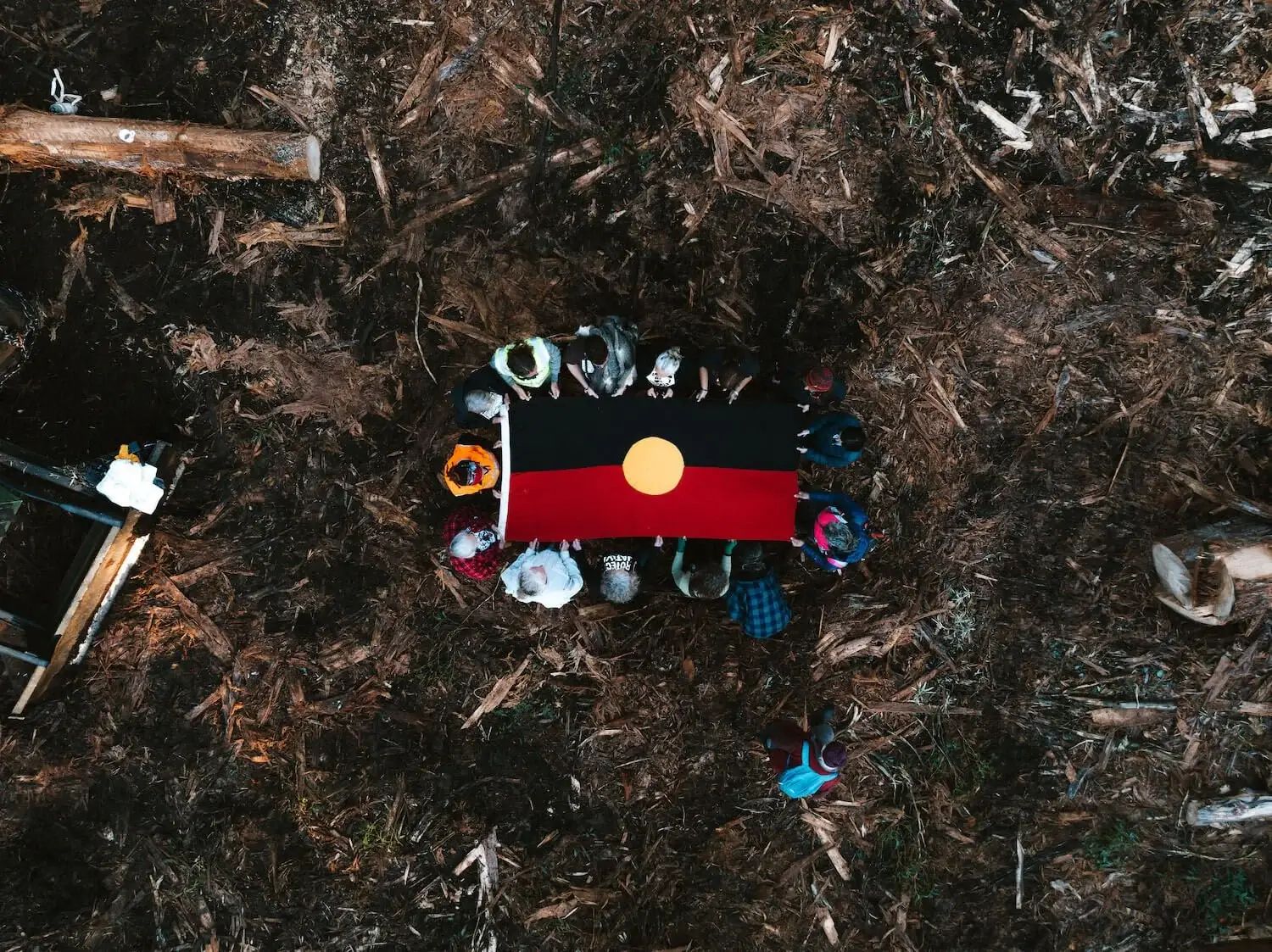
On Country hearings
What if courts listened on Country?
When courts ask First Nations people to give evidence about Country, they’re usually expected to do it in a colonial courtroom.
Often far from the place they’re speaking about. In unfamiliar, uncomfortable settings. Removed from the knowledge, relationships and responsibilities they’re trying to explain.
There has to be a better way.
This issue sat at the heart of a recent decision in Tasmania, where the Magistrates Court declined Ruth Langford / Tipruthanna’s request to hear evidence about Country On Country.
The decision raises important questions about how Australia’s legal system listens, whose law it recognises, and whether it can adapt to deliver fair and respectful justice.
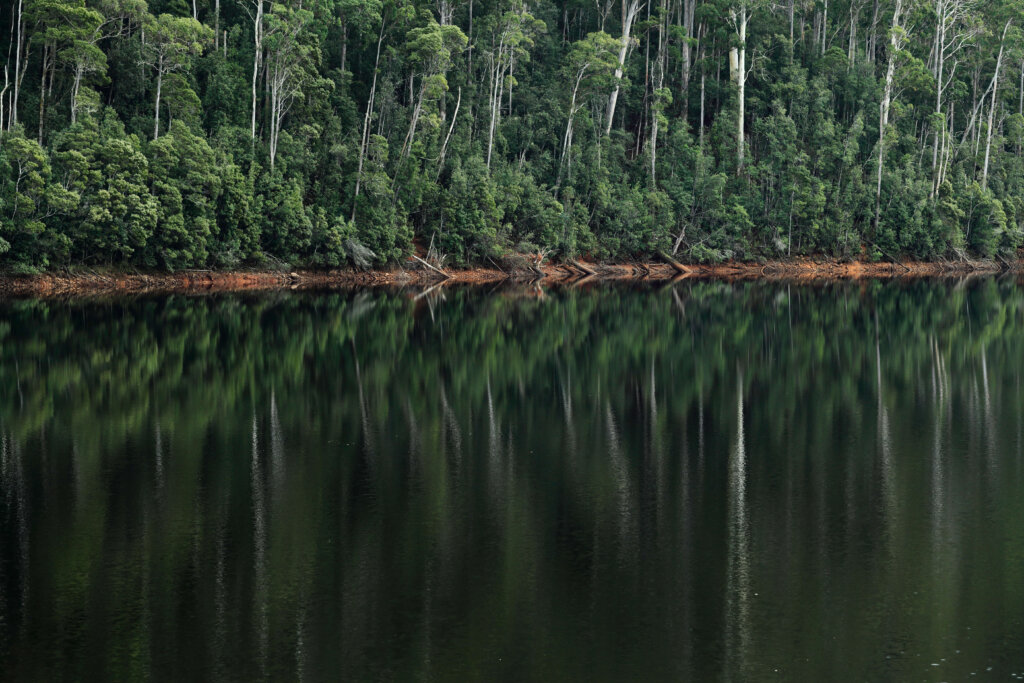
What is an On Country Hearing?
An On Country hearing is when a court or tribunal hears evidence on or near the relevant First Nations land or waters, instead of in a courtroom.
Knowledge about Country is grounded in place, relationships and responsibility. The best place for a court to listen and learn abot that relationship is where it lives – On Country.
On Country hearings help courts:
- understand cultural obligations in context, not in translation
- hear directly from Elders and knowledge holders in a culturally appropriate setting
- better grasp the real-world impacts of environmental harm.
On-Country hearings have already been used in many important cases including:
- In 2024, the Federal Court travelled across six locations on Karajarri Country in the Kimberley to hear evidence from Elders in a Native Title matter, before finalising a hearing at the Broome/ Rubibi Courthouse.
- In 2023, the Federal Court travelled to the Torres Strait Islands (Boigu, Saibai, and Badu) to hear directly from community leaders about rising sea levels and cultural impacts in a case brought by Traditional Owners Paul Kabai and Uncle Pabai Pabai.
- In 2022, the Queensland Land Court heard evidence on Country about the proposed Galilee coal mine, including at Isabella Falls on Guugu Yimithirr Country, to understand impacts on cultural heritage.
Why it matters
Where and how courts hear evidence shapes whether people can participate fully and safely.
For many people, the legal system is intimidating and disempowering. That impact is not shared equally. First Nations people are overrepresented in the justice system, reflecting deep structural inequality.
On Country hearings offer a different way.
They can support a fuller understanding of evidence, allowing courts to engage with cultural obligations in place rather than forcing them into unfamiliar legal language.
They can create culturally safe conditions for people to speak about Country in a way that feels supported and properly understood.
They also recognise and respect cultural authority. Elders and knowledge holders can speak on their own Country, where that authority can be expressed appropriately.
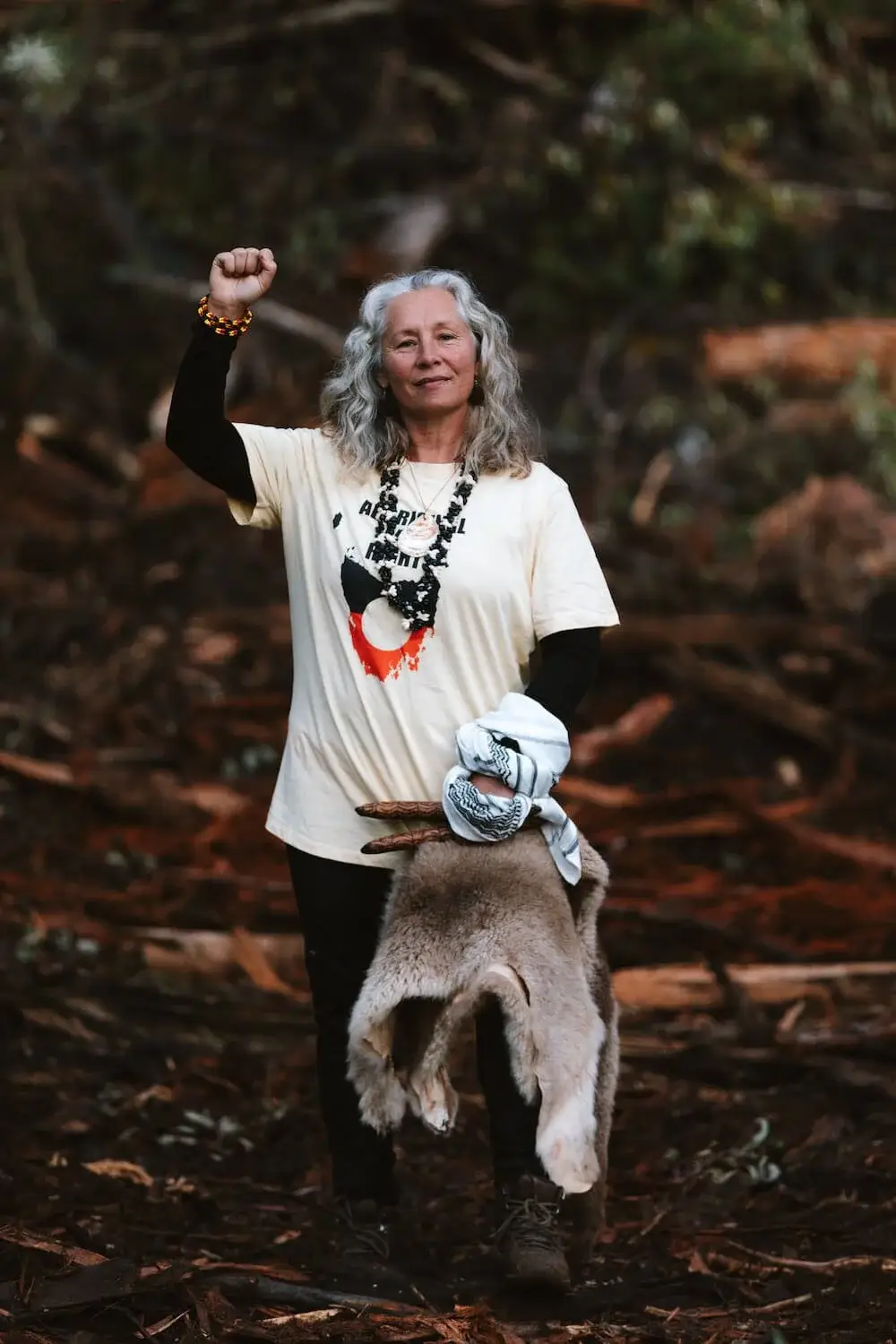
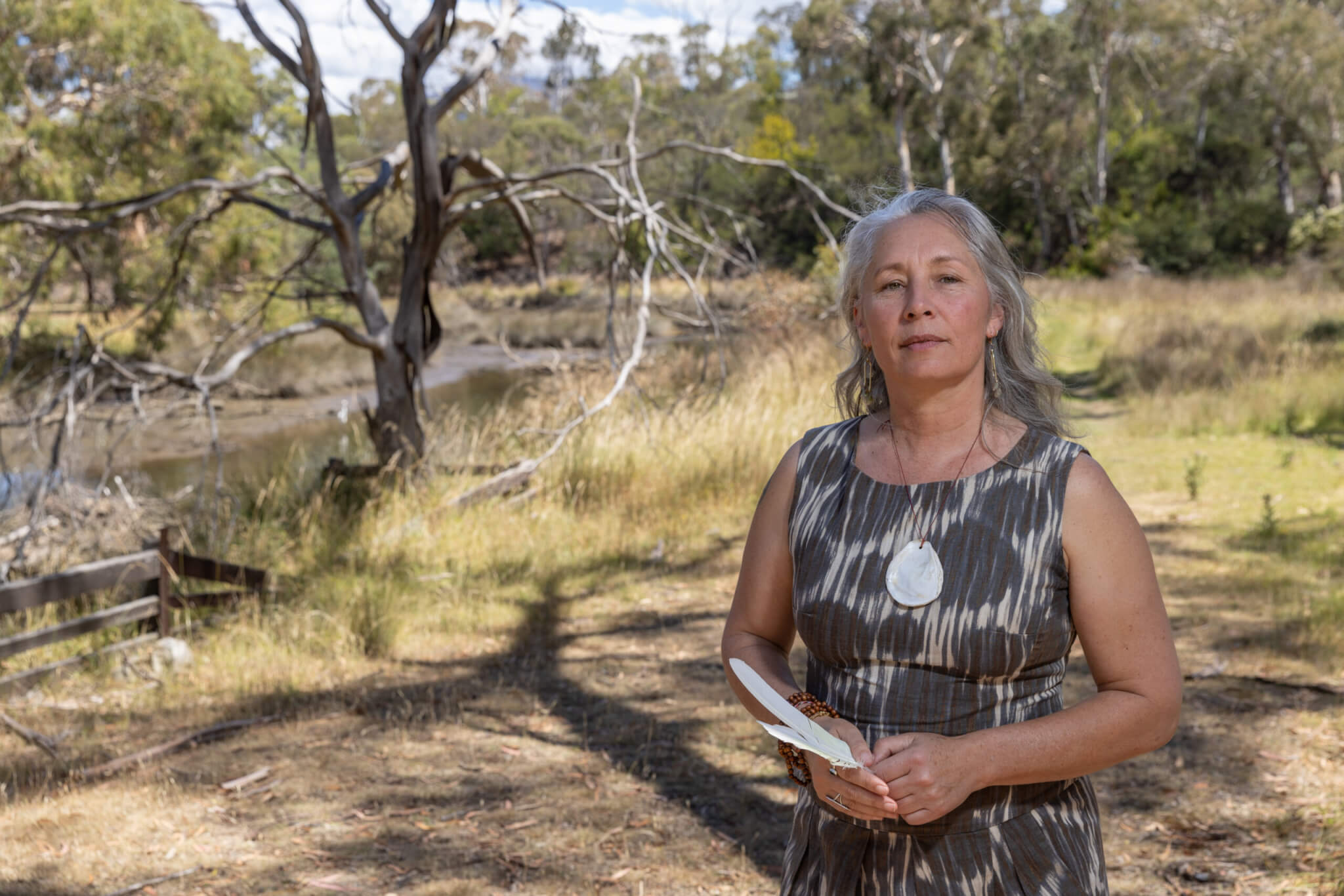
As Ruth Langford / Tipruthanna explains:
“When Aboriginal people are asked to speak about Country, they should be able to do that On Country – where they feel safe, supported and properly understood.”
What happened in Tasmania?
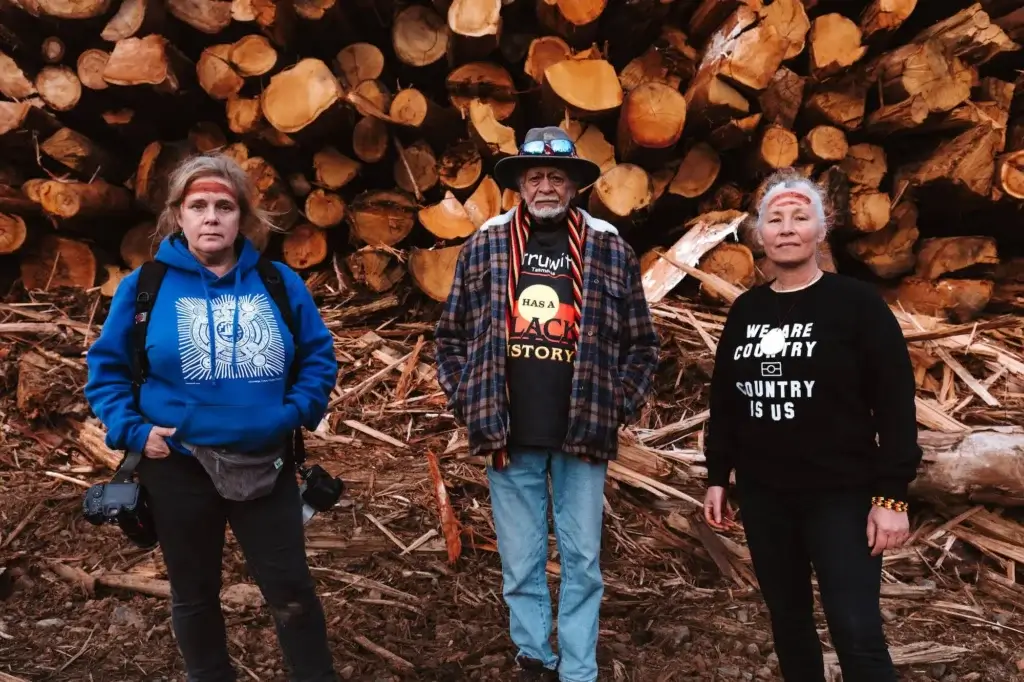
In 2026, Ruth Langford / Tipruthanna, a Lutruwita/Tasmanian-born Yorta Yorta / Dja Dja Wurrung woman, invited the Hobart Magistrates’ Court to hear Aboriginal expert witnesses give testimony On Country at Piyura Kitina Risdon Cove, just 15 minutes drive from Hobart.
Piyura Kitina is the site of the first massacre of Aboriginal people in Lutruwita, and was returned to the Aboriginal community in 1995.
Ruth is representing herself in proceedings linked to peaceful actions to protect native forests. She was acting under First Law, with permission from Senior Palawa Elder Uncle Jim Puralia Meenamatta Everett.
“Law lives in Country,” says Ruth. “I am in court defending our cultural obligation to protect the very things that give us life. I’ve been charged with trespass for defending beautiful ancient forests and the natural systems and cycles that provide for us all.”
Pleading not guilty to all charges, Ruth argues she was acting under a cultural and legal obligation to protect Country and that this obligation takes priority over the interests asserted by Forestry Tasmania.
“If you live on this Country, you are bound by First Law – the Aboriginal Law that existed long before colonisation and continues in Country today. No colonial law can erase that responsibility. We are Country, and Country is us. I am simply honouring my obligation to protect it.”
Her request for an On Country hearing was not just about her case.
“My invitation was about creating that pathway – not just for me, but for my community and the wider community, and for future generations,” she said.
The Court declined the invitation, finding the case would not be prejudiced by being heard in a standard courtroom.
“This was a missed opportunity. Moral and ethical leadership could have been shown today. Once again it’s up to the people to show the leadership,” says Ruth.
This points to a broader gap. There are no established pathways in Tasmania for hearing evidence On Country, and no specialist Aboriginal court to support culturally appropriate processes.
A colonial legacy
When the First Fleet brought disease, violence and dispossession, it also brought the British legal system. More than 200 years later, Australia’s courts still operate within that colonial framework.
On Country hearings are just one way that this system can adapt to better fit Australia.
Courts already have the power to hear evidence On Country. The issue is consistency. Without clear pathways, access to culturally safe processes depends on individual decisions.
When that doesn’t happen, it reinforces a system where First Nations law and knowledge are harder to recognise on their own terms.
Towards a more just legal system
For thousands of generations, First Nations people have cared for Country through law, knowledge and responsibility.
But colonisation, environmental harm and legal systems that fail to recognise these relationships have caused lasting damage to Country and culture. There is a clear need for change.
On Country hearings are one practical step. They can help courts better understand the evidence before them, support safer participation, and reflect the place they operate in.
There can be no climate or environmental justice without First Nations justice.
As an environmental justice organisation, we know that protecting nature and climate means supporting the authority, knowledge and leadership of First Nations communities. That includes backing calls for legal systems that listen properly.
Because justice is not just about what is heard. It’s about how, and where, we choose to listen.
Image credits: Ramji Ambrosiussen and Jillian Mundy
Stay in the loop
Follow Ruth Langford as her case progresses, as well as the ‘Tell the Truth” campaign, led by Uncle Jim Everett, which is asserting First Nations Law in Country and the Law Keepers of Country.