
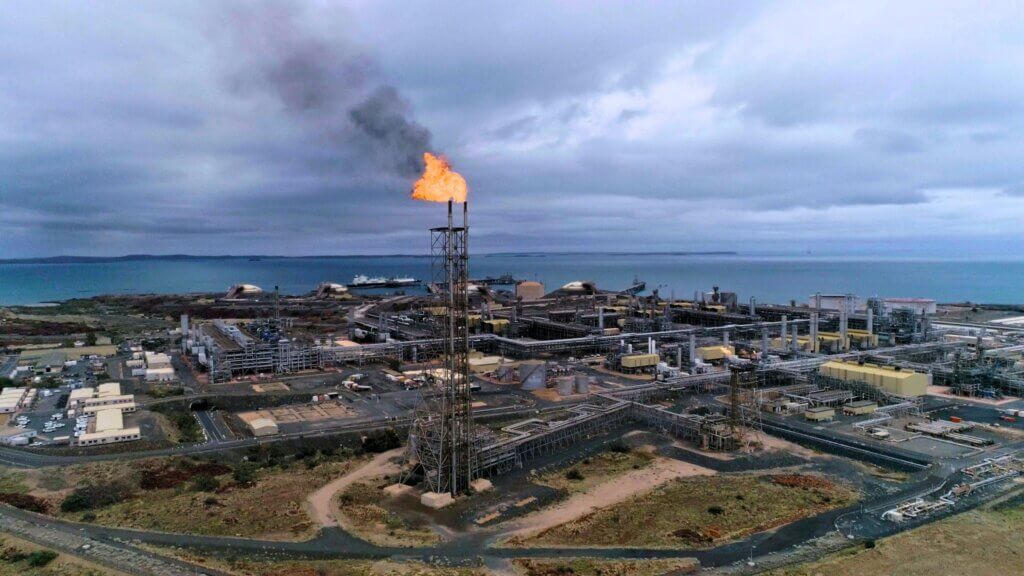
Woodside's Burrup Hub gas plant
Challenging the North West Shelf Extension
This case is scheduled to be heard in the Federal Court from 21–24 July 2026. It will be heard alongside a separate challenge brought by Friends of Australian Rock Art (FARA), also seeking review of Minister Watt’s approval decision.
watch the livestream
Taking the Environment Minister to court over his approval of Australia’s largest, longest operating and most polluting gas project.
EJA lawyers are representing the Australian Conservation Foundation (ACF) in the Federal Court, arguing the Minister’s decision breached environmental laws.
Our client argues the Minister failed to properly assess the climate impacts of the project, particularly Scope 3 emissions, and the broader consequences for ecosystems like the Murujuga rock art landscape.
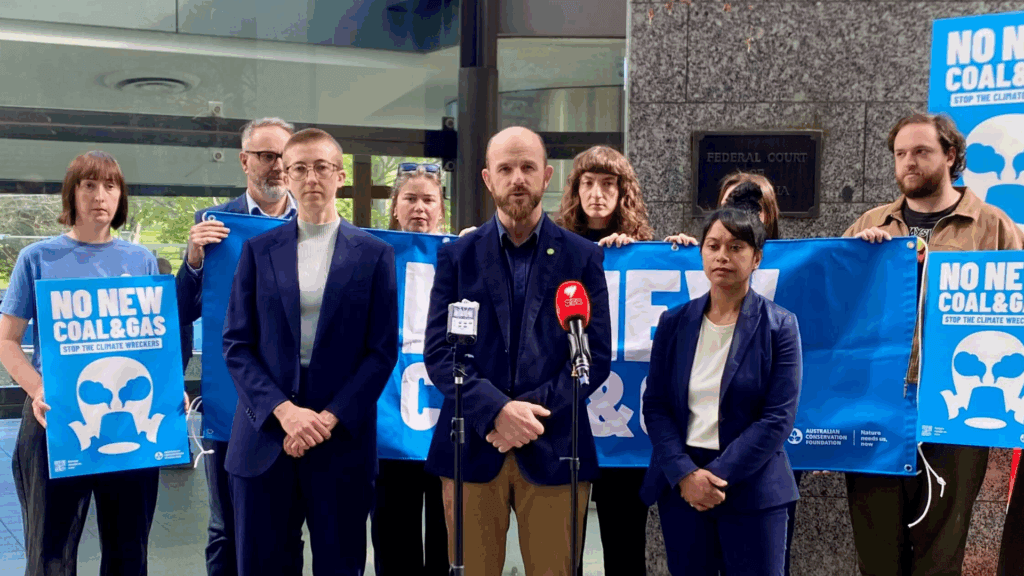
— ACF General Counsel, Adam Beeson.
“We’re challenging the lawfulness of Minister Watt’s approval of this gas hub extension, which is the centrepiece of the most polluting gas project in the Southern Hemisphere.”
The North West Shelf Extension
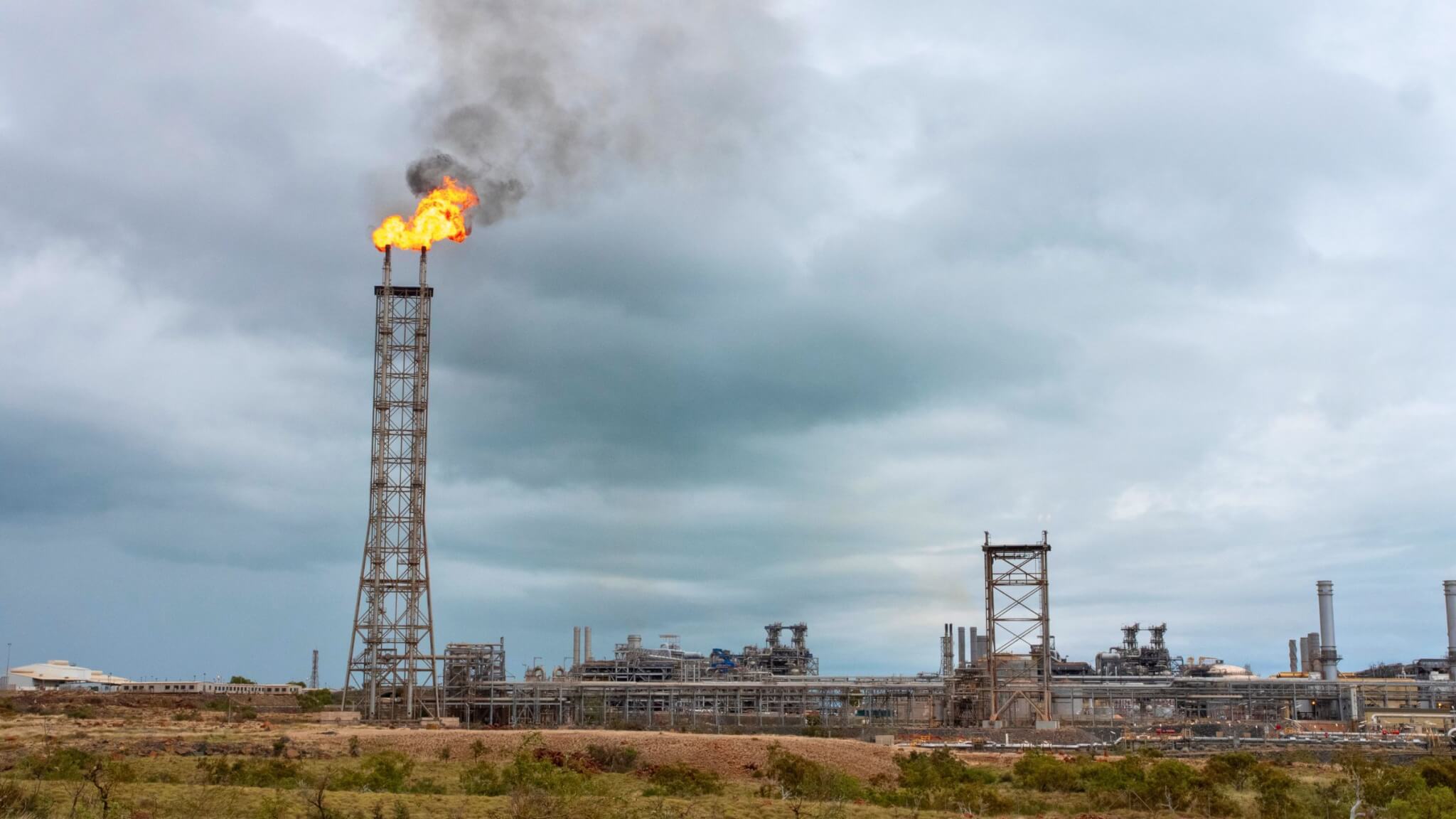
Woodside plans to extend the operation of its Karratha Gas Plant on the Burrup Peninsula until 2070. If it proceeds, the project could fuel around four billion tonnes of greenhouse gas emissions – roughly ten times Australia’s total annual emissions.
The North West Shelf Extension would be the longest-operating and most polluting gas development in Australia.
The project currently processes up to 18.5 million tonnes of liquefied natural gas each year. Gas is a fossil fuel that damages our climate. If the extension proceeds, emissions would continue for decades, rather than decline as the facility winds down.
The project could also enable the extraction of gas from other fields, including the offshore Browse basin, near Scott Reef, and the Canning basin in the Kimberley.
According to the Minister’s own reasons for decision, the project would be responsible for around four billion tonnes of greenhouse gas emissions over its lifetime, with annual emissions of about 88 million tonnes CO₂-e.
The facility sits near Murujuga, home to the world’s oldest and largest collection of First Nations rock art, now recognised as a World Heritage site.
“A child born today will be 45 in 2070. ACF will argue the Minister was wrong to cite the claimed economic benefits of the proposed Browse gas project — which Woodside hopes will feed the gas hub, but which has not been approved — when he approved the North West Shelf extension.”
— ACF General Counsel, Adam Beeson.
Learn more about the case
Why is this an important case?
The case is a significant legal test of how climate change must be considered under the Environment Protection and Biodiversity Conservation Act 1999 (EPBC Act).
It raises important questions about lawful decision-making and accountability in environmental governance.
If successful, the case could clarify how future fossil fuel projects are assessed under Australia’s national environment law.
ACF's legal arguments
This is a judicial review, meaning ACF is asking the Federal Court to detemine whether the Minister’s decision was made lawfully under the Environment Protection and Biodiversity Conservation Act 1999 (EPBC Act).
A judicial review does not re-decide the merits of a project; it examines whether the approval decision was made according to law.
ACF will argue that the Environment Minister acted unlawfully by:
- Failing to consider the project’s contribution to climate change,
- Using the economic benefits of a different and not yet approved project, the Browse development, to tip the scales in favour of approving North West Shelf;
- Failing to identify the composition of third party gas and any resulting emissions; and
- Unreasonably approving the decision when the impacts of the air emissions were unknown.
Ground 1: Failure to consider the project’s climate impacts
ACF argues the Environment Minister had information about how climate change could harm the Dampier Archipelago’s natural heritage — but did not take it into account. They argue that’s a serious error in law, especially given the scale of emissions involved.
When assessing the project, the Environment Minister decided not to consider the contribution of NWSx to climate change on the national heritage values of the Dampier Archipelago, because he found the project was not a “substantial cause” of the physical effects of climate change on the relevant matters protected by the EPBC Act.
He decided NWSx would not contribute to a “net increase” in emissions because gas would be supplied from other projects anyway, and that even if NWSx did increase global emissions it would only be a “very small” contribution.
This is sometimes referred to as the “market substitution” argument or “drug-dealers’ defence”, as well as “drop in the ocean” logic. Fossil fuel companies and governments use the argument to justify knowingly contributing to harm: if they didn’t do this, another company would, so the harm of the product doesn’t matter. The market substitution or drug dealers’ defence has been categorically rejected in several jurisdictions around the world and recently in the Queensland Land Court.
ACF argues the Minister applied the “substantial cause” test incorrectly and made an error in refusing to take the project’s contribution to climate change into account. ACF will ask the Court to find that the “substantial cause” test in the EPBC Act is not just an exercise in arithmetic analysis, and the Minister erred in applying it that way.
Ground 2: Considering economic benefits from unrelated unapproved projects
ACF argues the Environment Minister tipped the scales in favour of approving North West Shelf by considering something he wasn’t allowed to – and justified his approval by including the supposed economic benefits of a gas project that is speculative and not yet approved. They say that’s a legal misstep.
When deciding whether to approve a project under the EPBC Act, the Environment Minister is required to consider “economic and social matters.”
When assessing any economic and social benefit of Woodside’s gas expansion, Minister Watt considered the economic benefits of a different project: Woodside’s Browse basin development, which aims to extract offshore gas from fields around Scott Reef, off the coast of Broome. Yet the Browse project has not been approved. This meant the economic benefits were bigger than they otherwise would have been, which tips the scales in favour of approving the project.
ACF argues the EPBC Act does not allow the Minister to factor in benefits of additional projects that have not themselves been approved.
Ground 3: Approval without determining key air emissions
ACF argues the approval left out critical details. The Minister gave the green light without knowing what kind of gas the project will process and what pollution it will cause. They argue law requires these details to be clear before approval.
The conditions attached to the approval decision require monitoring and reporting of particular air emissions. But this reporting will be undertaken after the approval itself. This means the scope of the impact of this project is essentially left undetermined because the project has already been approved.
ACF argues that the Minister failed to identify and left undetermined, a critical aspect of the NWSx project, namely the composition of future third party gas and the resulting air pollution emissions.
Ground 4: Unreasonable decision given unresolved uncertainties
ACF argues the approval decision was legally unreasonable. The Minister claimed the project’s impacts on the heritage values of the Dampier Archipelago could be managed, but had no solid basis for that claim. ACF will argue this leap of logic makes the decision legally flawed.
ACF argues that given the unknowns in relation to the composition of future third party gas emissions, the Minister’s decision to approve the project was unreasonable because there was no rational basis for concluding that the conditions attached to the approval, in their totality, would make the impacts of the NWS Project Extension on the national heritage values of the Dampier Archipelago acceptable.
Ground 5: Apprehended bias
ACF argues final approval was given before there was a real opportunity to review or challenge the Minister’s earlier assessment decision – and a reasonable person could view that sequence as indicating the Minister might be biased in favour of approval.
In February 2026, ACF filed an additional ground of apprehended bias in support of their argument that the approval was unlawful.
The Minister had to make two key decisions about the project:
- The scope of the environmental assessment, and
- Whether to grant final approval.
The Minister did not publish his reasons for the first decision until after he had granted final approval, despite those reasons having been requested months earlier.
Anyone seeking to challenge either decision needed access to the Minister’s statement of reasons. This meant ACF could not challenge the first decision until after the final approval had already been granted.
ACF argues a fair-minded observer might reasonably see this sequence as indicating that the Minister was trying to avoid legal challenge to the first decision.
A reasonable person could view that sequence as indicating there might be bias in favour of approval.
What the case could change
If successful, ACF hopes the decision won’t just affect a single project, it could set a protective precedent that overturns the dangerous logic the Albanese Government is using to greenlight new coal and gas projects across the country.
The precedent could mean no Australian Environment Minister can ever approve major fossil projects without first considering their climate impacts.
It could also ensure that "economic benefits" used to justify approvals are properly tied to the specific project being assessed, not to unrelated or speculative projects.

About the client
The Australian Conservation Foundation is Australia's national environment organisation – more than half a million people who speak out for the air we breathe, the water we drink and the places and wildlife we love.
ACF is represented by lawyers at Environmental Justice Australia.

Make a difference
The challenges we face are vast. The time to push for large-scale system change is now.
Our financials
We have a long-standing commitment to sound fiscal management, accountability and transparency.
We encourage you to investigate before you donate.
Join us
The law is a powerful circuit breaker to hold governments and corporations to account.
Join us and let's build a radically better world.