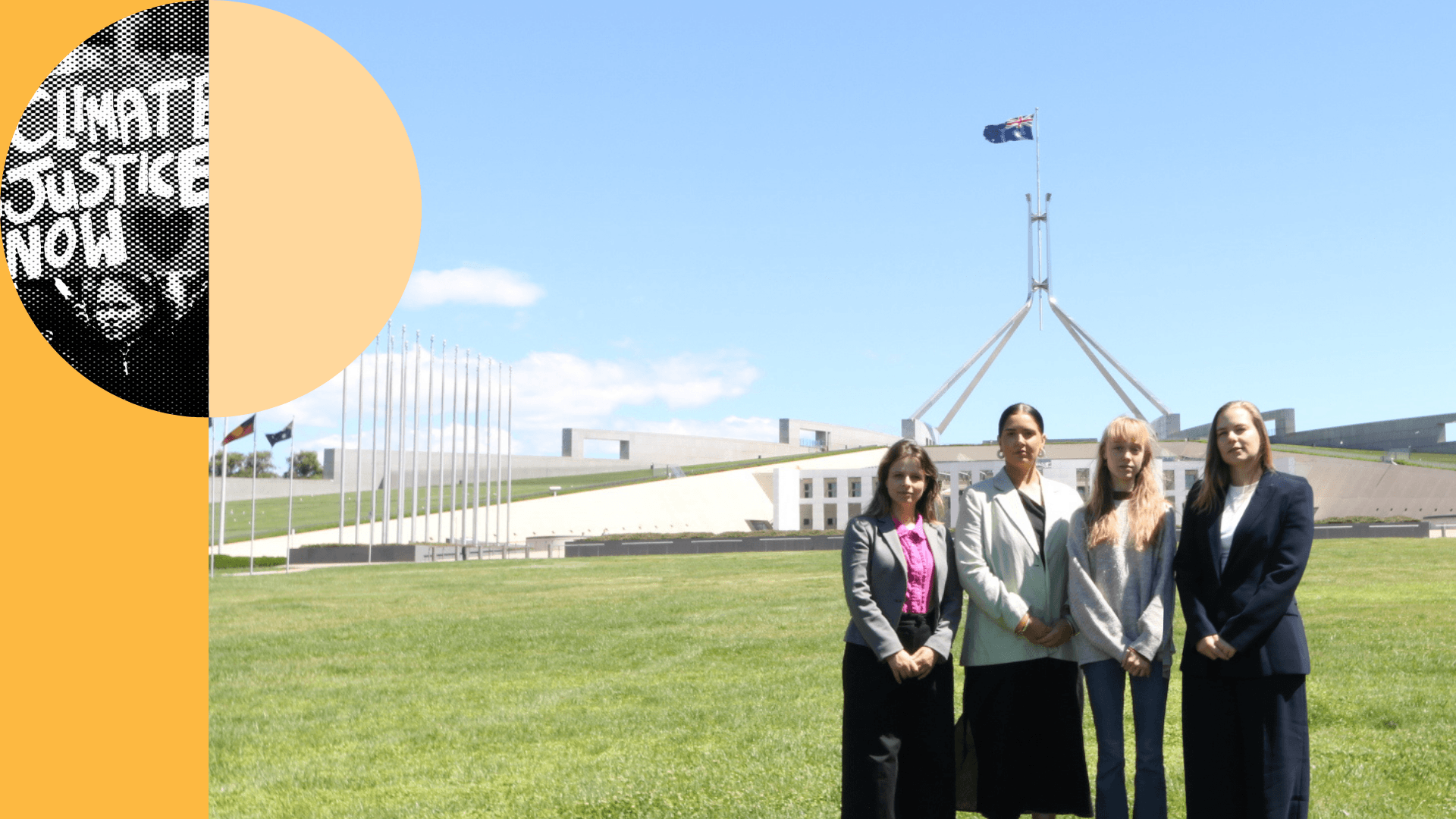
Generation Justice
UN intervention over coal + gas
Don’t you dare try and “politician-talk” your way out of the coal mines you keep digging. You are letting our future slip through your hands like dry soil.
– Maddie McShane, Generation Justice
For years, young people have been living with the consequences of decisions they had no say in.
They’ve fled bushfires and extreme heat. They’ve watched Country and culture come under threat. They’ve worried about whether the places they love will still be safe to live in as they grow older.
We represent nine young Australians who, last year, made a human rights complaint to the UN Special Rapporteur for human rights in the context of climate change. Catch up on the complaint here>>
Now, two UN human rights investigators have issued serious allegations with the Australian government about its continued coal and gas approvals, fossil fuel subsidies and inadequate climate targets – and the impacts those decisions are having on young people’s lives, health and futures.
In their joint allegations, the Special Rapporteurs say Australia’s laws appear to be “ill-equipped” to regulate greenhouse gas emissions and fossil fuel production, consumption and subsidies in line with its legal obligations.
They asked the Albanese Government to explain what it is doing to move away from coal and gas, whether its 2035 climate target is aligned with limiting warming to 1.5°C, and how its fossil fuel approvals account for impacts on children, First Nations peoples and communities overseas.
The Australian government has now responded with an outline of its existing climate policies. But Generation Justice say it has ignored the central issue. The response does not explain why the government continues to approve new coal and gas projects while facing serious questions about the human rights impacts of those decisions, nor does it commit to ending new approvals, fossil fuel subsidies or strengthening Australia’s 2035 climate target.
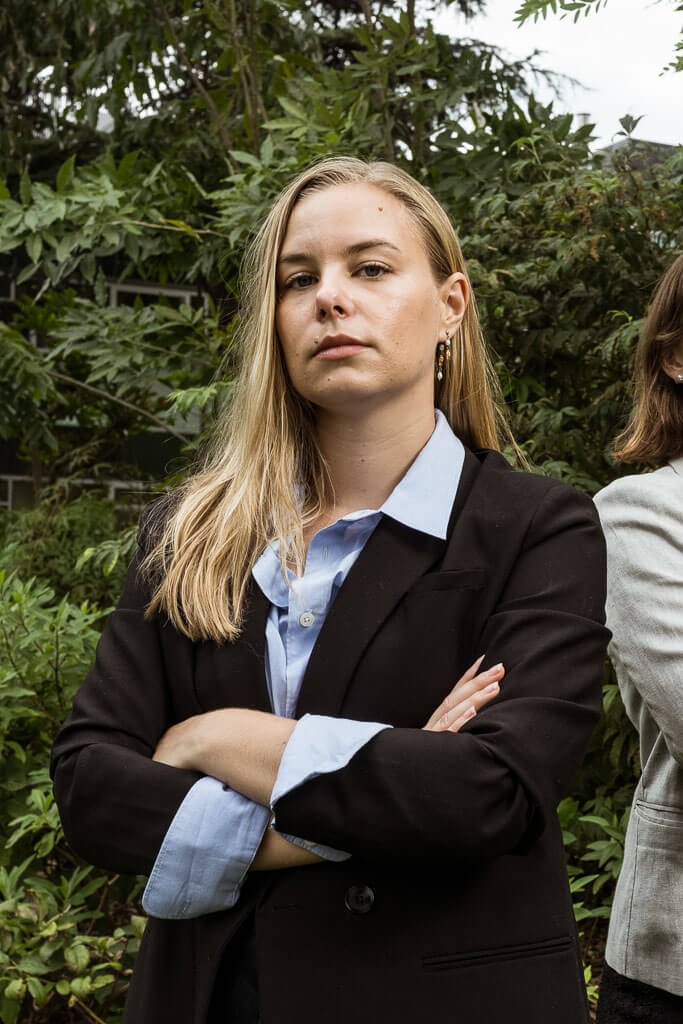
Hannah White, EJA Senior Lawyer“International human rights law requires governments to protect peoples’ lives, health and homes from foreseeable climate harm, with particular obligations to protect children and young people.
Young people will spend their whole lives dealing with the consequences of decisions they had no say in. They should be able to trust that the adults making those decisions are looking out for them and following the law.”

Generation Justice is now calling on the government to:
listen to young people, answer the concerns raised, and stop making climate disasters worse through continued coal and gas approvals.
Why this moment matters
For young people, this is a major milestone.
It's the first time the UN – or any Special Rapporteur – has communicated directly with Australia over its failure to address climate pollution from coal and gas.
And for Australian’s more broadly, the timing could hardly be more significant.
The intervention comes just weeks before COP31, when Australia will preside over negotiations, and amid growing scrutiny of coal and gas approvals. It also follows the Australian High Court ruling requiring consideration of conditions to reduce climate pollution from coal mined for export.
At the same time, its own fossil fuel policies and human rights record are under unprecedented international scrutiny.
That creates an uncomfortable credibility test for the Albanese government: how can Australia ask other countries to do more on climate while facing serious investigations about what it is doing at home?
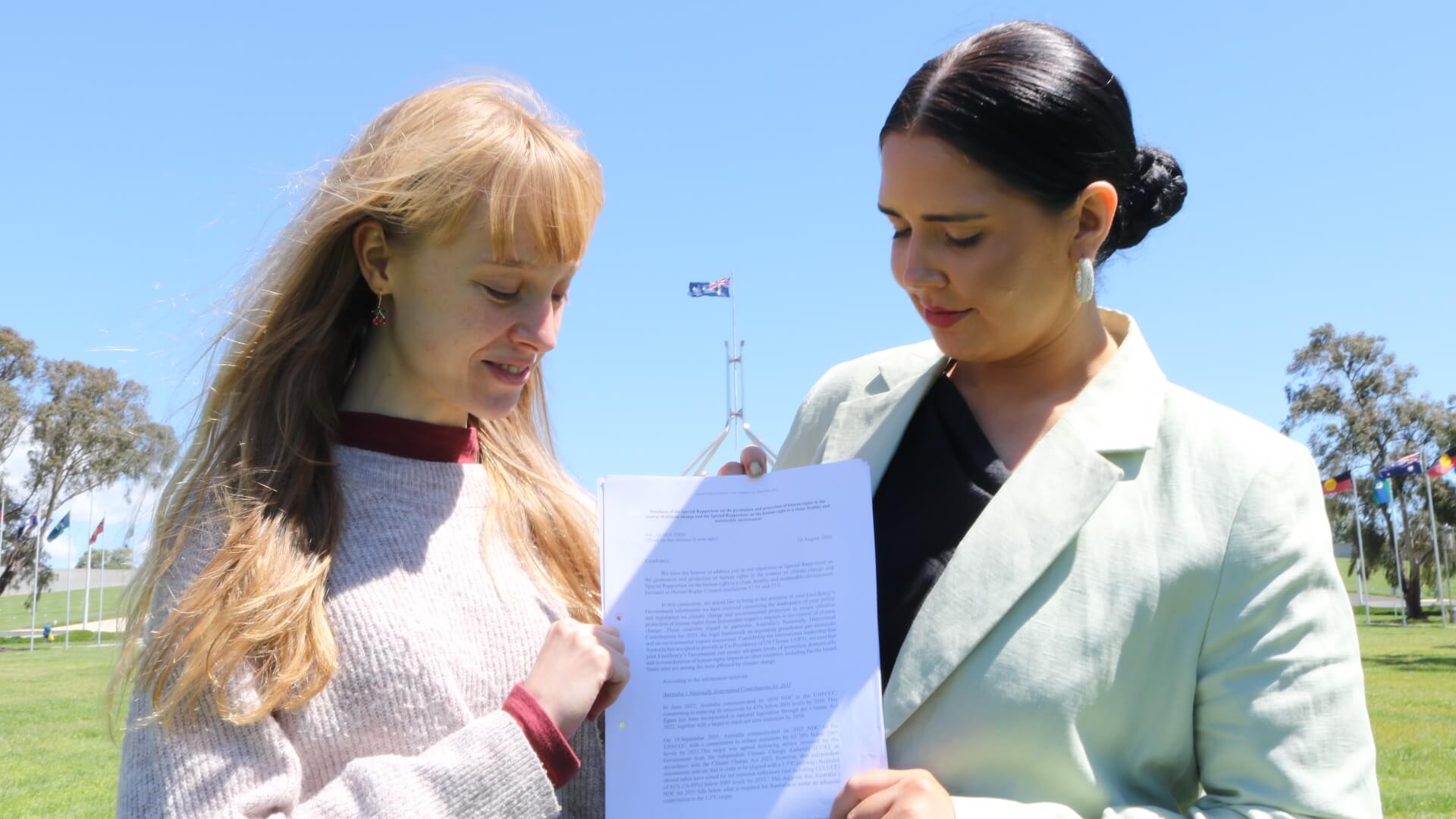
While Generation Justice waited for answers, the destruction continued
Since EJA lawyers lodged Generation Justice’s complaint in April 2025, they have waited for the Australian government to respond. In the meantime, new fossil fuel projects have been approved, climate harms have hit their communities, and the risks they warned about have continued unfolding...
About the complaint
Generation Justice is a group of young people from across Australia.
In April 2025, represented by Environmental Justice Australia, they lodged a formal human rights complaint with the UN Special Rapporteur on human rights in the context of climate change.
They argued Australia’s inadequate climate policies, continued coal and gas approvals and fossil fuel subsidies are incompatible with its international human rights obligations.
Their complaint was grounded in their lived experiences – from fires and floods to supercell hailstorms, drought and heatwaves. Each of them knows all too well how climate change can disrupt your home, your health, your connection to Country, your education and your plans for the future.
You can read more about Generation Justice and their complaint here -->
As EJA Senior Lawyer Hannah White says:
“These nine young people have lived through fires, storms and extreme heat. They want to stay in their hometowns, feel safe and plan their futures. They should be able to trust that the adults making those decisions are looking out for them and following the law.”
About the UN allegations
The formal allegation letter was sent to Australia on 24 August 2026 by two independent experts appointed by the UN Human Rights Council:
- Elisa Morgera, UN Special Rapporteur on the promotion and protection of human rights in the context of climate change
- Astrid Puentes Riaño, UN Special Rapporteur on the human right to a clean, healthy and sustainable environment.

Their allegations raise serious concerns about:
- continued coal and gas approvals and fossil fuel subsidies
- whether Australia’s 2035 climate target is consistent with limiting warming to 1.5°C
- whether fossil fuel approvals properly assess environmental and human rights impacts
- disproportionate impacts on children and young people, particularly First Nations children and children with disabilities
- access to justice for people affected by climate harm
- fossil fuel industry influence on climate policy.
The investigators have asked the Australian government to explain how it is addressing those concerns and protecting people’s rights – including the rights of communities in the Pacific. They also state that Australia’s domestic laws appear to be ill-equipped to regulate Australia’s climate pollution in line with its international obligations and stress that missing or ineffective climate action is a form of discrimination against children.
Their allegations also refer to the International Court of Justice’s July 2025 Advisory Opinion on states’ climate obligations, including duties to protect the climate system and prevent significant harm.
About the Australian Governments response
In its response, the Australian government outlined its existing climate policies but failed to explain how continued coal and gas approvals are consistent with protecting young people from worsening climate harm.
Its response also highlights a significant gap in Australia’s national environmental laws: there is no requirement to assess the full climate impacts of fossil fuel projects before they are approved.
Read the full response here -->
For Generation Justice, that leaves the central question unanswered:
“In its response to the investigators, the government has failed to answer the fundamental question: why does it keep approving new coal and gas mines that make climate change worse?
These nine young people are asking the Albanese Government to put kids above polluting companies – stop approving coal and gas fields and make a national roadmap to protect their lives and futures.”
– Hannah White, EJA Senior Lawyer
The bigger picture
This story is about all young people – the pressures they face now, and the world they will inherit.
Generation Justice’s experiences reflect what young people across the country are already living through: hotter days, worsening fires and storms, damage to Country and communities, and growing uncertainty about where and how they will be able to live in the decades ahead.
“These nine young people have lived through fires, storms, drought and extreme heat. They want to stay in their hometowns, feel safe and plan their futures. They should be able to trust that the adults making those decisions are looking out for them and following the law.”
– Hannah White, EJA Senior Lawyer
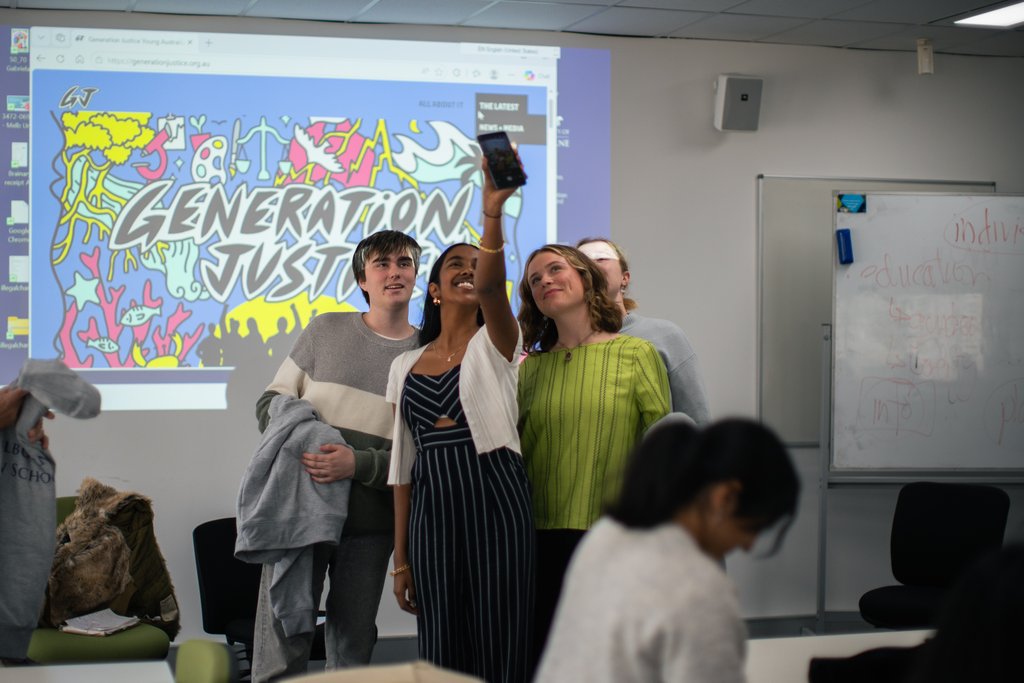
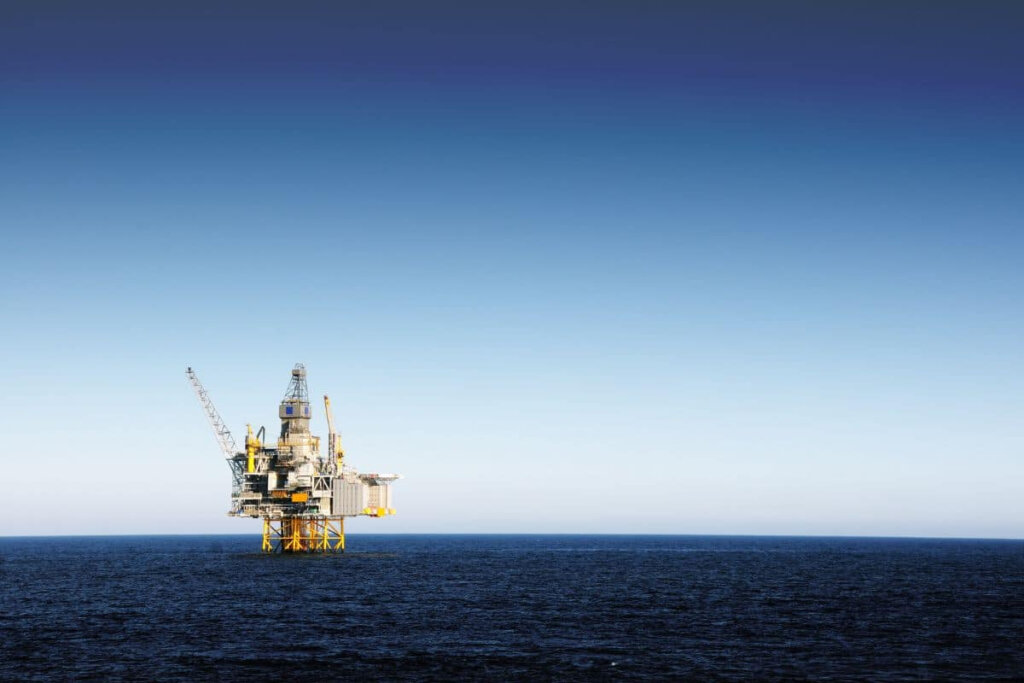
The Australian government has the power to take meaningful action now.
As Maddie puts it:
“We’ve asked the government to stop pouring fuel on the fire, and they’ve responded by telling us how much they’ve invested in fire hoses.”
That means tackling the source of the problem, including:
- Immediately ending fossil fuel subsidies
- stopping new coal and gas approvals
- developing a national roadmap to phase out fossil fuels in a way that’s fast and fair
- setting stronger climate targets aligned with keeping warming to 1.5°C
- Their vision is simple: a future where young people can stay in the places they love, feel safe, care for Country and plan their lives without climate disasters hanging over every decision.
A future where this is the last generation forced to fight for something so basic – the right to grow up on a safe and liveable planet.