
THE DETAIL:
What’s in our new environment laws?
After years of review and debate, Australia now has a new Environment Protection and Biodiversity Conservation Act (or at least an amended one)!
With a deal between Labor and the Greens made in the final sitting week of the year, the reform package passed Federal Parliament on 28 November 2025. A few changes have already commenced, but most won’t kick in until mid or late 2026.
EJA’s legal experts have been combing through the seven Bills and more than 1,500 pages of amendments to figure out what this actually means for nature and for the communities fighting to protect it.

What's changed?
Here’s how the new system compares to the old one:
| Old laws | New laws | |
|---|---|---|
| NATIONAL STANDARDS | No enforceable standards. | A framework for national standards is in place with some draft standards released, but most details are still to come. A “no regression principle” means future changes to standards won’t reduce environmental protection. |
| INDEPENDENT ENFORCEMENT | Politicians make decisions. Limited monitoring + compliance. | Creation of a national EPA for compliance + enforcement, but politicians still lead project approvals. |
| CLIMATE DAMAGE | Silent on climate change. | Scope 1 and 2 emissions must be disclosed and coal and gas projects can’t be fast-tracked – but decision makers still aren’t specifically required to consider climate harm when approving projects. |
| DEFORESTATION + LAND CLEARING | Loopholes and blind spots mean most deforestation is never assessed. | The continuous-use clearing loophole was tightened on 2 December 2025, and the RFA exemption ends in July 2027 – bringing logging and land clearing into the regular assessment system. |
| FIRST NATIONS RIGHTS | Advisory committee but silent on Free Prior and Informed consent. | An enhanced role for IAC and a Government commitment to develop a First Nations Engagement Standard but details are still unclear. |
| NATIONAL LEADERSHIP | Commonwealth responsibility over MNES but a patchwork of assessment systems. | Greater power to delegate national responsibilities to states and territories, which could expose decisions to political pressure and weaker protections. |
| THREATENED SPECIES | Recovery Plans but routine approval of habitat destruction. | A new offsets scheme that risks becoming pay-to-destroy, and a restructure of conservation planning documents. |
| FAIR + TRANSPARENT SYSTEM | Subjective, political + discretionary decisions. | Increased ministerial discretion in key parts including Standards and rulings. |
Scroll down for an in-depth analysis of each of these topics.
Note: to keep things simple and consistent, we use past tense when referring to the “old laws” (the Environment Protection and Biodiversity Conservation Act 1999) and present tense for the “new laws” (the 2025 amendments), even though the new laws won’t take effect until their commencement dates.
Most changes will be in place from December 2026, although some will commence earlier or later (mostly those relating to the NEPA, Environment Information Australia, deforestation and land clearing). Where a change has a different commencement date, we identify this below.
Watch the recording of our webinar

A closer look
National environmental standards
Read the detail:
What's in the old EPBC Act?
Australia’s national environment laws did not include any environmental standards, even though standards are common across most industries – from consumer products to technology. Standards were a central recommendation of the 2020 independent Samuel Review to strengthen the laws.
Read more about standards and why they matter.
What's in the new laws?
The reforms give the Environment Minister new powers to create national environmental standards. The government has committed to deliver a full suite of standards, including standards on: matters of national environmental significance; offsets; First Nations engagement; community participation; and data and information. The reforms require the Minister to consult the public on the detail of any standards before they are made.
Once standards are created, the reforms mean the Minister will have to be satisfied that certain decisions are consistent with the standards, including project approval decisions and making new protection statements. Regulations (that are yet to be drafted) will otherwise describe how decision makers need to consider the standards, and when they will apply. A “no regression principle” means that, once standard has been in place for 18 months, it can’t be changed to reduce environmental protections or to reduce the likelihood of appropriate consultation or engagement.
The reforms also introduce new definitions, including what constitutes an “unacceptable impact” on nature and what counts as “critical habitat” for threatened species.
The government has already released two draft standards - for matters of national environmental significance and offsets – and these are open for public consultation until 30 January 2026. These standards are expected to be finalised during 2026.
A closer look
Independent enforcement
Read the detail:
What's in the old EPBC Act?
Despite strong precedents for independent watchdogs in other sectors – such as ASIC, the Fair Work Commission and the Therapeutic Goods Administration – Australia’s environment laws did not provide an independent regulator.
Instead, the federal Environment Department was responsible for compliance and enforcement, but action was frequently slow or absent. The Environment Minister had wide discretion to approve projects, including those with serious environmental risks, and decisions were often inconsistent and hard to predict.
Read more about an independent umpire and why it matters.
What's in the new laws?
The amendments create a National Environment Protection Agency (NEPA) to oversee compliance and enforcement.
NEPA has the power to:
- issue environment protection orders
- enforce penalties for environmental breaches
- conduct environmental assessments and audits to ensure compliance
NEPA can also make project approval decisions, but only as a delegate of the Environment Minister – not as an independent decision-maker with its own authority. The Minister retains ultimate responsibility for project approval decisions.
NEPA is led by a CEO with relevant experience, but it does not report to a board and operates under the direction of the Environment Minister.
The reforms also establish a Head of Environment Information Australia to lead improvements to environmental data and State of the Environment reporting.
The reforms for NEPA and Environment Information Australia will commence on 1 July 2026.
A closer look
Climate damage
Here's the detail:
What's in the old EPBC Act?
The old EPBC Act was effectively silent on climate change.
Coal and gas projects were assessed for their local impacts on protected places and species, but their largest risk – the climate damage they caused – was not considered in the approval process.
This gap meant Environment Ministers could approve fossil fuel projects without weighing their climate impacts on species, ecosystems or communities. (The government often pointed to the Safeguard Mechanism as an alternative, but this does not act as a substitute for proper climate assessment.)
Actions assessed under certain state laws – and by NOPSEMA, the regulator for offshore oil and gas – were required to provide scope 1, 2 and 3 emissions information.
Some fossil fuel proponents also voluntarily provided emissions assessments for projects assessed under the EPBC Act, but even then, climate emissions were not a mandatory factor in decision-making.
What's in the new laws?
The reforms mean that projects must disclose their scope 1 and 2 emissions if they exceed a prescribed threshold and must outline strategies to manage those emissions. However, the amendments do not require proponents to reduce their greenhouse gas pollution or to disclose downstream or “scope 3” emissions. The Minister is also not specifically required to consider emissions information when deciding whether to approve a project.
In practice, this means direct emissions – such as smokestack pollution – and indirect emissions – such as emissions from off-site electricity generation – must be disclosed, but emissions produced when coal, oil or gas is burned after it is sold do not need to be.
The amendments also enable the Environment Minister and NOPSEMA to disregard some existing safeguards for offshore gas and petroleum projects assessed by NOPSEMA. This could affect requirements for consultation with First Nations communities and may limit proper environmental assessment.
One important safeguard is that fast-tracking provisions in the amendments do not apply to fossil fuel activities. This means coal and gas projects cannot be pushed through streamlined assessments, bioregional planning or national-interest approval pathways – processes that would otherwise have reduced the strength of environmental assessment and limited public access to information and consultation.
A closer look
Deforestation and land clearing
Read the detail:
What's in the old EPBC Act?
Most deforestation was never assessed under Australia’s old environment laws due to loopholes and blind spots. Logging was not assessable because of the “Regional Forest Agreement” (RFA) exemption, which excluded logging activities altogether, and there was limited assessment or oversight of agricultural land clearing.
The “continuous use” exemption also meant activities such as agricultural land clearing that began before 2000 were exempt from environmental assessment.
Read more here.
What's in the new EPBC Act?
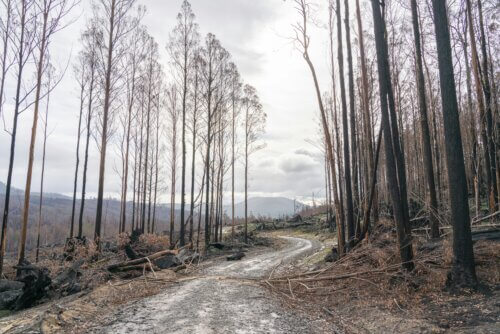
The reforms end the Regional Forest Agreement exemption from 1 July 2027. From that date, any ongoing or new native forest logging must comply with the assessment and approval requirements of the laws, like any other project. These changes are a massive win for communities who have been fighting for forests for decades (more on that here) – but 18 months is a long time in the life of a forest. Without interim safeguards, significant old growth and critical habitat could still be lost before the new rules take effect.
The continuous use exemption has also be tightened. Changes that commenced on 2 December 2025 mean that land clearing of vegetation over 15 years old – and clearing in Great Barrier Reef catchments – must now be referred for assessment and approval.
The Government has also indicated that enforcing the laws on agricultural clearing will be a priority for the new National EPA.
A closer look
First Nations rights
Read the detail:
What's in the old EPBC Act?
The old laws established the Indigenous Advisory Committee (IAC), appointed by the Minister to provide broad advice on the operation of the Act.
However, they did not require the free, prior and informed consent of Traditional Owners for projects on their Country. This meant major developments could be approved without proper consultation, consent or respect for cultural values and rights.
What's in the new laws?
The reforms expand the functions of the Indigenous Advisory Committee (IAC). The IAC will provide specific advice and information to the Minister and NEPA. The reforms mean that cultural knowledge will be incorporated into threatened species and ecological community listing processes.
However, free, prior and informed consent has not been integrated into the operation of the Act.
The Government has committed to a First Nations Engagement Standard and a Community Participation Standard. The details of these standards, and how they apply, will be critical to ensuring that respect for traditional ecological and cultural knowledge is genuinely embedded in the laws. Detail on these standards is expected in 2026.
A closer look
National leadership
Read the detail:
What's in the old EPBC Act?
The laws gave responsibility and power to the federal Environment Minister to protect nationally significant environmental matters, including threatened species, ecosystems and water resources. Importantly, state and territory governments were not able to approve actions captured by the “water trigger” – unconventional gas and large coal mining developments that could significantly affect a water resource. This safeguard was essential because water resources cross jurisdictions, and state and territory governments invest in and receive royalties from mining and gas projects, creating clear conflicts of interest in approval decisions.
In other areas of the law, state and federal systems often overlapped, conflicted or left dangerous gaps. Accredited agreements between the Commonwealth and the states – such as NOPSEMA arrangements – were not held to consistent standards and often failed to protect nature. The result was a patchwork of weak and inconsistent protections that left nature exposed.
What's in the new laws?
Overall, the reforms give the Environment Minister greater power to delegate responsibility for national matters to states and territories – a shift that could expose decisions to political pressure and weaker protections.
Specifically, the reforms make it easier for the Minister to delegate project assessment and approvals to the states through accredited arrangements. One notable exception to this is that the Environment Minister has retained responsibility for “water trigger” decisions, thanks to amendments secured by the Greens in negotiations.
The amendments also create power for the Environment Minister to switch off important safeguards for offshore gas and petroleum projects assessed by NOPSEMA (the National Offshore Petroleum Safety and Environmental Management Authority). This could have a significant impact on requirements for consultation with First Nations communities
A closer look
Threatened species
Read the detail:
What's in the old EPBC Act?
The EPBC Act set out the process for listing species and ecological communities as threatened (vulnerable, endangered or critically endangered), and outlined when and how to develop Conservation Advice and Recovery Plans to guide conservation planning.
Listed threatened species were treated as “matters of national environmental significance”, meaning the Environment Minister had to approve actions that could have a significant impact on the species or their critical habitat.
Project approval decisions could not be inconsistent with Recovery Plans and had to take Conservation Advice into account.
However, there was no system for genuine “no-go” zones. Loopholes such as Regional Forest Agreements – alongside consistent failures to apply and enforce the Act – meant destructive projects were routinely approved or never assessed at all. These projects often killed threatened species or destroyed their habitat, pushing nature closer to extinction.
While offsets were not included in the EPBC Act itself, an offsets policy allowed “biodiversity offsets” to be used as approval conditions. This meant a development could damage habitat if it paid to protect or restore habitat elsewhere.
The Act was widely criticised for its over-reliance on biodiversity offsets, which had become a default tool rather than a genuine last resort.
What's in the new laws?
The new laws create a new offsets scheme and introduce “payment in lieu” offsets. This would allow projects to be approved even when genuine offsets are not available. Instead of restoring or protecting equivalent habitat, companies could pay “restoration contributions” into an offsets fund. In NSW, a similar fund has been criticised for collecting money that cannot be spent because no suitable replacement habitat exists. Without strong safeguards, this could function as a pay-to-destroy scheme.
The reforms also give the Minister the power to declare species or ecological communities that cannot be offset. However, these non-offsetable matters have not yet been identified.
There has been a draft standard released for Offsets.
The amendments give the Minister a new power to make “protection statements,” which would become the main documents for conserving threatened species and ecological communities. These statements can be made or changed through a less rigorous process than existing conservation documents and do not require advice from the Minister’s Scientific Committee, which may lead to less reliable information. The reforms also allow recovery plans to be made for only part of a species or ecological community.
A closer look
Threatened species
Read the detail:
What's in the old EPBC Act?
Communities found it difficult to access information about what was happening in their environment, understand how decisions were made, or raise concerns when something went wrong. The law gave communities limited rights to participate and very little power to hold decision-makers to account. It was frequently criticised for giving broad discretion to the Environment Minister, leading to subjective, politicised and unpredictable decisions. Projects that caused significant harm to matters of national environmental significance were routinely approved, and there were only limited grounds to challenge those decisions.
What's in the new laws?
In a positive step, the laws will now be reviewed every five years, improving accountability and public oversight. However, the reform package also creates several new powers and pathways that increase Ministerial discretion and weaken transparency, including:
- Actions do not need to clearly meet national environmental standards. Instead, they can be approved if “the Minister is satisfied” they are consistent – a concern raised in the Samuel Review.
- The Minister or the CEO of the National EPA (NEPA) can issue “rulings” on how the Act should be interpreted.
- A new streamlined assessment pathway: could allow some projects to move ahead with reduced scrutiny and limited public consultation. Coal and gas projects are excluded from this pathway, but large-scale land clearing and exploration for gas and minerals are not.
- A new national interest approval mechanism: The reforms introduce a power for the Minister to approve projects they consider to be in the national interest, even if the project does not meet EPBC Act requirements.
Continue reading...



Make a difference
The challenges we face are vast. The time to push for large-scale system change is now.
Our financials
We have a long-standing commitment to sound fiscal management, accountability and transparency.
We encourage you to investigate before you donate.
Join us
The law is a powerful tool to disrupt the status quo and make governments and corporations accountable.
Join us and let's build a radically better world.