LEGAL EXPLAINER
The Murray Darling Basin Plan
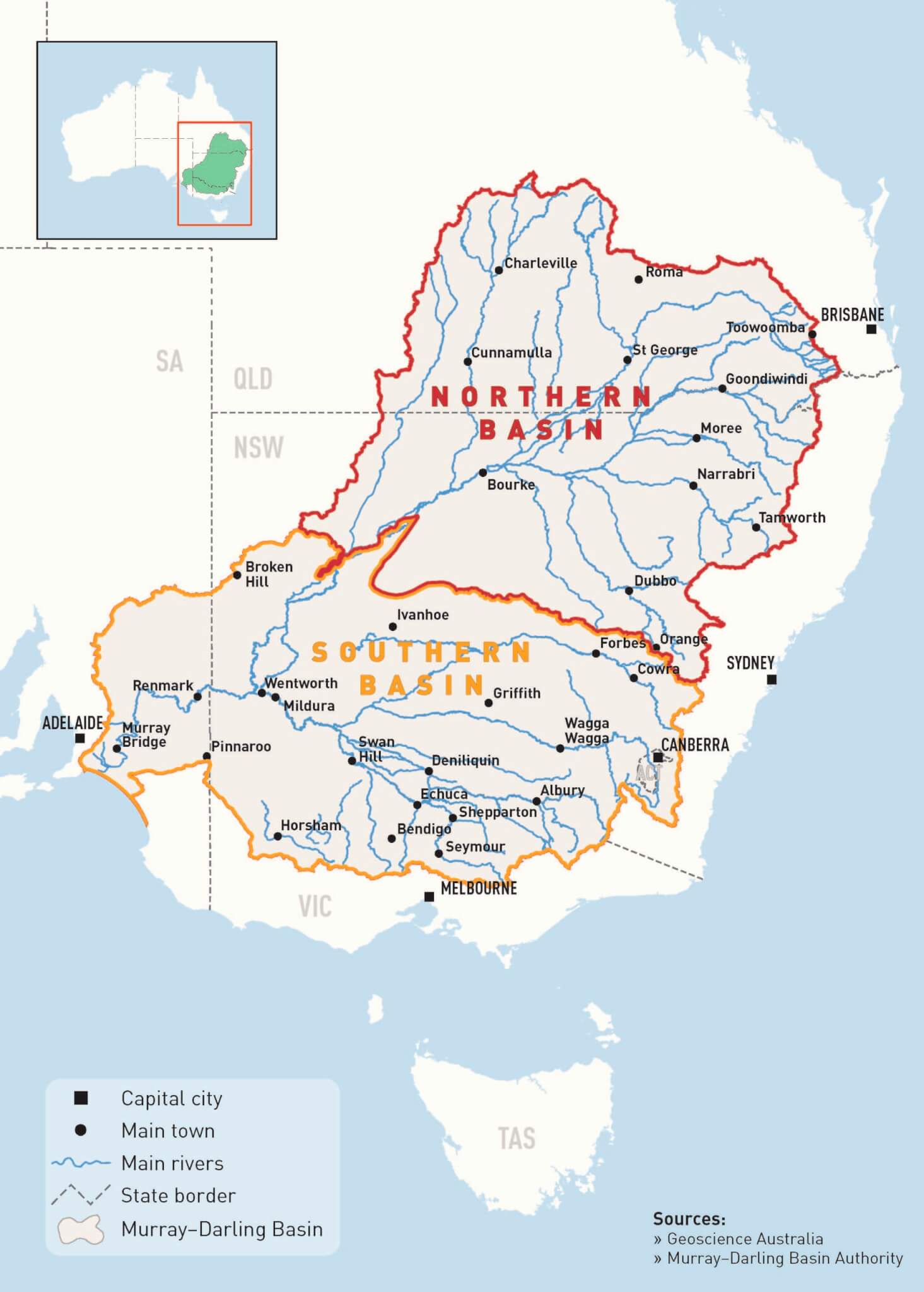
AUSTRALIA'S BIGGEST RIVER SYSTEM
More than two million people live in the Basin and it’s the lifeblood of regional communities.
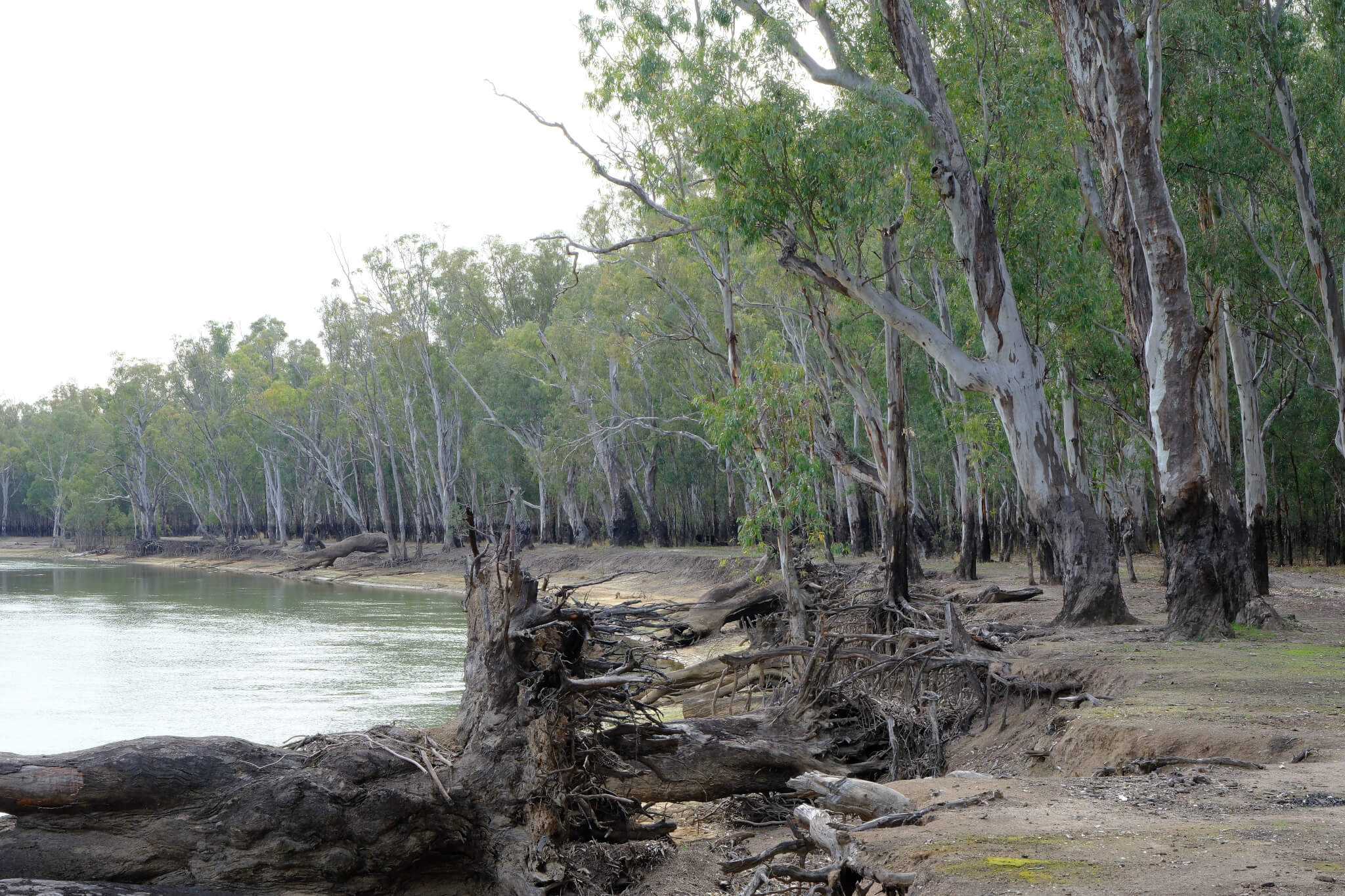
It’s home to globally important wetlands, incredible wildlife like the Murray cod and towering river red gum forests.
Here, water really is life.
It’s a fact that First Nations have understood for thousands of generations, keeping this ecosystem in balance. But today, the Murray-Darling is one of the most vulnerable river systems on the planet.
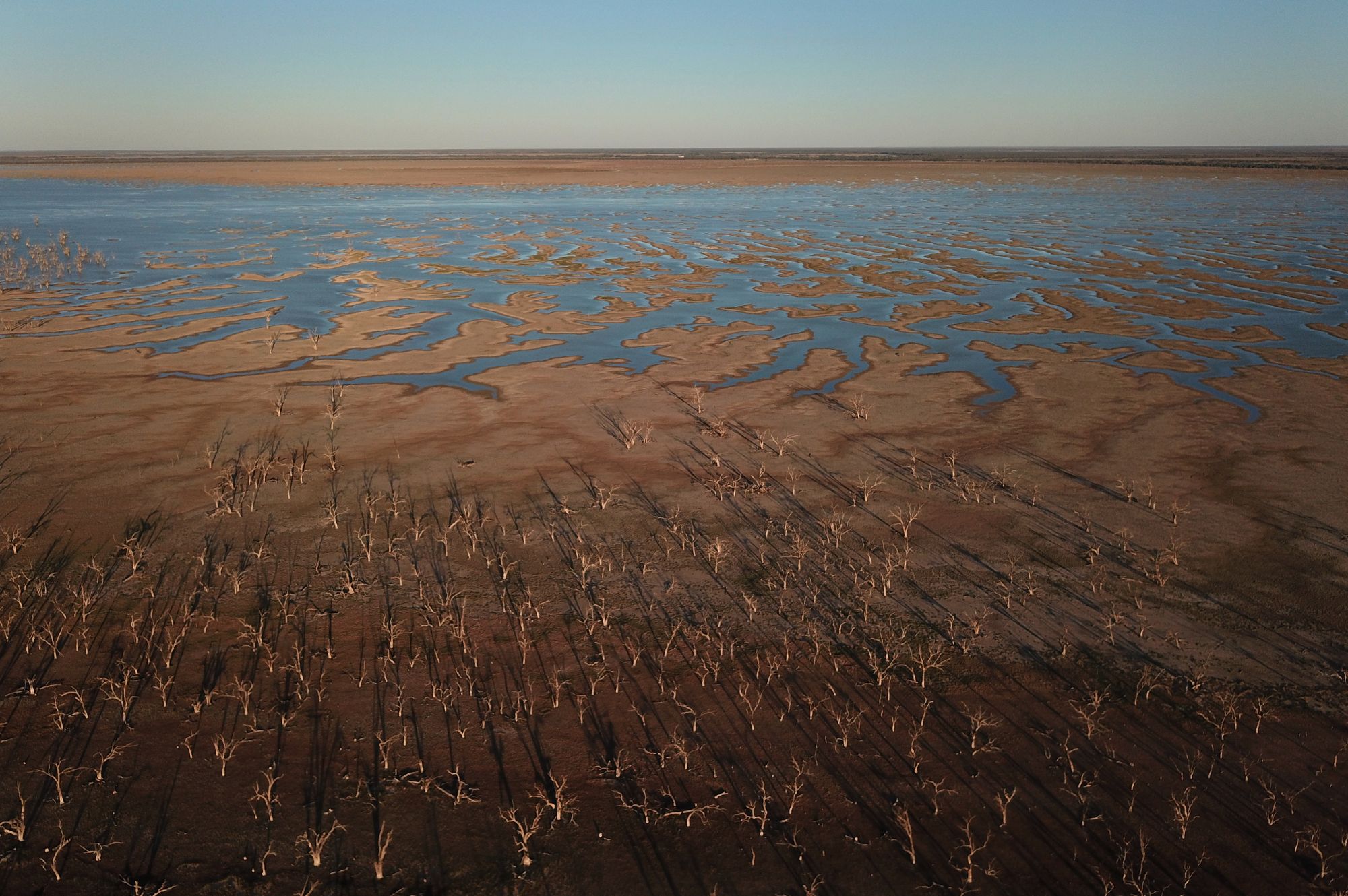
After decades of mismanagement, it’s been pushed to the brink of collapse. Too much water is being taken from the river for big irrigation and industry. And in a hotter, drier climate, the river is being squeezed even tighter.
WHY THE MURRAY MATTERS
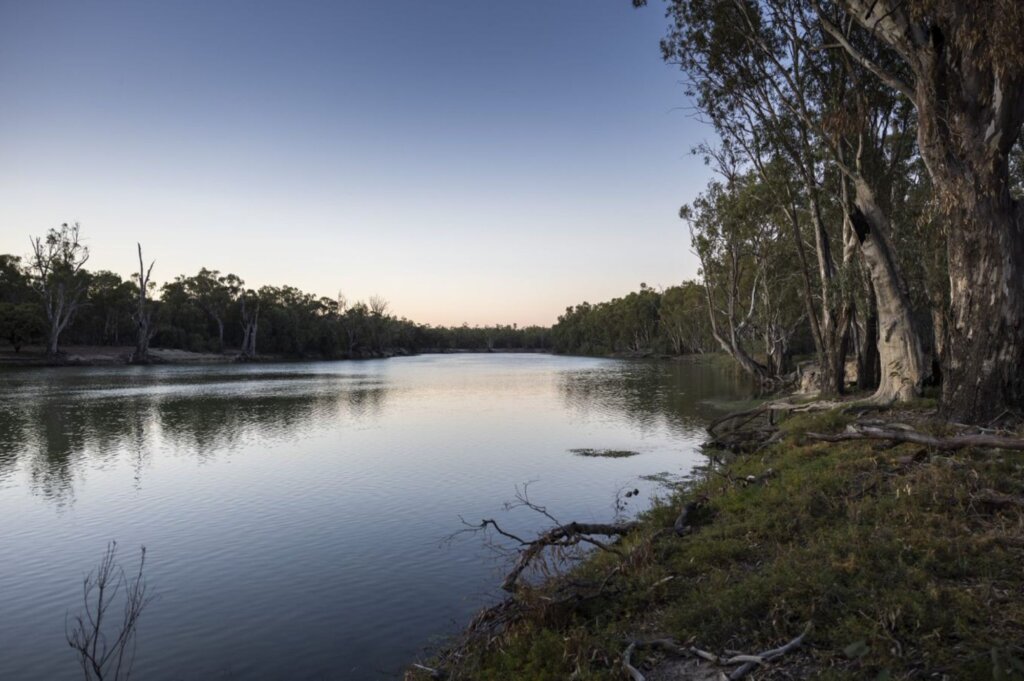
Water is life
The Murray-Darling Basin is full of culturally significant sites and wetlands, critical habitat for animals, and is the lifeblood of regional communities.
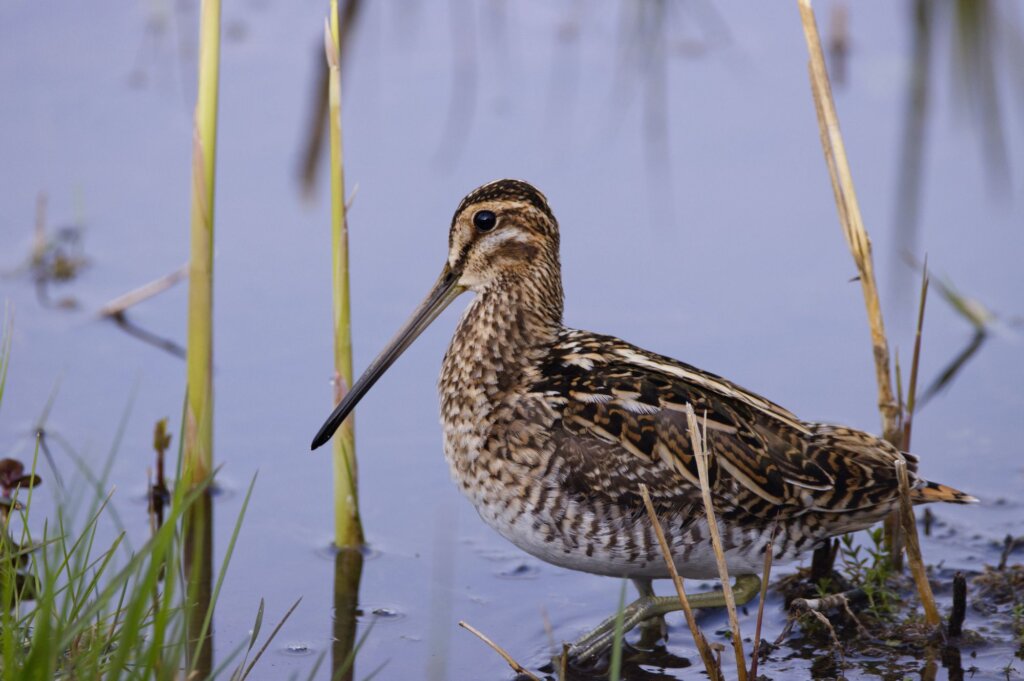
Abundant wildlife
More than 50 native fish, 85 mammal species, 367 native and migratory bird species, frogs, lizards, turtles, insects and many other animals, trees and plants call the Murray home.
Internationally significant
Sixteen Murray River wetlands are internationally recognised for their contribution to global biodiversity.

WHAT IS THE BASIN PLAN
+ why is it broken?
The Basin Plan is a national framework that attempts to share water in the Murray-Darling Basin and make sure there is enough for rivers and wetlands.
It was created in 2012 in the wake of the Millennium Drought. For decades, there had been warning signs that the river was in trouble. The drought brought things to a crisis point.
Without enough rainfall and with too much water pumped out of the river system, some sections of the Murray Darling river system became as acidic as battery acid. Thousands of ancient river red gums died and whole towns ran out of water.
It was enough to galvanise the federal government, and all five Basin state and territory governments to agree to a new national plan.
Under the Water Act 2007, the Basin Plan sets legal limits on how much water can be taken from the Basin each year, for uses like irrigation and town water. Importantly, it includes a target to recover 3,200 billion litres of water for the environment. This water is vital for waterbirds to breed, to make sure wetlands get inundated at the right time and so the river can flow all the way from source to sea.
HELPFUL RESOURCES
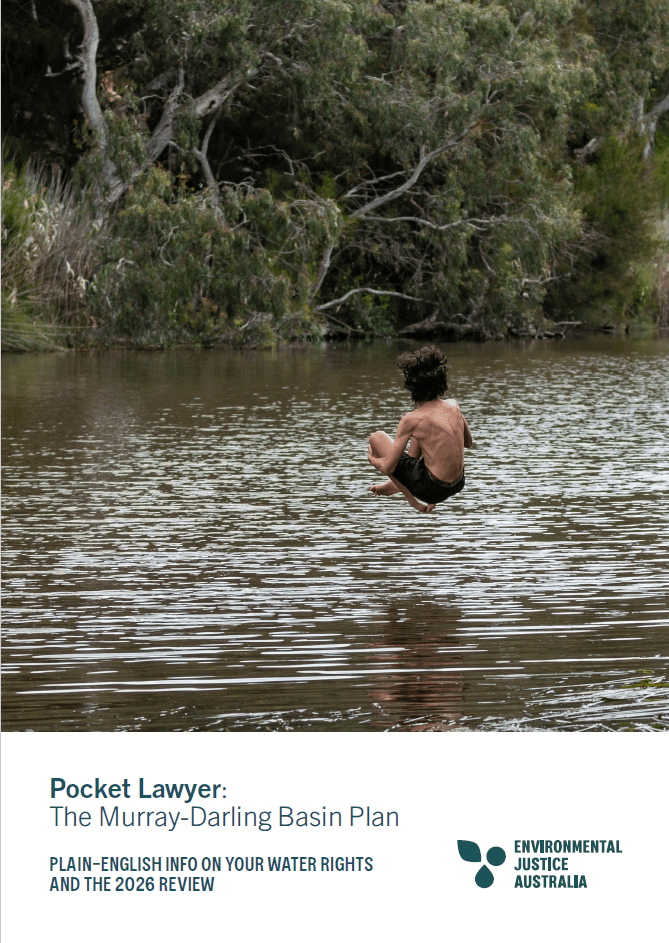
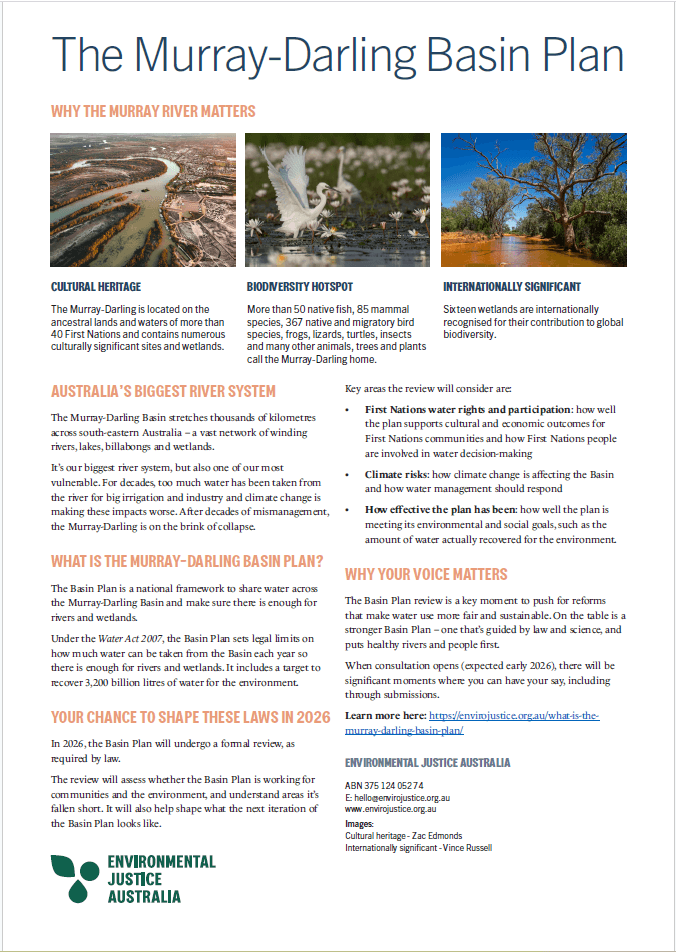
Click the links below to download plain-English information on your water rights and the 2026 review.
WHERE DID THE BASIN PLAN GO WRONG?
Water recovery, climate impacts and First Nations justice.
- Water recovery: We still haven’t recovered the amount of water promised for the environment - and this target was already far below what science said was needed to give the river a good chance of survival
- Climate impacts: The Basin Plan doesn’t take climate impacts into account, despite this being one of the biggest threats to the river system. In the last 20 years alone, inflows have almost halved.
- First Nations justice: The Basin Plan gave no rights to First Nations to own, manage or control water. While funding has been promised to help First Nations buy water rights, the vast majority has never been delivered
YOUR CHANCE TO SHAPE THESE LAWS
In 2026, the Basin Plan will undergo a formal review, as required by law.
The review will assess whether the Basin Plan is working for communities and the environment, and understand where it’s fallen short. It will also help shape what the next iteration of the Basin Plan looks like.
The review must consider:
- First Nations water rights and participation: how well the plan supports cultural and economic outcomes for First Nations communities and how First Nations people are involved in water decision-making
- How effective the plan has been: how well the plan is meeting its environmental and social goals
- The best available science: this includes things like groundwater–surface water connections, environmental outcomes, and the performance of water infrastructure
- Climate risks: how climate change is affecting the Basin and how water management should respond
TIMELINE OF REVIEW

HAVE YOUR SAY
YOUR VOICE MATTERS
The Basin Plan review is a key moment to push for reforms that make water use more fair and sustainable. On the table is a stronger Basin Plan - one that’s guided by law and science, and puts healthy rivers and people first.
When consultation opens, there will be significant moments where you can have your say, including through submissions.