
Faces of Environmental Justice Australia
Meet Inshani
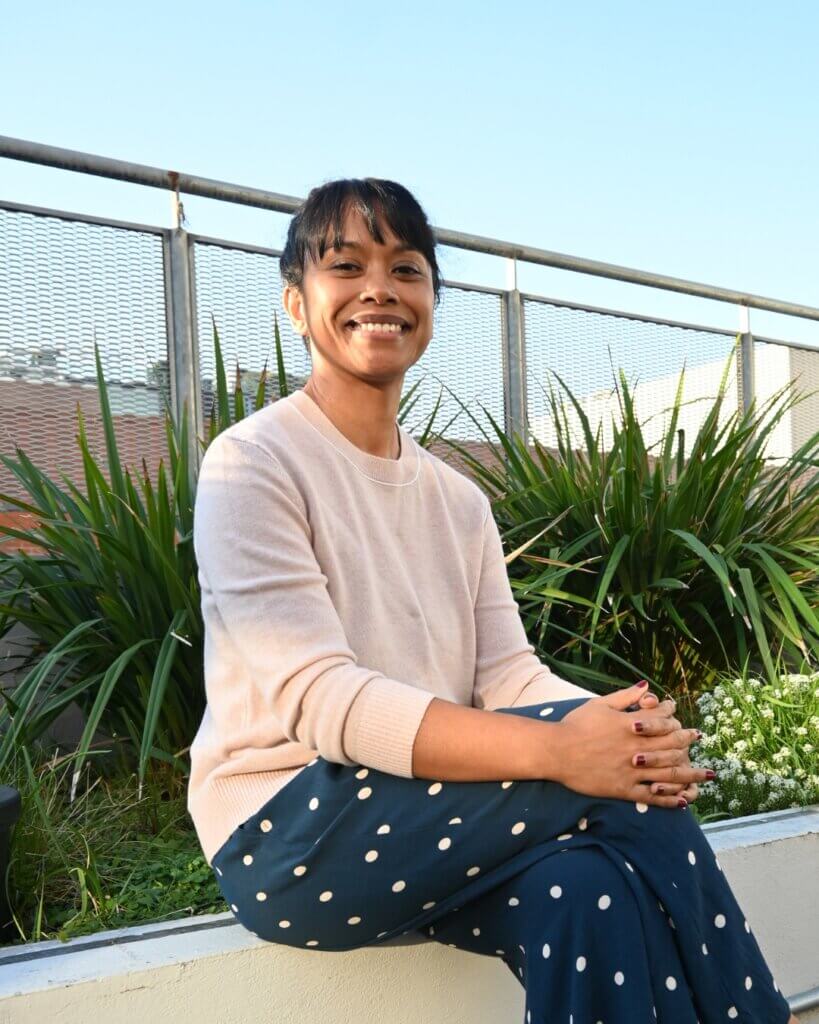
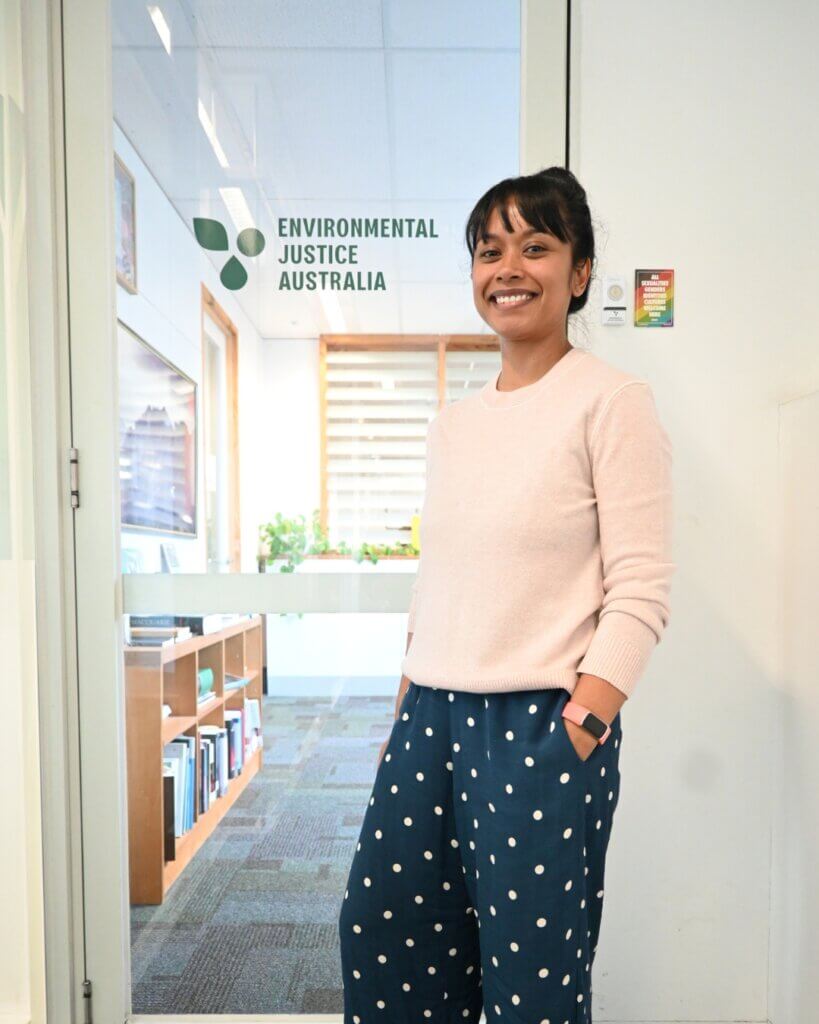
Inshani Ward is no stranger to Environmental Justice Australia. She first joined the organisation as a volunteer while completing her law degree, later served on the Board from 2023, and in 2025 returned in a new role as Special Counsel.
An experienced litigator, Inshani brings expertise across administrative law and commercial litigation, as well as time spent as a Senior Legal Adviser for the Victorian Government. Alongside her professional work, she has a strong commitment to access to justice, having advocated for clients before the Mental Health Tribunal and advised self-represented litigants through Justice Connect.
Now, Inshani works across EJA’s teams, providing specialist litigation support on some of our most complex and important cases. We sat down with her to talk about her journey into environmental law, what drives her in the courtroom, and what keeps her motivated in the fight for justice.
You’ve recently stepped into the role of Special Counsel at EJA, but your connection to the organisation goes back much further. Can you tell us about your journey?
I first volunteered with EJA (back when it was still EDO) while finishing my law degree. I was really interested in public interest law and environmental law, and volunteering here felt like the perfect way to bring those interests together. It was a small, intimate team at that time, but I loved the experience and kept in touch with the organisation.
Years later, I joined EJA’s Board in 2023 while working in government. That gave me a chance to contribute in a different way, but I always found myself wishing I could be more directly involved in the legal work. When the Special Counsel role came up, it felt like the right opportunity to come full circle and return to EJA.
“But the more I learned, the more I realised law could be a powerful way to have an impact, not just for animals, but for communities and the environment as well.”
— INSHANI WARD, SPECIAL COUNSEL, Environmental Justice Australia
You originally studied science, what made you decide to become a lawyer in the end?
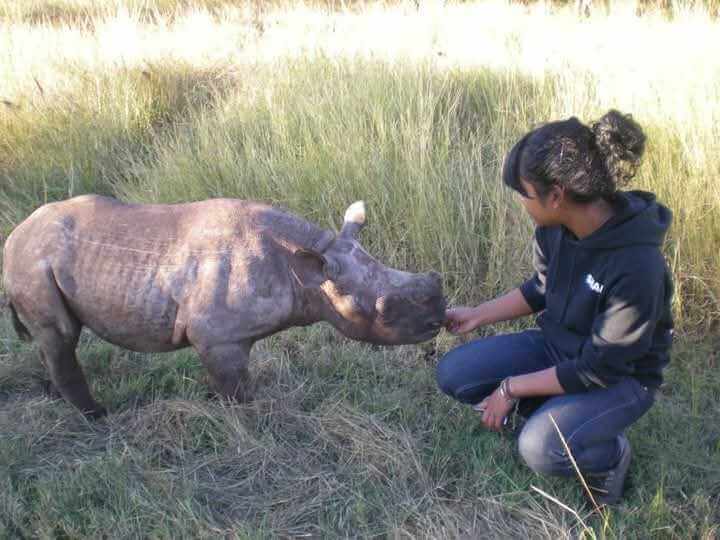
I started out with a degree in animal and veterinary bioscience, and during that time I became really interested in animal welfare issues and policy. That made me think more about how laws shape outcomes, and I eventually decided to pivot into law.
It was not something I planned from the beginning. A lot of my friends were going into law straight away, and I always thought I would stick to science. But the more I learned, the more I realised law could be a powerful way to have an impact, not just for animals, but for communities and the environment as well. Once I started, it stuck, and I have never looked back.
Before taking on this role at EJA, you worked in both government and private practice. How does your current work compare?
In government I did generalist legal work, advising a department across a range of issues. Then I moved into private practice where I focused on commercial litigation and administrative law. Both gave me strong and varied legal experience, but I wanted to move into something more aligned with my values and interests.
What excites me most about being back at EJA is that I now get to focus on the kinds of cases that drew me to law in the first place. It feels incredibly meaningful to be applying my litigation skills to matters that protect communities and the environment.
You mentioned earlier that access to justice is about giving a voice to underrepresented people. What do you think shaped your awareness of this problem?
I have reflected on that quite a bit. I had a very comfortable upbringing here in Australia, but my parents migrated from Sri Lanka in the 1980s, so I grew up with an awareness of what it means to start fresh and build community from the ground up. We always had people around, lots of connection, and my parents are very generous people. I think I absorbed the idea that if you have the means to give back, why wouldn’t you?
That outlook has stayed with me. It is probably why I was drawn to public interest law and why volunteering and pro bono work have always resonated with me. Even when there is no monetary reward, the work is valuable because you are contributing to something bigger and helping people who might not otherwise get a fair chance.
You have also done pro bono work with the Mental Health Legal Centre and Justice Connect. How has that shaped your approach to justice?
Those experiences really reinforced for me just how critical access to justice is. Advocating for people in the Mental Health Tribunal, or advising self-represented litigants, showed me how complex and overwhelming the legal system can be when you are on your own.
It taught me the importance of listening closely to clients’ concerns and looking for the ways the law can help alleviate them. Sometimes it is just guiding someone to take the first step or pointing them in the right direction, and that can make a huge difference. Without that kind of support, people really struggle, and it could be anyone in that position. It could be your neighbour, your friends, your family. That is why it feels so important to use the law to give a voice to people and communities who are underrepresented.
Special Counsel sounds like a big title! What does your role involve?
The focus of my role is on litigation. That means thinking strategically about legal arguments, assessing the prospects of cases, drafting documents, working with barristers and clients, and running matters in court.
Other EJA lawyers also do policy and law reform work, which I might have input into, but my day-to-day is really about matters that are in, or heading to, court. It is what I have specialised in throughout my career, and honestly, it is what I love. Some people might find litigation stressful, but for me it is energising.
Administrative law is one of the tools EJA uses to push for accountability. What potential do you see in it for communities and the environment?
It can definitely feel like an uphill battle, but administrative law gives us avenues to scrutinise government decisions that affect people and places. By bringing these matters to court, communities get the chance to highlight their concerns and shine a spotlight on impacts that might otherwise be overlooked.
“Even when cases are not successful, they can send a powerful message to decision-makers, and over time, that pressure can help push for stronger, more considered laws and reforms.”
— inshani ward, special counsel, Environmental Justice Australia
You were on EJA’s Board before stepping into this role. Has that shaped how you approach your work now?
Absolutely. Being on the Board gave me an insight into how a not-for-profit runs, from risk and finances to supporter engagement and long-term strategy. It made me more conscious of the bigger picture and the importance of stability and longevity for the organisation.
Now, when I am working on matters or brainstorming with colleagues, I think I bring that governance perspective into the room as well.

What motivates you day-to-day in this work?
I think it is knowing that the work EJA does really does make a difference. We are in a unique position to test environmental laws, hold governments to account, and push for better outcomes for both communities and ecosystems.
Of course, progress can feel slow, and setbacks are part of the reality. But being surrounded by such resilient, passionate people, colleagues, clients, and communities, is motivating and grounding. We are all striving for the same thing: a fairer, safer future for everyone. Celebrating the wins, big and small, also keeps that fire alive.
Read more about our game-changing work


Make a difference
The challenges we face are vast. The time to push for large-scale system change is now.