EXPLAINER
Independent Planning Commission
Thorough, independent assessment is critical to ensure projects are properly reviewed for any impacts they could have on the environment and local communities.
In New South Wales, the Independent Planning Commission (IPC) has a central role in allowing for independent and robust assessment. As its name suggests, the IPC is an independent body – meaning it does not operate under the direction or control of the NSW Planning Minister.
The IPC does not review every proposed project in NSW. However, it does review many significant projects, and in doing so, gives the community more opportunities to share their feedback and concerns on these projects.
In this guide, you’ll learn what the IPC is and how it works, the IPC assessment process, and how you can get involved in an IPC review.
While this guide is specific to the example of Engie’s Hazelwood rehabilitation, the EES process follows the same steps across all relevant projects in Victoria.
Contents
What is the Independent Planning Commission?
The Independent Planning Commission (IPC) is a NSW Government agency established under the Environmental Planning and Assessment Act 1979 (NSW) (the EP&A Act). It is an independent body that is not subject to the direction or the control of the NSW Planning Minister.
The IPC’s main function is to make decisions on projects considered State Significant Developments (SSD). The IPC as a few other important functions under the EP&A Act, including holding public hearings and providing advice at the Minister’s request.
A proposed project is considered a State Significant Development (SSD) when it is declared so by a State Environmental Planning Policy (SEPP) or by the Minister for Planning.
Proposed projects are generally considered to be an SSD if they:
- Are over a certain size
- Are in a sensitive environmental area
- Exceed a specific capital investment value
- In some cases, are on an ‘identified site’, such as Sydney Olympic Park, Barangaroo, and Taronga Zoo
Some broad examples of projects that are declared to be SSD include but are not limited to: mining; intensive livestock agriculture, waste management, electricity generating works; metal, mineral and extractive material processing; extractive industries; and water storage or treatment.
A declaration by the Planning Minister that a project is SSD cannot be made without advice from the IPC. This advice must also be made public.
Any project that is SSD requires development consent from the IPC or Minister.

Under the EP&A Act in NSW, a project will be considered by the IPC if it requires assessment under Part 4 of the Act.
State Significant Developments are initially assessed by the NSW Department of Planning, Housing and Infrastructure, and are listed on the Major Projects website. For all SSD, the Department will complete an assessment report that is then made available to the public via the Major Projects website. An SSD will then be referred to the IPC to be determined if the IPC is the appropriate ‘consent authority’ for the project.
The IPC will be the consent authority for an SSD in a few circumstances. ‘Consent authority’ simply means the body empowered to grant consent for a development.
For the IPC to become the consent authority, the SSD application must be made by or on behalf of a public authority, in addition to any of the following conditions:
- The relevant council for the development area has submitted an objection to the development
- More than 50 unique submissions in objection to the project have been received during the exhibition period; or
- The application is made by a person who has disclosed a reportable political donation in connection with the development application.
If a project is declared as State Significant Infrastructure (SSI), the IPC cannot be the consent authority. The Minister can declare a project as SSI at any time, even after the SSD assessment has begun or concluded; SSI declaration for development not already declared is at the prerogative of the Minister. The IPC itself can also recommend that a project be assessed as SSI.
Having the IPC as the consent authority for a project means that there is increased public consultation and additional opportunities for community concerns to be voiced and considered. It also means that there is increased scrutiny for the project, with another layer of assessment required by an independent body.
The main way for members of the public to ensure the IPC becomes the consent authority for a proposed project is to submit more than unique 50 objections during the initial exhibition of the project by the Department.
Importantly, the 50 submissions in objection must be ‘unique’. According to the State Significant Development Guidelines, petitions or submissions using ‘substantially the same text’, are not considered unique and will count as one objection.
IPC process after a project is referred
The process taken by the IPC from referral to decision is set out on the IPC website. Broadly, there are six steps.
What does the IPC have to consider?
The scope of what the IPC must consider is determined by the EP&A Act, the Planning SEPP and the Environmental Planning and Assessment Regulation 2021 (NSW). In summary, the IPC must consider:
- Any rules and regulations that apply to the physical land where the proposed development will occur
- The likely impacts of the proposed development, including environmental impacts on both the natural and built environments, and social and economic impacts
- The suitability of the site for the development
- The public interest, which includes the benefits of the proposed development and consideration of intergenerational equity and the principles of Ecologically Sustainable Development
- Any submission made within the appropriate time to the Department or the IPC.
Specific considerations for any consent authority in relation to a development application are set out in the EP&A Act at s 4.15 ‘Evaluation’ and the Regulations at Part 4 ‘Determination of development applications’, Division 1 ‘Determination of development applications’.
The Department’s assessment report is provided to the IPC and published on both the Department and IPC websites. The project is displayed on the IPC website as a ‘case’.
The IPC invites public submissions on the Department’s assessment report. The IPC will consider all submissions made during the Department’s exhibition period, so new submissions should avoid duplication of what is already before the Department. Submission timeframes vary and are displayed on the case page.
The period between 20 December to 10 January (inclusive) is excluded from a period of public exhibition.
The IPC may conduct a targeted consultation with selected stakeholders identified by the commission, though this step is optional.
The IPC may decide to conduct a site inspection, though this is optional and not required by legislation. The IPC will consider whether an inspection is necessary based on the circumstances.
Public hearings or meetings are optional for the IPC and are not required by law. The considerations for when to hold a public hearing or meeting are in the IPC’s Public Meeting Guidelines and Public Hearing Guidelines.
Generally, the IPC has indicated it will hold a public meeting when there have been more than 50 submissions during the Department’s exhibition stage. The IPC cannot require anyone to attend a public meeting or give evidence. However, the IPC has powers to require certain people to attend the public hearing and to give evidence.
The IPC will issue any development consent or notice of refusal and publish this with a Statement of Reasons for Decision.
If the project is considered ‘routine’ (no public meeting or hearing), a decision is expected within 32 days. If a public meeting is held, the timeline extends to occur within 50 days. If a public hearing is held, the timeline extends to within 84 days.
Between 20 December and 26 January is excluded from a period in which the IPC is expected to make a decision.
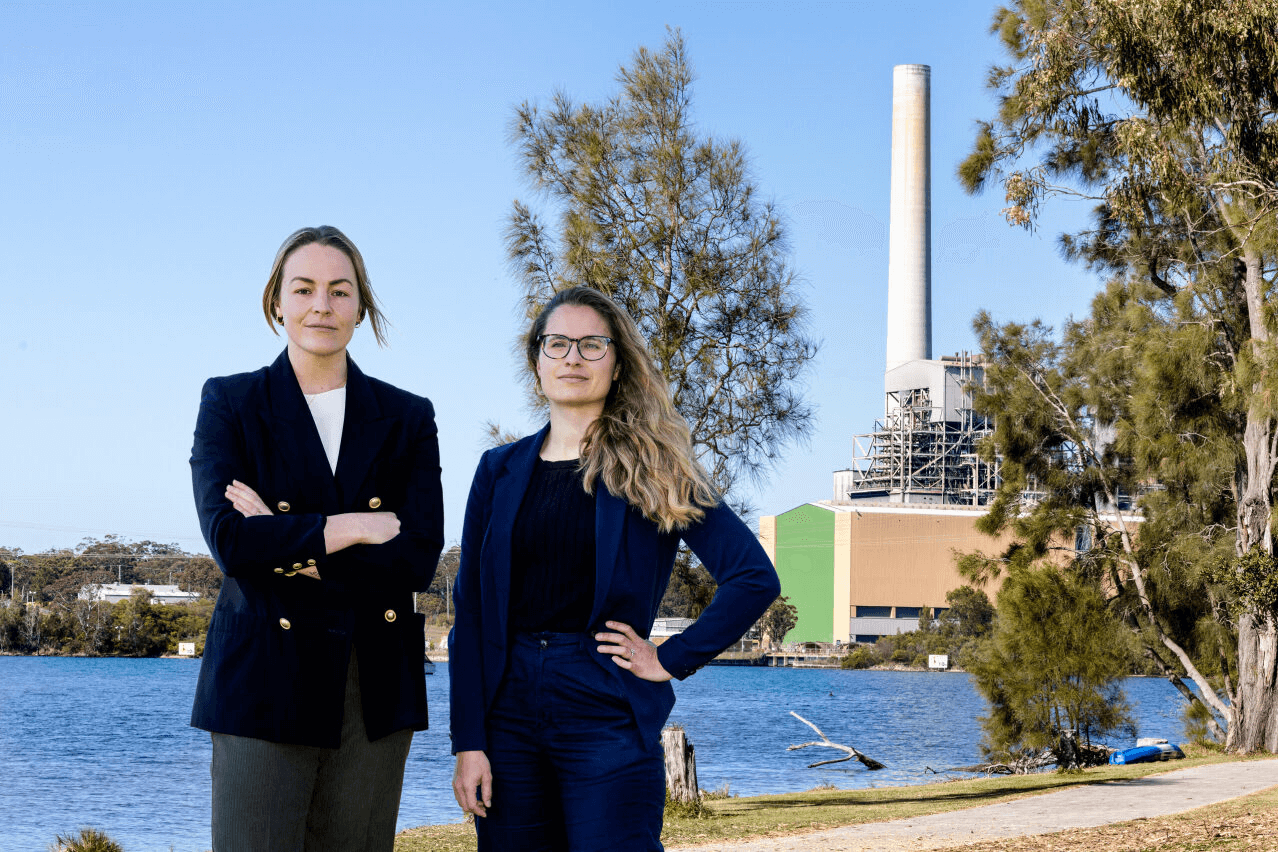
In December 2022, EJA lawyers supported the Lake Macquarie community to make submissions on Delta Electricity's proposal to continue mining coal from beneath the lake.
By the end of the public submission window, 134 objections had been made. This meant the proposal was referred to the IPC for assessment, and we are awaiting the public inquiry dates.
Getting involved in an IPC process
There are two key avenues for the community to get involved in an IPC process: you can make a submission, and/or you can participate in a public hearing.
Making a submission to the IPC
The IPC has Public Submissions Guidelines which set out the IPC’s process, what it can consider and how to make an effective submission. Submissions can be made on the website, by post or by email.
Importantly, all submissions made during the Department’s exhibition of the project will be considered by the IPC. Therefore, the most impactful submissions at this stage of assessment should not simply repeat earlier points, but rather consider the Department’s assessment report, and any responses to previous submissions.
Any individual person or group can make a submission. You don’t have to be an expert to make a submission. What is most important is that you engage with the assessment report in as much detail as possible, and ensure your points are relevant to the project.
Public hearings and public meetings
Public Hearings
Under the EP&A Act, Public Hearings are only held if requested by the Minister. The administrative requirements for a public hearing are set out in the EP&A Act at Schedule 2, Part 2 and summarised in the IPC’s Public Hearing Guidelines. If a Public Hearing is held, it is very unlikely there a Public Meeting will also take place.
Importantly – if a public hearing occurs, there will be no merits review available for a subsequent decision made in relation to a development (See Appeals below).
Public Meetings
Public meetings are optional for the IPC and are not mandated by legislation when considering an SSD. What the IPC considers when deciding whether to hold a public meeting is summarised in the IPC’s Public Meeting Guidelines, which note that when more than 50 submissions are received during a project’s initial exhibition, the IPC will usually hold a public meeting.
If you wish to speak at a public meeting, you must follow the IPC’s process. Information on attending and registration forms are available on the IPC website under Attend a public hearing or meeting, and will also be available on the project’s case page.
Following a public meeting, the IPC will accept further written submission for at least 7 days.
Attending a public event
If you’re preparing to attend a public hearing or meeting, check out the following resources:
Appeals from an IPC determination
The IPC is not empowered to hear appeals on its own decisions. However, decisions made by the IPC (except in the instance of a public hearing) are open to be reviewed on their merits by the Court.
In order to have standing to request the Court to review a decision, you must have objected during the consultation period, and the consent must have been granted. An application for review must be lodged within 28 days of the ‘notification’ of the decision. To safeguard your rights, it is best to calculate this time based on the date the decision was published on the IPC website.
Additionally, decisions are also subject to judicial review. You should seek independent legal advice if you are considering appealing an IPC determination.