
Environment law reform
Will new Standards actually protect nature?
National Environmental Standards have now been released by the Albanese Government. See how environmental lawyers assess them in our independent scorecard.
Australia’s new environment laws promised strong National Environmental Standards to help protect nature. Now we’re about to see whether they deliver.
The fine print really matters. Weak rules, broad discretion and loopholes could undermine the stronger protections these reforms were meant to deliver.
With the Standards expected in Parliament in coming days, we’ve set five tests for success.

The Standard for Matters of National Environmental Significance (MNES) is one of the most important parts of Australia’s new environment laws.
It will help set the rules for decisions affecting nationally protected nature – including threatened species and ecological communities, World Heritage areas, internationally important wetlands and migratory species.
Strong National Environmental Standards were a central recommendation of the independent Samuel Review and a key part of the Government’s environment law reforms.
But a Standard is only as strong as the rules inside it.
Previous drafts raised serious concerns about whether the rules would result in good decisions and deliver stronger protection for nature.
To be effective, the MNES Standard needs to set clear rules for protecting nature, require decision-makers to follow them, and deliver real results for threatened wildlife and the places they call home.
Before the final Standard lands, EJA lawyers have set out five clear tests for what it needs to deliver.
HOW DO THE STANDARDS STACK UP?
Will the new Standard actually protect nature?
Here's what EJA lawyers are looking for:
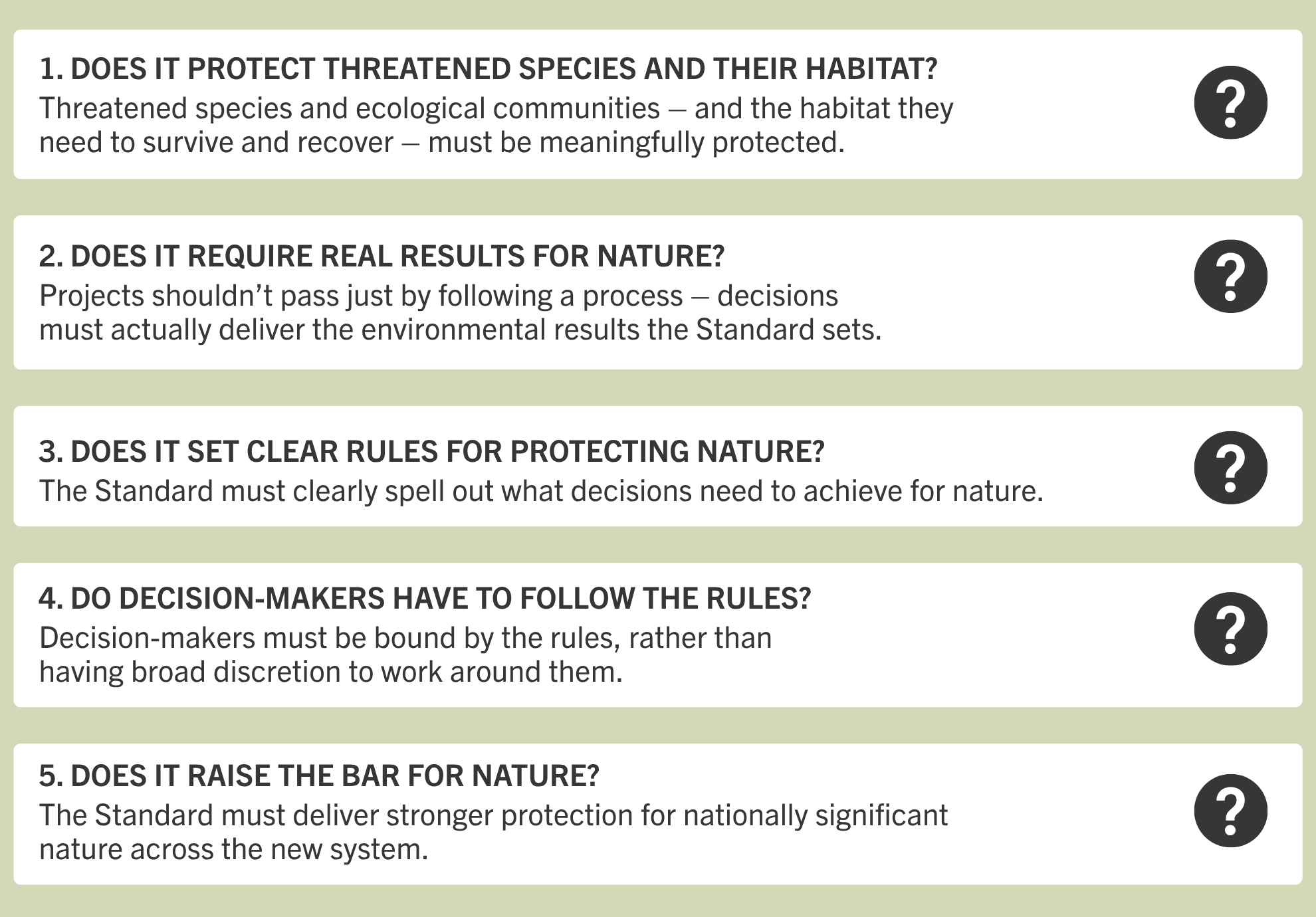
Scroll down for the detail on each of these tests.
Email Minister Watt and ask him to set high standards for nature
The Albanese Government is expected to table the MNES Standard in Parliament any day now.
Send a quick email to show our elected representatives that are watching closely and expect a high standard.
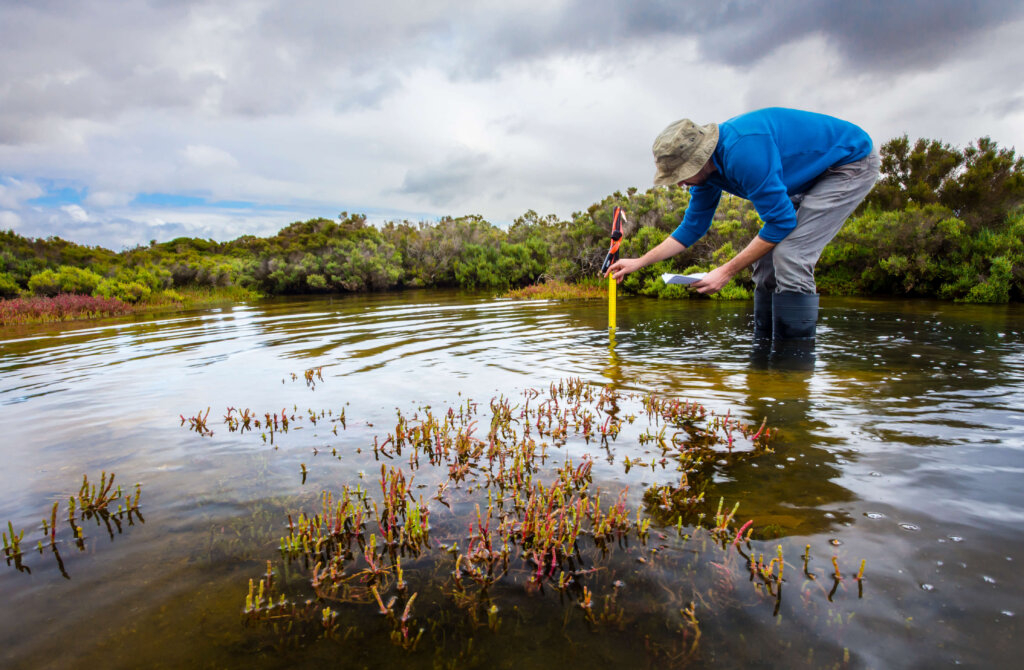
TEST 1: A CLOSER LOOK
Will it meaningfully protect threatened species and their habitat?
SUCCESS LOOKS LIKE: Threatened species and ecological communities – and the habitat they need to survive and recover – receive meaningful protection.
Why this matters
Protecting threatened wildlife means protecting the places they need to live, breed, feed and recover.
The draft Standard only gives specific protection to habitat that is “irreplaceable and necessary for the species to remain viable in the wild”.
That's an extremely low bar.
National environment laws should protect important habitat before a species reaches the point where losing it could threaten its very survival. And they should protect the species themselves, not just their habitat.
The goal should be to help threatened species survive and recover, rather than only guarding against their final decline.
What to look for in the fine print
The current draft Standard gives threatened species, ecological communities and migratory species narrower protection than other Matters of National Environmental Significance.
These species and ecosystem communities need meaningful protection under the MNES Standard – broader than application only to habitat that is “irreplaceable and necessary for the species to remain viable in the wild”.
To pass: The final Standard should provide broad, meaningful protection for threatened species, ecological communities and migratory species – and their habitat.
The key test: Does the final Standard protect threatened wildlife and ecosystems and the habitat they need to survive and recover?
TEST 2: A CLOSER LOOK
Does it require real results for nature?
SUCCESS LOOKS LIKE: Following a process isn't enough – decisions must deliver the environmental results the Standard sets
Why this matters
The draft Standard contains Outcomes and Objectives, which describe what environmental assessment decisions are meant to achieve for nature. These are required by the law and were recommended by the Samuel Review to make sure environmental standards are strong and actually protect nature.
It also includes Principles, which guide how decisions are made. They currently read more like general intentions, with no clear link to whether nature is in fact protected.
But the draft contains a major loophole: meeting the Principles can count as meeting the Outcomes and Objectives.
Think of it as the difference between following the steps and achieving the result.
A project could follow the steps and tick the right boxes around environmental impacts to koala habitat, for example, while still destroying important habitat.
It also means the Commonwealth could make agreements with state governments to approve projects without actually meeting the Outcomes and Objectives for nature.
A strong Standard should require the decision to meet the environmental outcome too.
The important question should ultimately be whether a decision protects the species and the habitat it needs to survive and recover – not simply whether the right process was followed.
What to look for in the fine print
The key issue is the “deeming” provision in section 7 of the draft.
Under this provision, satisfying the Principles is treated as satisfying the Standard's Outcomes and Objectives. This risks rendering the Outcomes and Objectives ineffective.
To pass: The final Standard should remove these deeming provisions and require decisions to meet the Outcomes and Objectives themselves.
The key test: Has the Albanese Government closed this loophole and made the environmental Outcomes and Objectives clear and enforceable?
TEST 3: A CLOSER LOOK
Does it set clear rules for protecting nature?
SUCCESS LOOKS LIKE: The Standard sets clear and specific expectations for what environmental assessment decisions need to deliver for nature.
Why this matters
Rules only work if it's clear what they require.
The Standard is supposed to spell out what decisions need to achieve for threatened wildlife, habitat and other nationally protected nature.
The Outcomes and Objectives should give decision-makers, developers and the public a clear picture of the environmental result expected.
If the Outcomes and Objectives are vague or aspirational, different decision-makers can interpret them differently. It becomes harder to tell whether the Standard has actually been met, and difficult to hold anyone accountable when nature loses out.
What to look for in the fine print
The Samuel Review recommended legally enforceable, outcomes-based Standards with clear rules and environmental thresholds.
The question is whether the final Outcomes and Objectives provide a meaningful benchmark against which a decision can actually be assessed – rather than broad statements of intent.
To pass: The final Standard needs clear, specific Outcomes and Objectives capable of guiding decisions and providing a meaningful basis for accountability.
The key test: Are the Outcomes and Objectives clear and specific enough to make a real difference to decisions?
TEST 4: A CLOSER LOOK
Do decision makers have to follow the rules?
SUCCESS LOOKS LIKE: Decision-makers must follow the clear environmental rules, not just consider them.
Why this matters
Small words can make a big difference in law.
Telling a decision-maker they must comply with a rule is very different from telling them they only need to “have regard to” it.
Likewise, if the decision-maker only needs to be “satisfied with” something, they have much more room for discretion than a requirement to actually achieve a specified environmental result.
If the Standard leaves decision-makers broad discretion, it won't provide the strong national bottom line these reforms were meant to deliver.
The Standards were meant to set strong national rules for environmental decisions. They need to clearly limit what decision-makers can approve, rather than leaving them with broad discretion.
What to look for in the fine print
Look closely at the legal verbs used throughout the final Standard and the EPBC framework:
- What must the decision-maker do?
- What do they merely need to consider or have regard to?
- Is there an objective test that must be met, or does the decision-maker only need to feel “satisfied” that it is met?
- Does the Standard require the decision maker to comply with the Standard, or just guide the process used to reach it?
- Are there exceptions or alternative pathways that allow the requirements to be avoided?
To pass: The final framework needs clear requirements that genuinely constrain decisions and limit the ability to work around the Standard.
The key test: Does the Standard contain rules decision-makers actually have to follow?
TEST 5: A CLOSER LOOK
Does it actually make our nature laws stronger, and raise the bar for nature?
SUCCESS LOOKS LIKE: The Standard delivers stronger protection for nature than the system we have now.
Why this matters
National Environmental Standards were a central promise of Australia's environment law reforms.
The MNES Standard should set the benchmark for how nationally protected nature is treated across the new system, including where other governments or regulators operate under accredited arrangements.
If the final rules remain vague, full of loopholes or easy to work around, they could lock in decades of destruction.
What to look for in the fine print
Look at the Standard as a whole:
- Does it require better environmental outcomes than the existing system?
- Does it set a clear national floor that other decision-making systems must meet?
- Are its requirements clear enough to be consistently applied?
- Do exemptions, deeming provisions or discretionary language undermine those requirements?
- Will it actually change what can be approved and on what conditions?
To pass: The final Standard should make a practical difference – creating a clear, enforceable national benchmark that leads to stronger protection for nationally significant nature.
The key test: Will these new rules actually lead to better decisions and stronger protection for nature?
Email Minister Watt and ask him to set high standards for nature
Australia's new National Environmental Standards play a central role setting the rules for decisions affecting threatened wildlife, forests, wetlands and other nationally protected places.
After decades of nature destruction, these new laws need to raise the bar.
The Albanese Government is expected to table the MNES Standard in Parliament any day now.
Send a quick email to show our elected representatives you're are watching closely and expect a high standard.

Continue reading...



Make a difference
The challenges we face are vast. The time to push for large-scale system change is now.
Our financials
We have a long-standing commitment to sound fiscal management, accountability and transparency.
We encourage you to investigate before you donate.
Join us
The law is a powerful tool to disrupt the status quo and make governments and corporations accountable.
Join us and let's build a radically better world.