Event
Celebrating Treaty in Victoria
Victoria has marked a new beginning. With state-wide Treaty now enshrined in law, community came together in dance, song and story to honour what this moment makes possible.
Across celebrations earlier this month, the message was clear: truth-telling and self-determination are the foundation for a new relationship, and for justice for First Nations peoples.
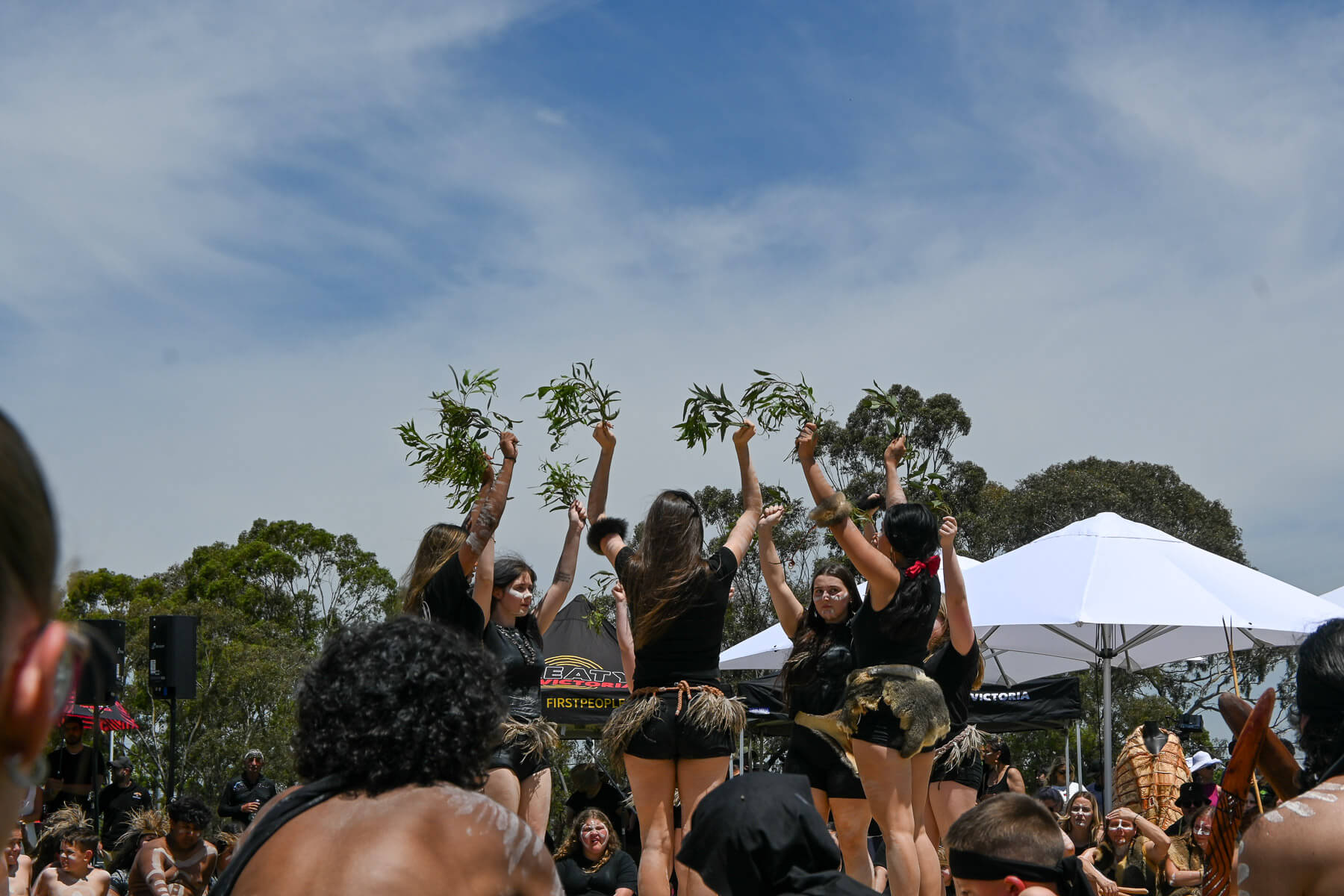
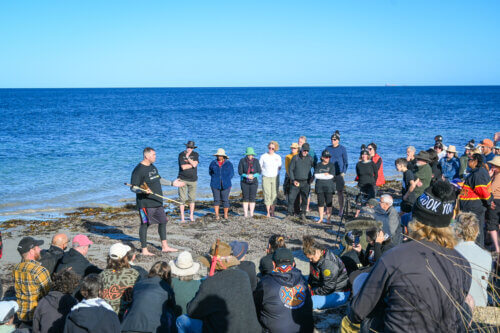
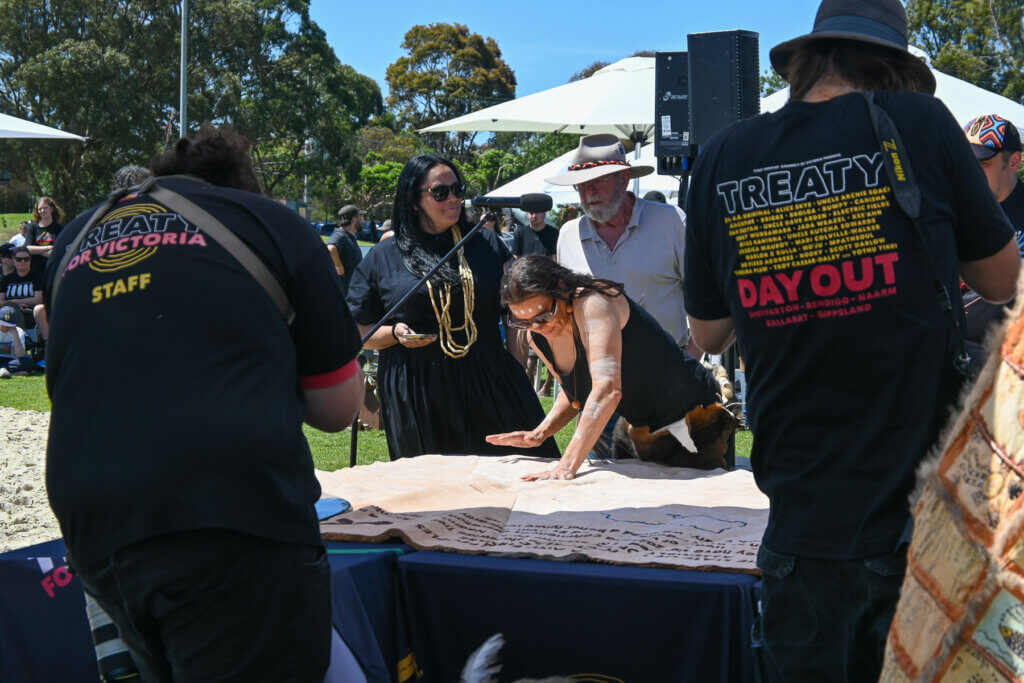
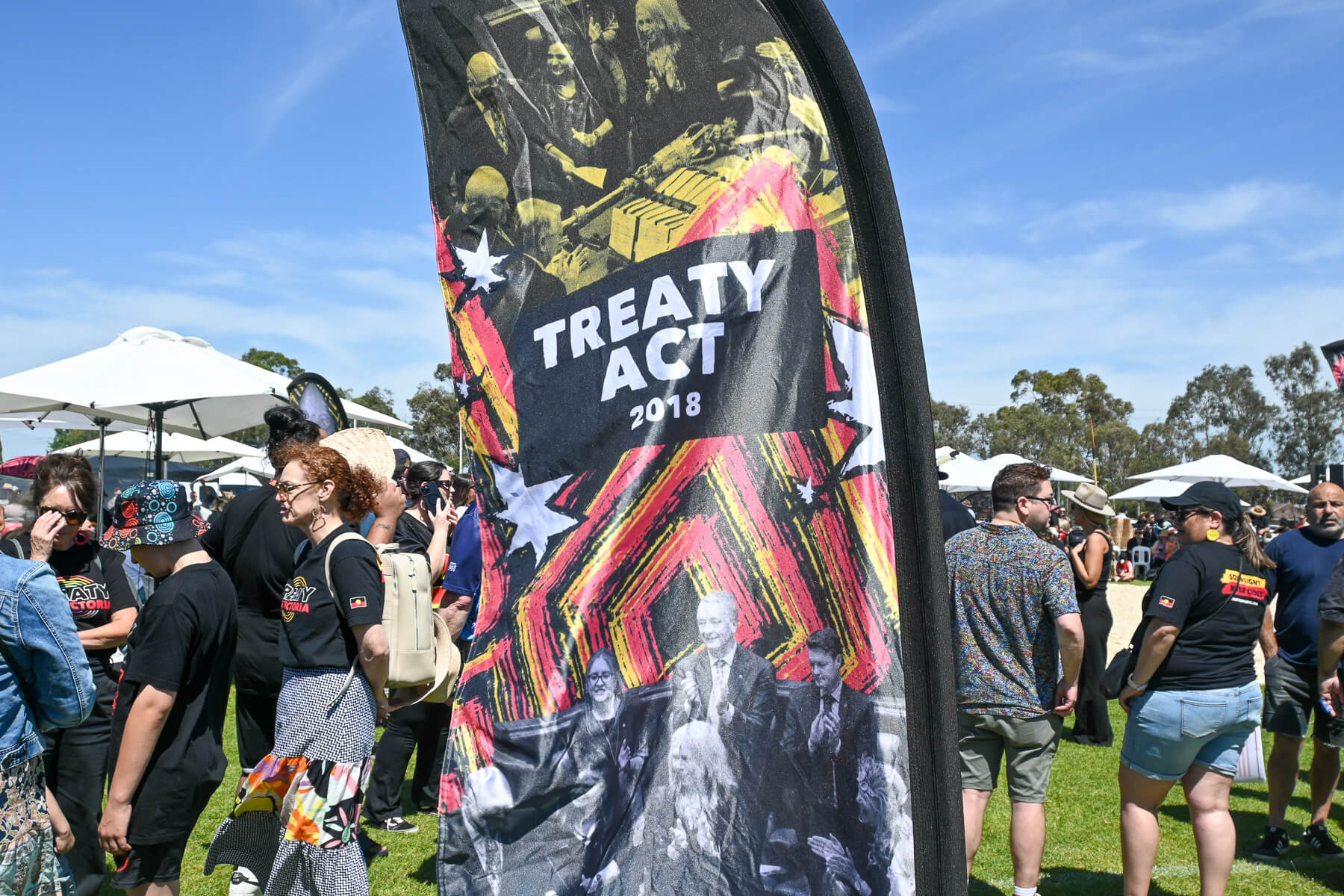
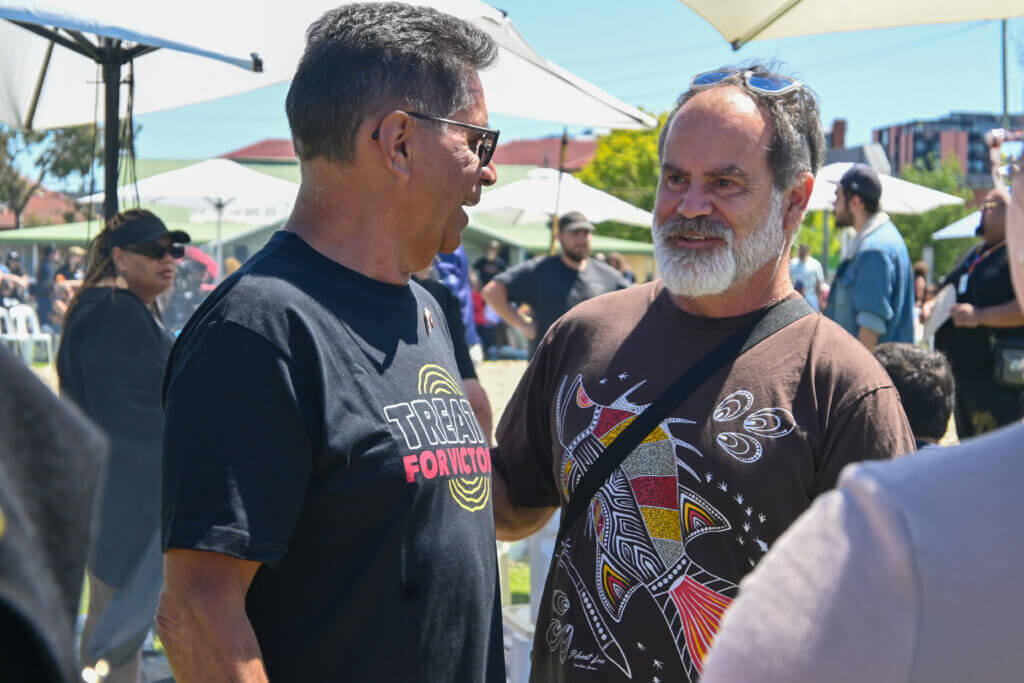
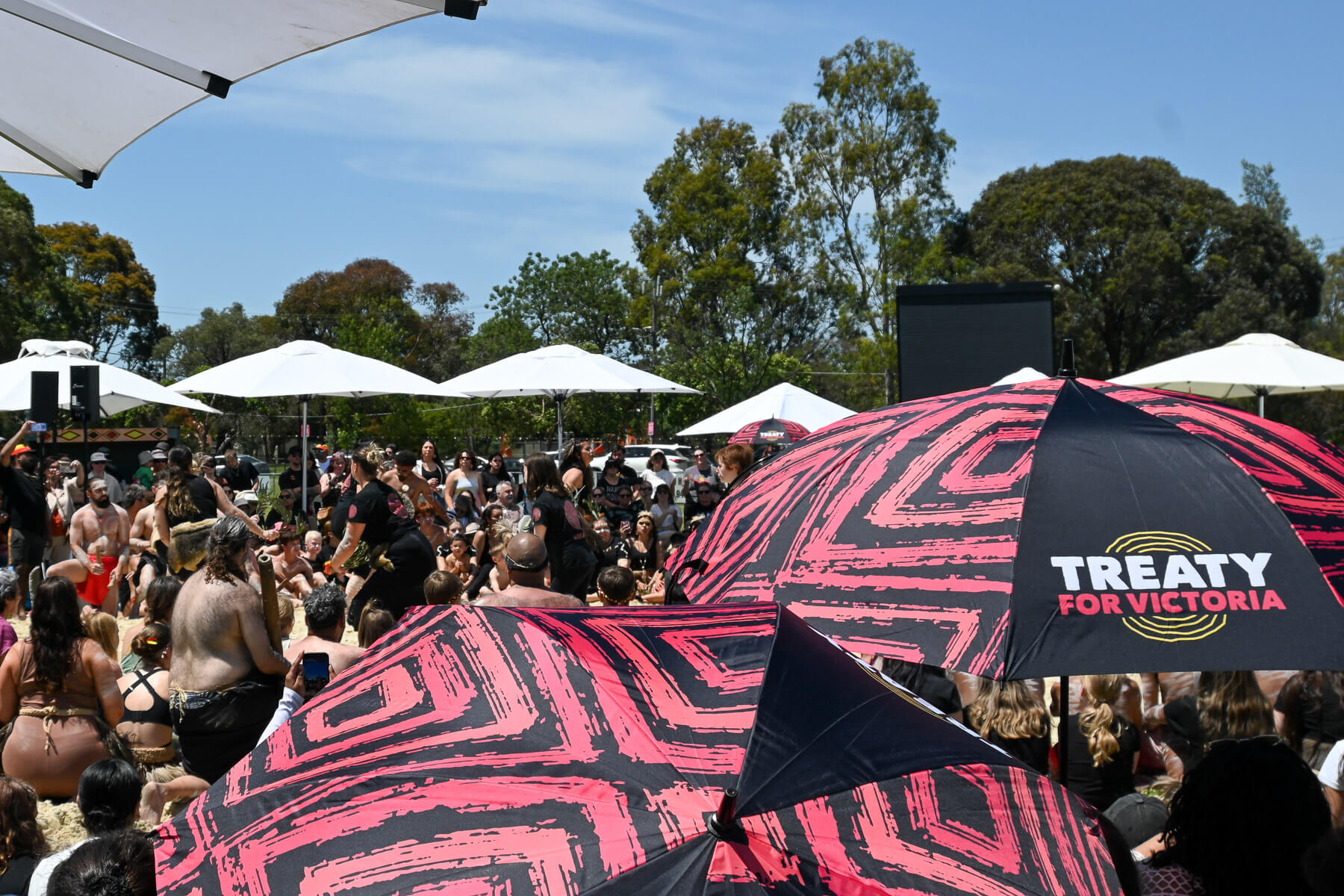
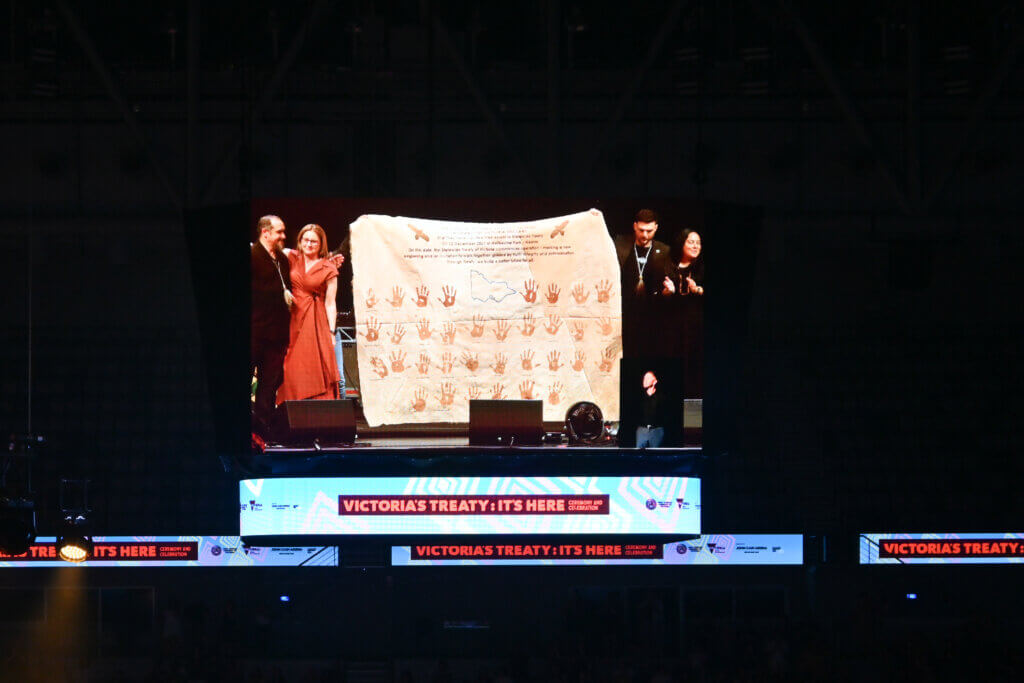
On Friday, December 5, The First Peoples’ Assembly of Victoria held a ceremony to mark the Cultural Assent of Australia’s first Treaty at the Aboriginal Advancement League in Thornbury. In the evening, they were joined by thousands of allies at John Cain Arena, which came alive with music and Treaty ceremonially signed during the event.
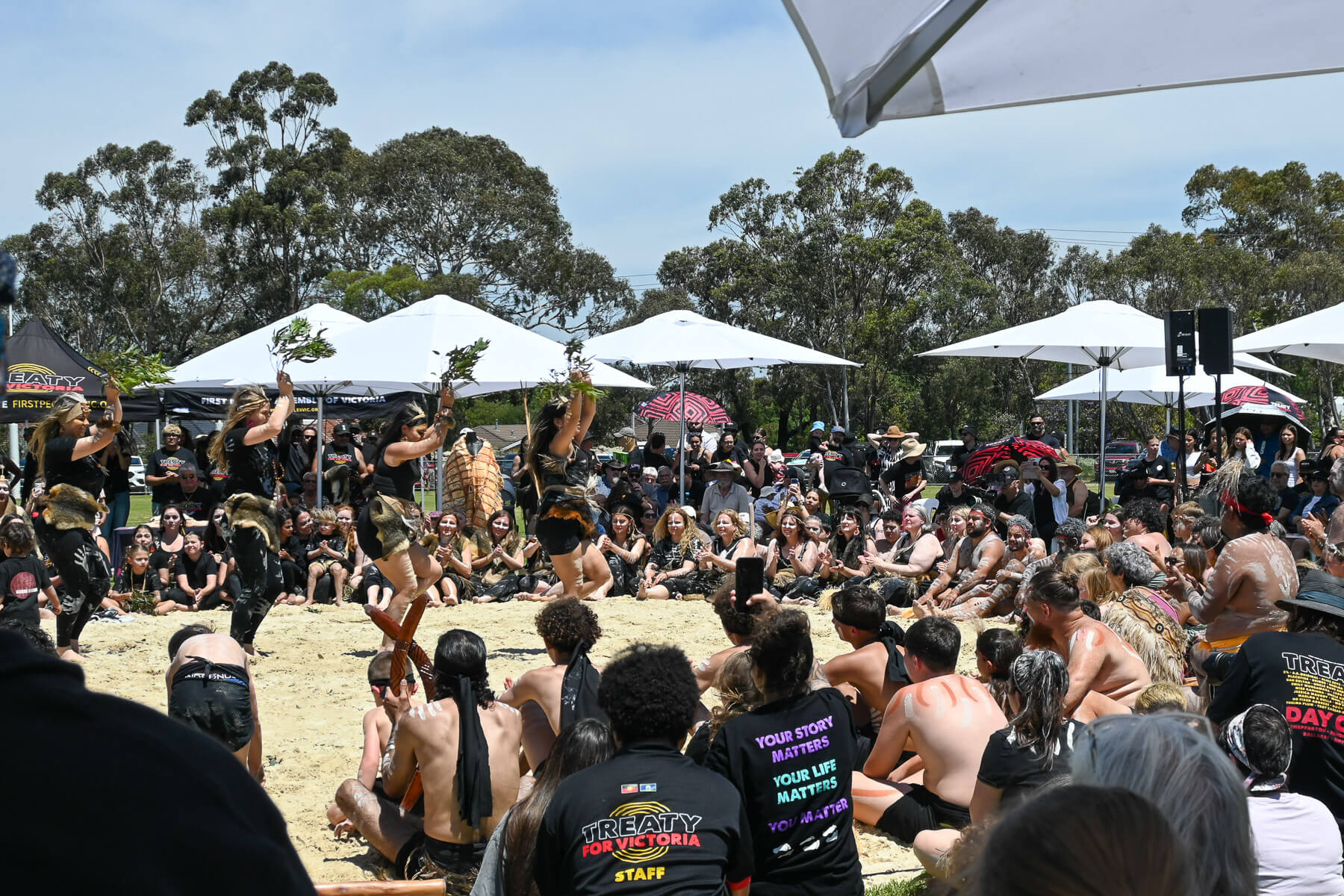
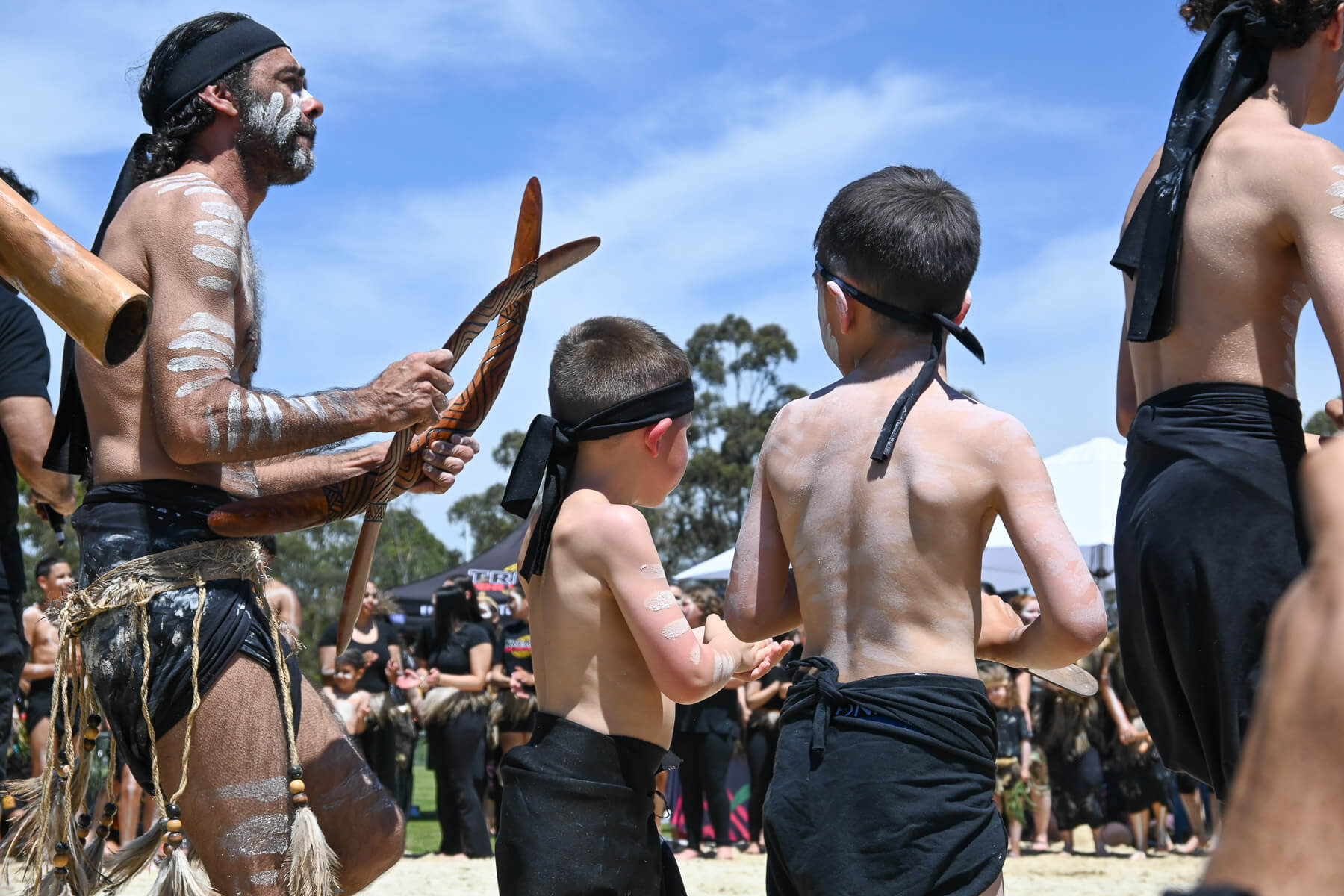
The atmosphere throughout the day was joyful and powerful, and the meaning ran deep. Mob from across Victoria, both young and old, came together to mark this historic moment through song, dance and ceremony. The message was clear: treaty is about real lives, real decisions, and a future shaped by First Nations leadership and cultural authority.
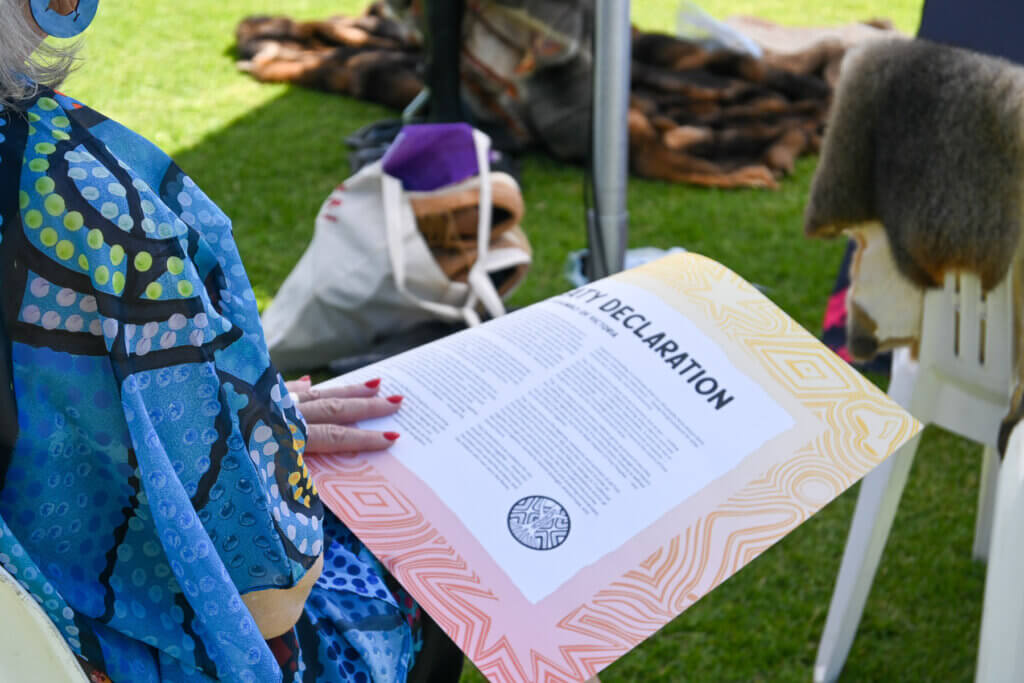
Aunty Esme Bamblett, a Bangerang, Taungurung and Wiradjuri woman and member of the first Peoples’ Assembly, opened the community gathering by reading the Declaration written by Assembly Members to community about the first Statewide Treaty:
We are the sovereign First Peoples of these lands, skies, stars and waters – the oldest continuing cultures on Earth. We speak from this place now known as Victoria — where the stars still follow the old paths, and the winds carry names older than memory. Our sovereignty was never ceded, it lives in ceremony and song, in story and law, and in every generation that refused to disappear.
From the first footstep on this land to the long fight to carry forward our Lore, law, rights and responsibilities, our story walks with us – in the footprints of Mungo, in the ash and shell middens of Moyjil.
It lives in the snowmelt of the high country, the red dirt of the Mallee, and in the dappling light along the banks of the Dungala. It moves through the You Yangs and shifts beneath the stars – guiding ceremony and time itself. Little by little, it sculpts the stone ridges of Gariwerd, shaped by wind and memory; the slow breath of the Birrarung; the black stones of Budj Bim, still warm with fire; the salt air of our rugged southern shores, and the serene lagoons of the east, where Ancestors move still with wind and water.
These places are not just remembered – they remember us...
Why Treaty Matters
At Environmental Justice Australia, we believe in justice, dignity and self-determination for all peoples – and we know this truth: there can be no environmental justice without justice for First Nations peoples.
Since the beginning of time, Aboriginal and Torres Strait Islander communities have cared for Country through law and culture that sustains forests, rivers and life. Sovereignty was never ceded. Any serious conversation about protecting Country must start by truth-telling, recognising cultural authority, and supporting First Nations peoples to make decisions about their lands, waters and communities.
"The significance of achieving Treaty especially in these challenging times and environment cannot be understated or underestimated, and the boost in confidence and goodwill is very much welcomed."
CLINT LINGARD
Murri, Ewamian and Kuku-Yalinji
EJA Board Observer and Reconciliation Action Plan Working Group member
Treaty matters for environmental justice. Colonisation, dispossession, extractive industries and discriminatory laws have harmed people, Country and culture, and continue to deny First Nations people power over decisions that affect their lives and lands. EJA’s role is to support self-determination in the places where legal outcomes are consequential, and where communities have too often been locked out from meaningful participation.
"It's a celebration and it's a reward. I see all the little babies and the children, and I think how they get to experience this and it becomes a norm that they grow up with!
BRENDAN KENNEDY
We're activating and self-determining who we are. We just broke through a barrier, so now we look ahead and plant the seeds of the future."
Tati Tati and Wadi Wadi Traditional Owner
EJA CLIENT THROUGH TATI TATI KAIEJIN
A celebration decades in the making
The Treaty event held the full weight of the moment – celebration alongside recognition of the work still ahead.
“Now, you may have actually seen me talk about Treaty in the past and the powerful work of the FPA,” began First Peoples’ Assembly Co-Chair Rueben Berg, addressing thousands at the evening celebration.
The Gunditjmara man continued, breaking into iconic song; “You might in fact... have heard it on the radio…. You might have seen me on the television! Back in 1988, I was eight-years-old. Like many, I heard the song on the radio, but the actual notion of realising a Treaty was a far-off idea. Now, for my eight-year-old and my 12-year-old, they will never know everything but Treaty!”
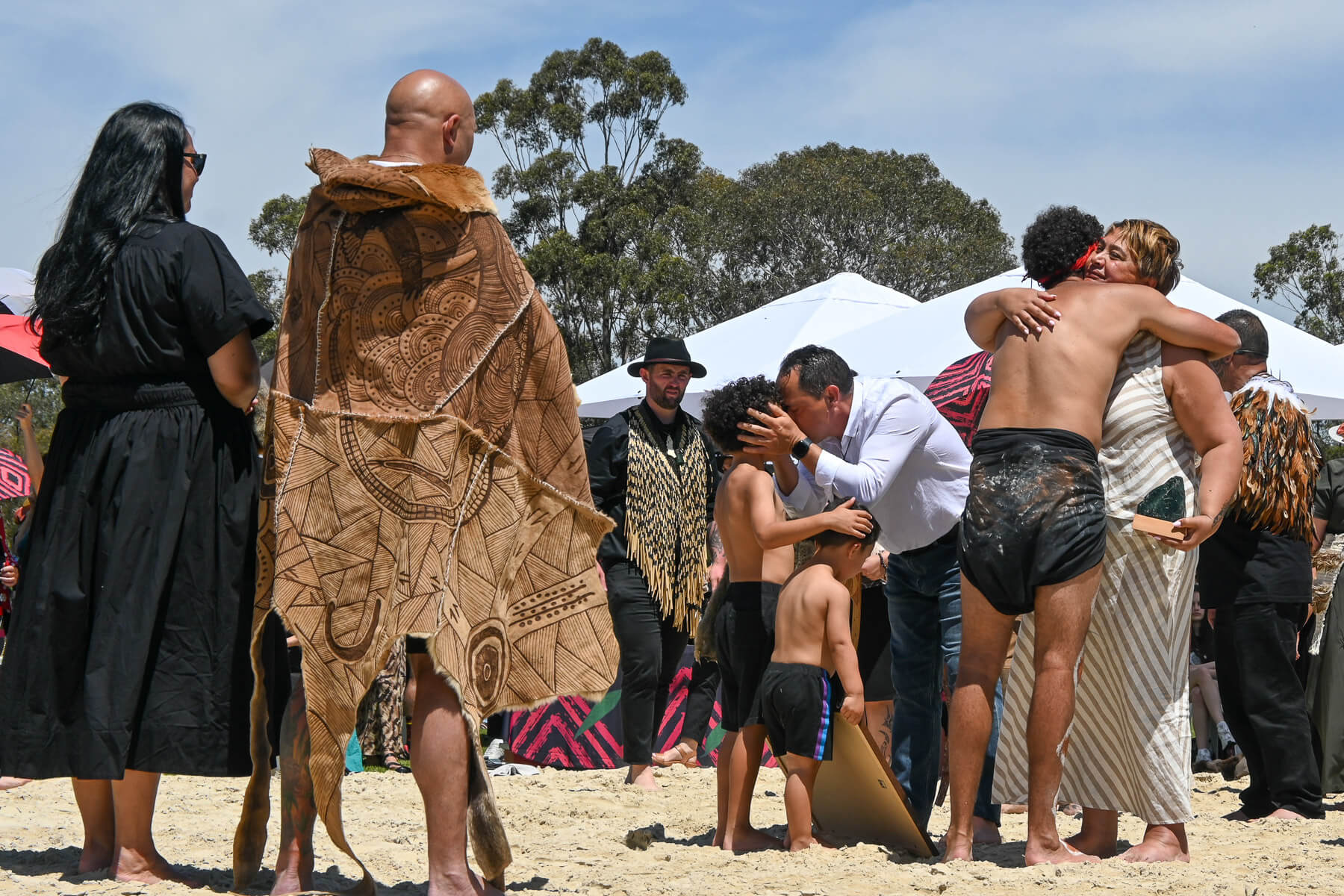

"The Treaty celebration was an emotional event that brought together Victorians, and as an Aboriginal woman I was grateful to attend and witness the landmark moment. I am still overwhelmed with joy that after decades of Aboriginal Victorian’s fighting for a Treaty, it’s finally here."
DAKOTA LACCO
Noongar
PARALEGAL, EJA
The new era
“When you listen to people, you get better outcomes.” Treaty is a practical way to do that. It creates a pathway for First Nations peoples to change what is not working, and to come up with and deliver solutions grounded in community knowledge and leadership.
First Peoples’ Assembly Co-Chair Berg directly referenced community members’ aspirations, when sharing some of the tangible gains that have been achieved.
“We heard about the importance of decision-making by First Peoples...Ongoing Truth telling across Victoria, hearing and learning about the true history of Victoria – Treaty will do that,” he explained. “Ensuring our communities’ expertise are heard by government ministers... A First Nations-led independent accountability mechanism for government, to make sure their promises are kept – Treaty will do that too. Increasing cultural capability of the public service; better processes, access and data for First Peoples; language names; Treaty school curriculum... – Treaty will do all of that!
"I'm so proud and happy, especially for my Koori Mob, that Treaty has been achieved in Victoria. I'm hopeful and have faith, that achieving Treaty here will be the start of its influence elsewhere in Australia and eventually Treaty being negotiated and achieved in every Australian state and territory and overall, federally."
CLINT LINGARD
Murri, Ewamian and Kuku-Yalinji
EJA Board Observer and Reconciliation Action Plan Working Group member
"I think the Victorian Treaty is a beacon of hope, particularly after the disheartening events that have occurred over the past couple of years, such as the disappointing No result from the Voice to Parliament Referendum.
DAKOTA LACCO
Treaty recognising that Aboriginal people need to be at the forefront of decision making regarding the decisions that affect us is a huge step towards reconciliation, but I also think that the Victorian Government still has considerable work to do before the significant gap between Indigenous and non-Indigenous Victorians is closed."
Noongar
PARALEGAL, EJA
Walking forward together
The Treaty cultural celebrations, along with the Victorian government apology that preceded them, are historic moments for this continent, signalling the start of the next chapter.
“...When it comes to Treaty, and when it comes to truth, Victoria leads the nation,” said Premier Jacinta Allan. “Thank you for being here, for showing support, for walking this journey together. This is the first step. Treaty only exists because people and communities fought for it...”
“I think the statewide treaty we celebrate today is only part of the story. More will be written by Victoria's Traditional Owners,” told Jidah Clarke, a Djab Wurrung man with Kirrae Wurrung, Peek Wurrung, Boon Wurrung, Wamba Wamba, Taungurung and Palawa ancestry, and Chair of the Treaty Authority. “We now have Traditional Owner groups on our Treaty Negotiations Register, the first formal step towards making local treaties, and many more are preparing to join. To them we say, the journey is yours to shape.”
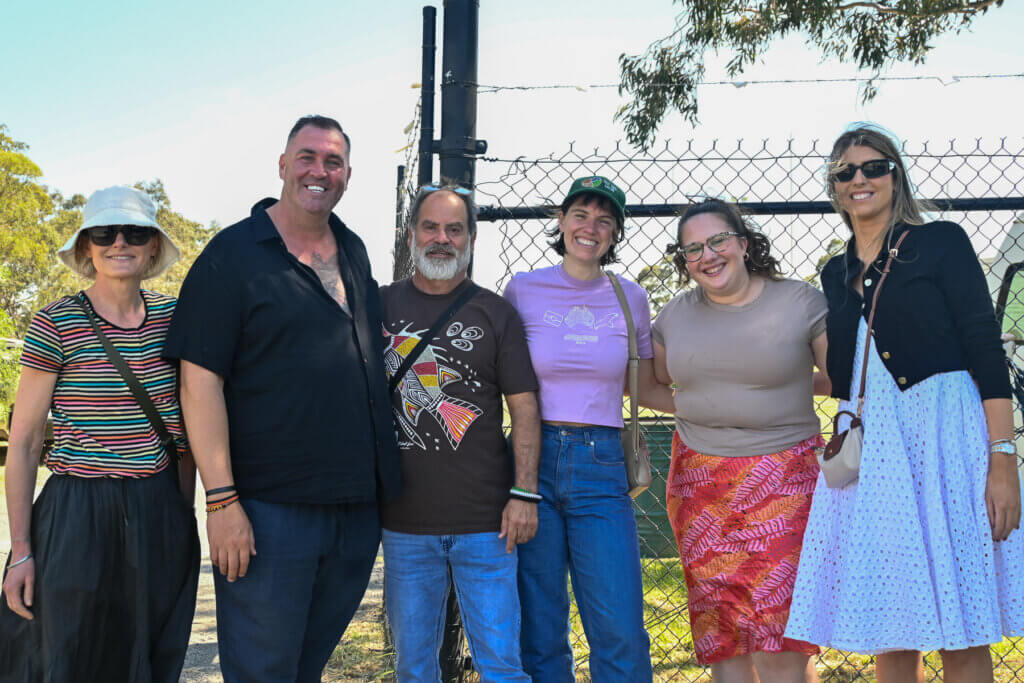
EJA is committed to continuing to show up, listen, and use the law to support First Nations peoples’ rights, voices and decision-making for Country.