Federal Court reveals water law loophole
Court rules that the water trigger does not apply to NT fracking project
The Federal Court handed down its decision in Lock the Gate’s case challenging a major fracking project in the Northern Territory’s Beetaloo Basin.
It’s not the outcome our client hoped for.
The court found that Tamboran's Shenandoah South fracking project does not need to undergo assessment under Australia's national environment laws for the risks it poses to groundwater.
The case tested an important question: when an unconventional gas project puts precious water at risk, should those risks be independently assessed before the fracking can go ahead?
For this project, the court said no.
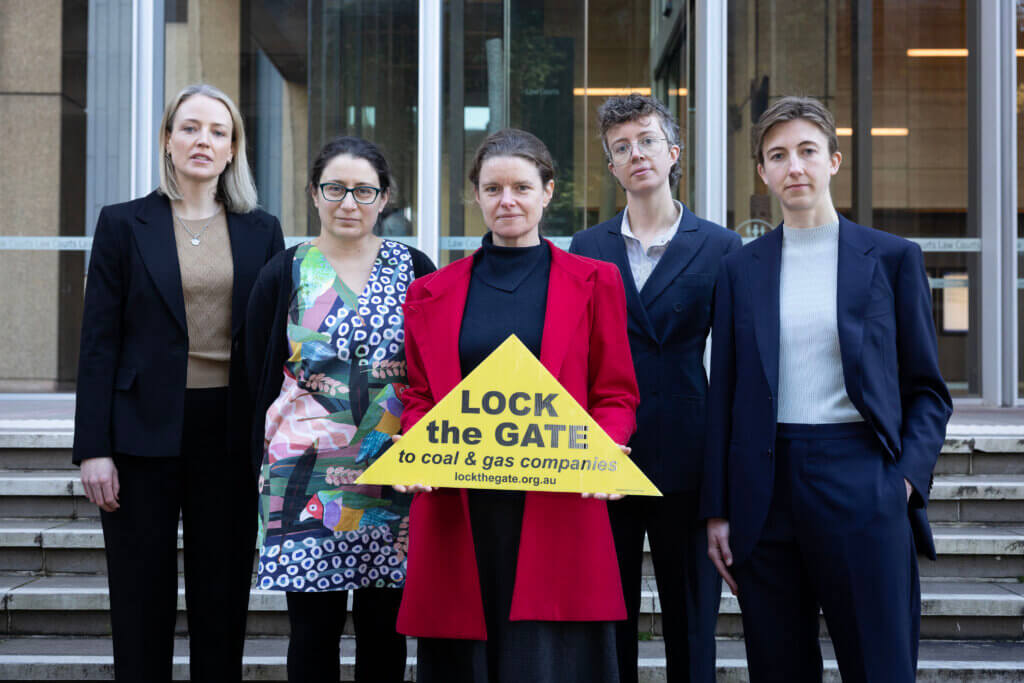
Lock the Gate brought this case because of serious concerns about plans to frack 15 gas wells near Daly Waters.
To reach the shale gas, Tamboran plans to drill through the Cambrian Limestone Aquifer – a vital groundwater system that supports pastoral stations, rivers, creeks, and iconic places like the Roper River and Mataranka Springs.
In the Beetaloo’s complex geology, independent experts gave evidence that it is impossible to completely “engineer out” the risk of well integrity failure.
And once groundwater is contaminated, it is virtually impossible to fully restore.
Despite this, there has still been no site-specific federal assessment of this project's risks to groundwater, even though the federal government's own Independent Expert Scientific Committee on Water advised that detailed local studies are needed to understand those risks.
“This is a deeply disappointing outcome for water protection in the Northern Territory.
We brought this case because communities deserve confidence that risks to vital groundwater are properly examined before projects like this can proceed.”
— Georgina Woods, Lock the Gate head of research and investigations
As the fracking industry expands in the Northern Territory, the court's decision leaves us with uncertainty about when unconventional gas projects will be assessed under Australia's environment laws.
But this is not a stamp of approval for the fracking industry. The decision concerns only one project and one legal question: whether the EPBC Act’s water trigger applies.
And the need to protect groundwater before something goes wrong remains as important as ever.
Despite the loss in court, this case is still ground-breaking.
When the matter was heard in June last year, the Court examined detailed independent expert evidence about the risks of fracking in the Beetaloo Basin.
For the first time in an open forum, the Court heard evidence on how unconventional gas wells are drilled, global rates of well failures, and the challenges posed by the Beetaloo’s complex geology.
Because of your support, we were able to help Lock the Gate bring this important test case.
Public interest litigation doesn’t always deliver the outcomes we seek. But it does bring independent evidence onto the public record, test our laws, and expose where Australia's environmental protections are falling short.
We'll keep working alongside communities to strengthen those laws so they protect the water we all depend on for life.