Faces of EJA
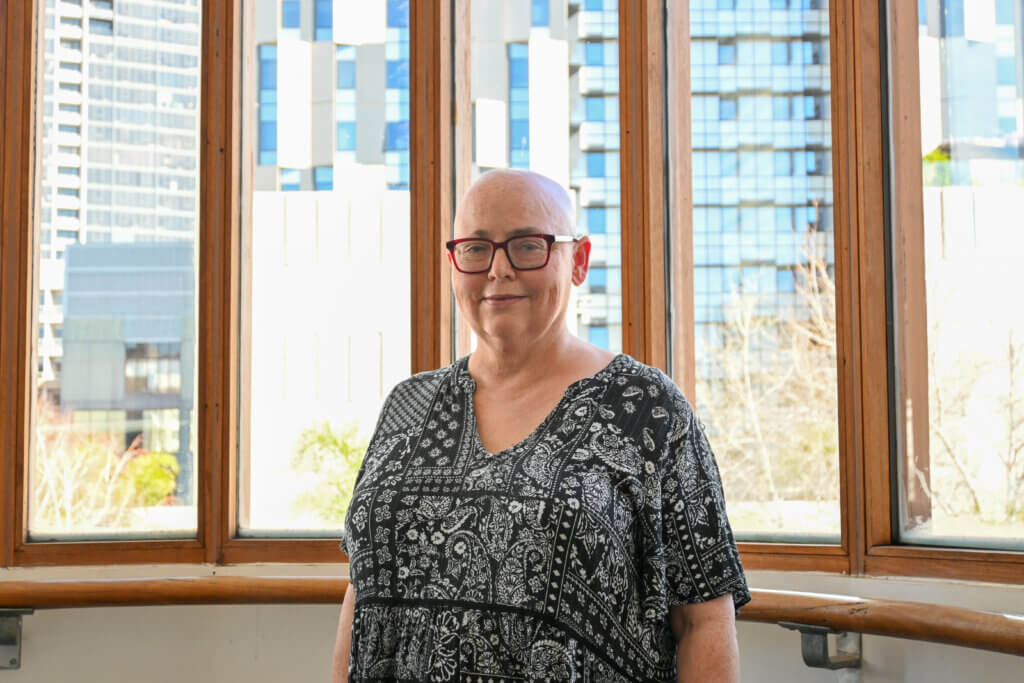
Celebrating 20 years with Mandy Johnson

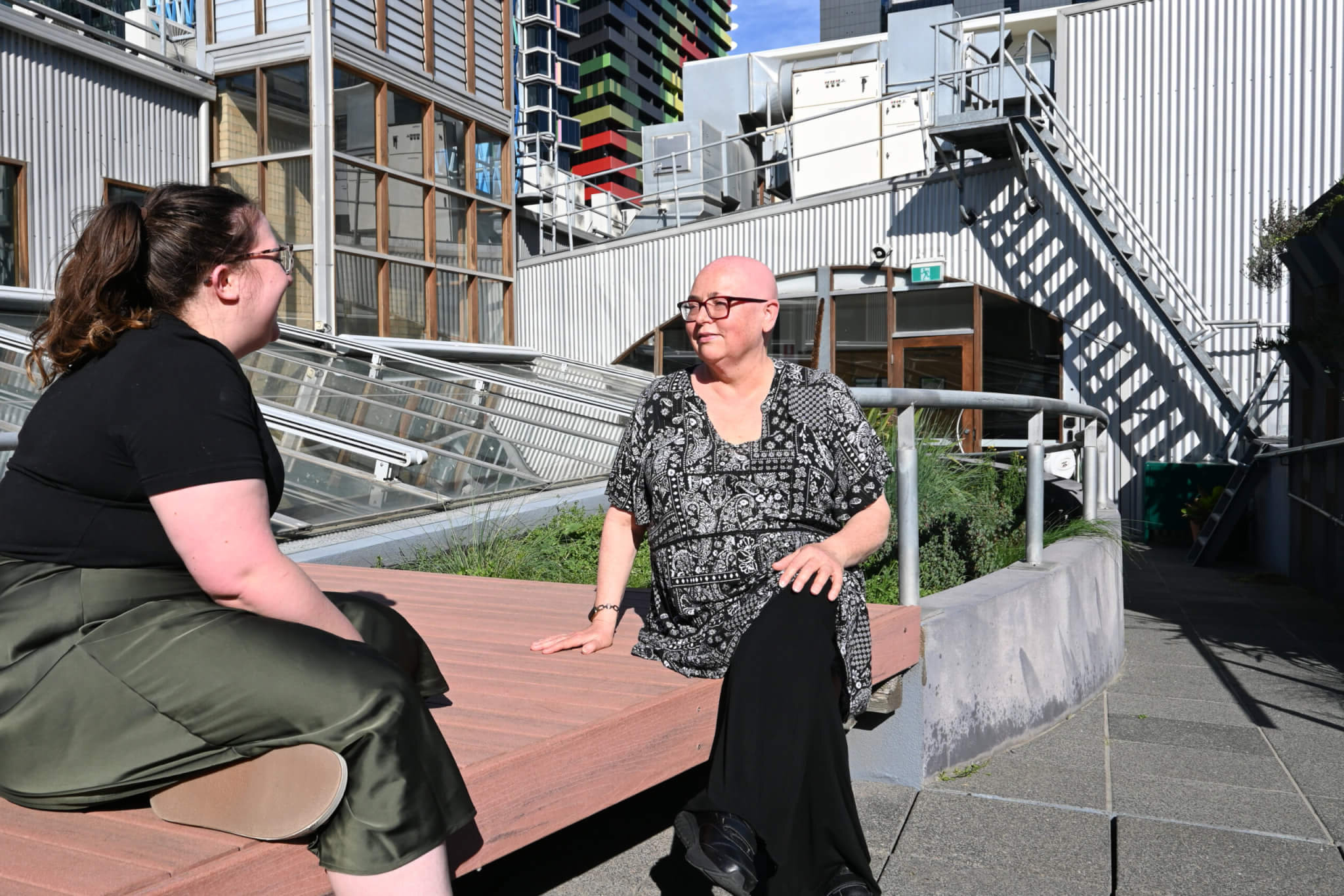
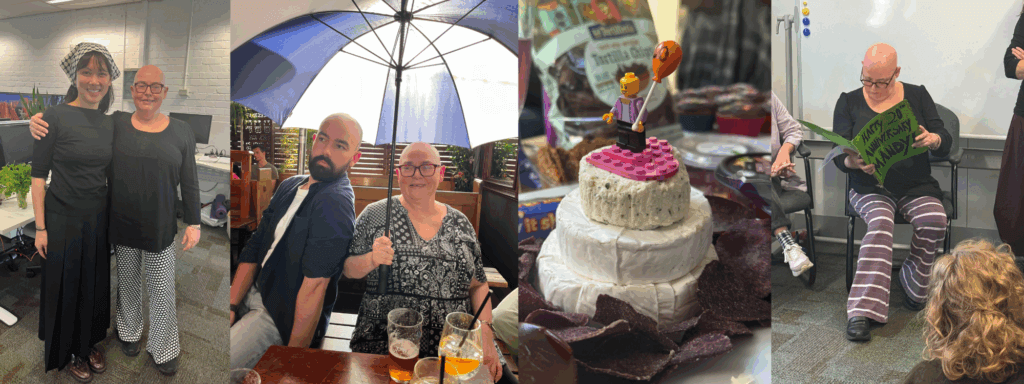
Late last month, EJA staff came together to honour a very special lifetime of service from the world’s best operations specialist.
Mandy Johnson has been part of our story since 2005, when EJA was still a small team – only three part-time staff!
She has seen the organisation transform into a national tool for environmental justice, while her own role has grown from juggling diverse work (now completed by six people) to becoming an indispensable operations specialist, editor, and mentor for generations of staff.
“There are many ways to tackle the crises we are in, but after 27 years in the environment sector, I believe the law is our best chance… anything else just isn’t going to make the change needed,” began Mandy, graciously accepting a multipage, lovingly-hand-scalloped card.
In the opening line of her speech she had already deflected a moment about her own huge milestone, into an opportunity to empower all around her. Typical Mandy.

“When we advocate for new laws, when we use and test the laws… I believe this is the only thing that is going to force governments to change, and actually do something!
“Over the past 20 years, I’d occasionally looked around for jobs and I thought, ‘none of these are as effective! I just want to be somewhere where we are doing things.’ So, thanks people – because that is you doing that! And making this the place to be. Long may we continue to make a difference.”
– Mandy Johnson, operations specialist, EJA

Building everyone in the organisation up is what EJA's longest serving team member does. She’s your first contact, setting you up with a warm welcome, stern-yet-caring reminder to take your full lunchbreak, and walking you through an abundance of clever resources to make you feel comfortable and capable from day dot.
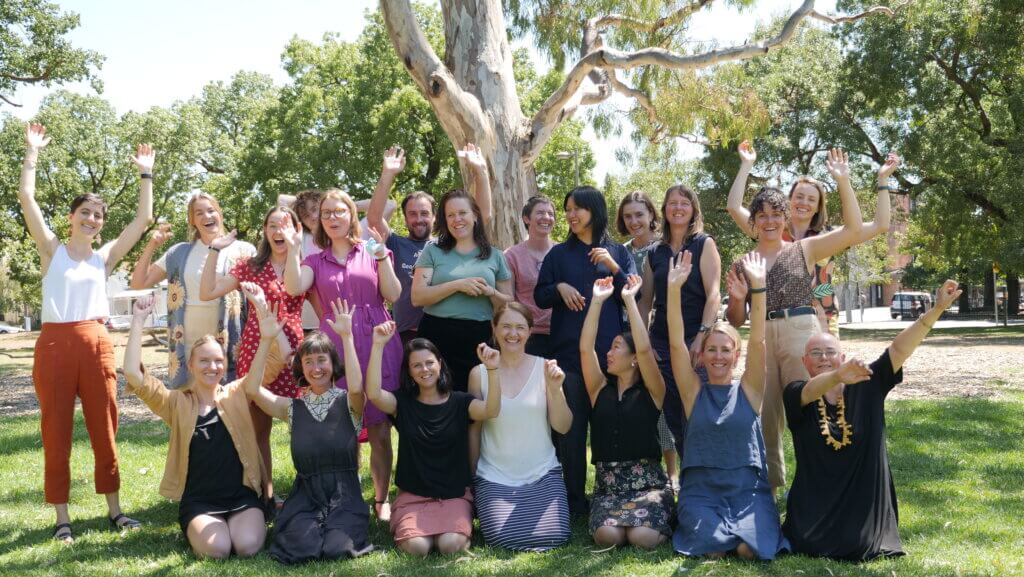
For two decades, Mandy has been the crucial point-person. Under her considerate eye, we've evolved to a team of 43 today. From payroll to publications, She's is a polymath like no other, contributing the crucial, “invisible” work at the root of this organisation.

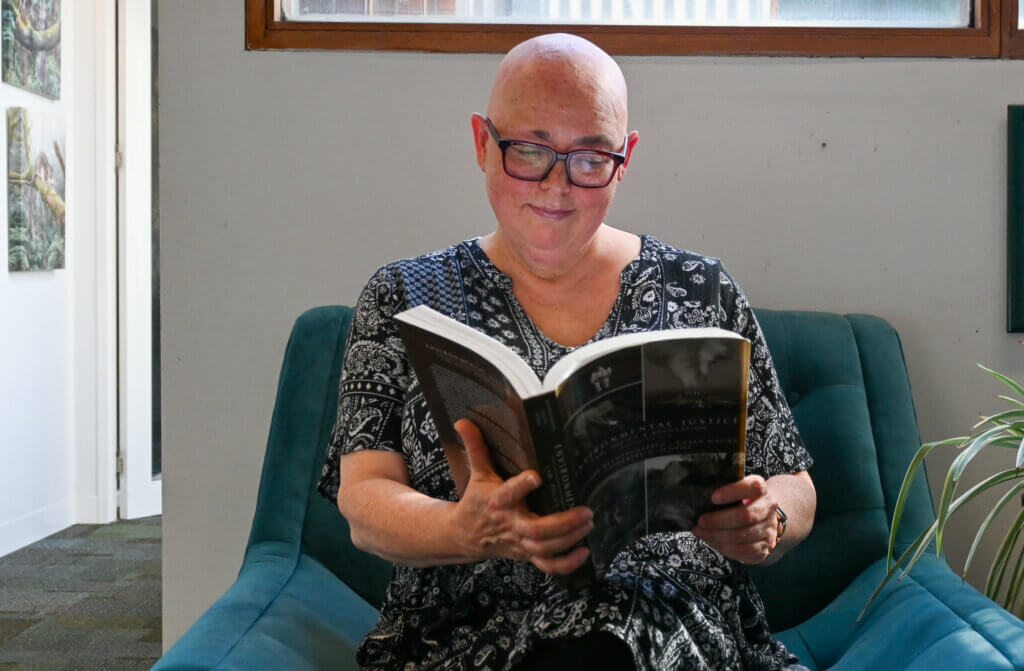
“I am still here because this is where I think I can make a difference, and because I get to work alongside dedicated staff on work that matters. To be a part of such a well run, positive organisation is a privilege that I think is rare in the working world.”
– Mandy Johnson, operations specialist, EJA
What follows is less a formal interview and more a conversation: a glimpse into the humour, resilience and wisdom of someone who has spent two decades shaping the backbone of EJA.
Early days
Twenty years is an incredible milestone. Looking back, do you remember anything from your first day?
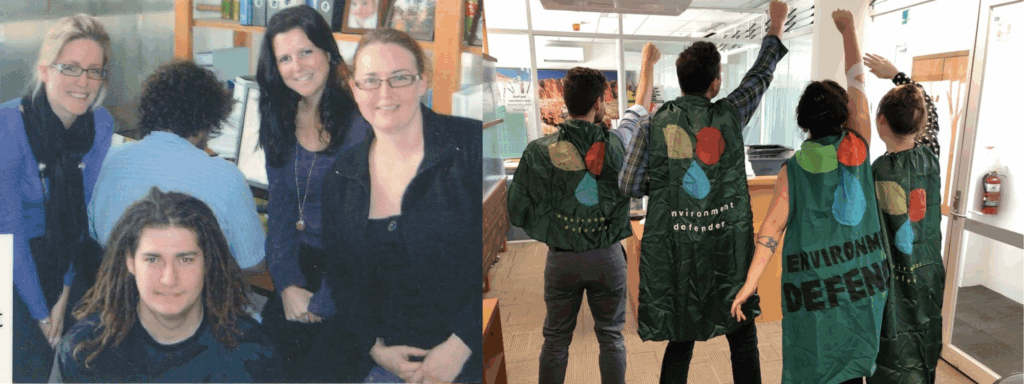
Mandy: Yes, there were three of us, all new, starting within a few weeks of each other. It felt like the first day of school. Two lawyers and me, figuring out how to do our work – in those days, environmental law just wasn’t such a thing. We were limited in what we could do with one lawyer and one junior part-time lawyer! But we did have a night service, we would collect enquiries and then volunteer lawyers and barristers would come in one night a week and respond to them, we’d save them the most interesting matters.
Elle: That feels worlds away from where EJA is now.
M: Exactly. Now we are busier than we can handle with environmental cases, but then it was different. I think we were just beginning to explore forestry matters, and a couple of years later we mounted a big case against a gas company in Geelong. Many of the calls we got were about planning law: people obsessed with fencing disputes!
What drew you to working in the environmental movement in the first place?
M: Before EJA I’d been with what is now BirdLife Australia for a wonderful seven years, and then at a private firm for three-and-a-half. At that firm I missed working for something ‘good’. You know that feeling when someone asks, "what you do?", and you’re proud to say it? I missed that. And I missed volunteers: their enthusiasm is infectious; it restores your faith in humanity. So, when I heard about this role opening through a friend, I jumped at it. And really, I just love working for the environment. There’s nothing like it.
Did you always feel connected to nature?
M: I did feel like that, but not so much in terms of time I spent in it. My extended family went on a big camping trip each year, all over to different Victorian national parks. Those trips were the highlight of my childhood. We also spent long stretches at my grandparents’ house by the beach. Even now still living in the city, I try to walk in nature every day. It’s so restorative.
And what about the people you started with? Did everyone have that same call to protect the environment?
M: Yes, they were connected too. And people who could already see the lack of protections. But momentum felt more out of sight then. There were literally only one or two localised environment stories a week in all the newspapers. I remember clipping out one on a contaminated strawberry farm, the toxic waste dump at Tullamarine! Now, people seem much more aware of how everything connects to climate and biodiversity, they see the bigger picture.
Building blocks and big shifts
Over two decades you’ve seen EJA evolve through names, leaders, challenges. What stands out as the biggest changes?
M: One was starting a dedicated policy team in 2009. That was huge, suddenly we weren’t just reacting through the courts, we were pushing for law reform, lobbying, holding governments to account.
Another was becoming Environmental Justice Australia in 2014. It gave us independence in funding and freedom to litigate with fewer constraints. Our supporters also really got behind it.
And, believe it or not, getting a new photocopier was transformative! It sounds silly, but you learn the importance of investing in tools that let people focus on their real work.
E: I love that. It says a lot about how 'operations' underpins impact.
M: Exactly. Our role is to be invisible. If we’re doing our job, you shouldn’t notice us; the systems just work. That way lawyers can focus on fighting cases, comms can reach communities, and fundraising can keep things afloat!
I think we started well and we gradually put building blocks into place to be the organisation we are today, especially with regard to integrity and good management of the organisation. Our first CEO Brendan Sydes had great drive and vision that was strategic.
He said that you take on the environmental matters where you have the best chance, and if you 'fail', it's got to be that you can make some kind of gain – like you've tested a point of law or something like that. Meaning, even if we don't succeed in winning a case it’s still progress. When I look back, I'd say we did think big, and that moved us from being a community legal centre in the traditional sense into a national organisation.
You’ve been editor, HR, IT support, finance…
M: Yes! In the early days I did what many different people now do: payroll, onboarding, IT (computers have evolved so much in 20 years!), and running the volunteer program. Over time, as new roles were created, my job shifted. But I’m still involved in many of these tasks or work with my colleagues implementing them; the variety is what I love. I’m like an octopus with arms everywhere.
Lately, supporting our Board, payroll, and editing our annual report, are some of my quite time-sensitive priorities, I also do quite a few human resources tasks, membership, and some compliance as we are a registered charity.
E: I can vouch for that, my own orientation was seamless thanks to you. And I think it’s just amazing that the person who introduces you to the organisation has been here for 20 years, unreal, really!
M: That makes me happy. Everyone should feel they’ve found their place here. Straight away.
Are there particular projects of which you’re most proud?
M: Starting the volunteer program from scratch: we went from four sporadic helpers to thousands of hours contributed each year. This has more than doubled our impact.
Editing has also been a joy. From early fact sheets to major reports, I’ve loved the deep dives into issues. I remember a recent moving report on heat stress in public housing, and a while back our current co-CEO Elizabeth McKinnon’s early research on environmental justice that helped set us on the path to becoming what EJA is today. A lot of content is more brief, regular and goes on our website and social media now.
And I’ll admit, I used to love organising events like AGMs when they were in-real-life. Doing the invites, agendas, simple catering, that was humble but fun. We still do them every now and then too, which is nice.

Looking ahead with hope
Working in this space can be tough: progress can be slow, wins can be rare. What has kept you on track these past 20 years?
M: Two things. First, when I feel down, I go talk to a lawyer about their plans. They always have something exciting up their sleeve. Once I heard about involving young people in climate litigation, at the time it was just an idea, now it’s reality with Generation Justice. Hearing brilliant ideas, seeing that energy and people light up, that all lifts me.
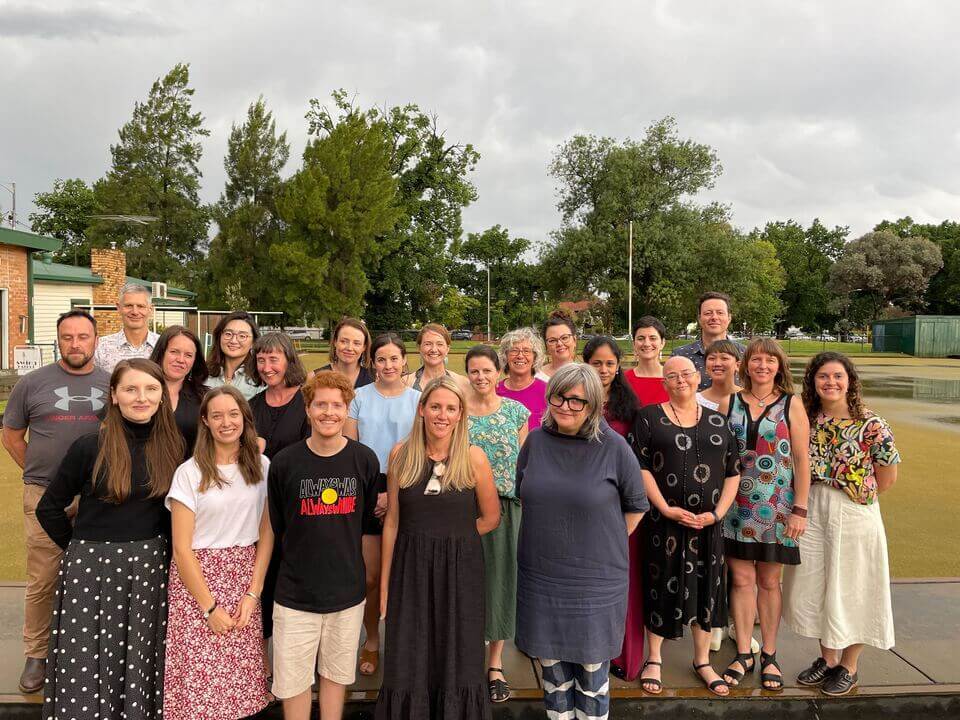
Second, it’s the people here. I’ve worked with 112 colleagues in 20 years, and all have been top-drawer. Supportive, passionate, kind. That's what makes the hard days possible.
Oh, and one more: I go for a walk every lunchtime. I want the world to do that!
What do you hope for EJA’s next 20 years?
M: Ideally, that there is no need for us, and we’d wind up! That would be perfect. But I don’t think that’s realistic. So, I hope EJA keeps evolving, whether by staying on this trajectory or shifting tack to meet new challenges, but keeping to this big-picture thinking and strategic approach.
I’d love to see our co-CEOs Nicola and Elizabeth continue their vision for another 20 years! I mean, well, I might be a bit old by then to be here seeing it, but you know what I mean – to be able to stick around and keep seeing what goes on here, would just be such a boon. I haven’t had enough of this yet!
A rare privilege
Mandy is quick to downplay her impact, but her two decades tell a bigger story: of quiet leadership, flexibility, humour and heart. She has been there through growing pains, landmark cases and strategy shifts, countless inductions and edits, ensuring EJA remained a place where people could do their best work.
Of course, progress can feel slow, and setbacks are part of the reality. But being surrounded by such resilient, passionate people, colleagues, clients, and communities, is motivating and grounding to Mandy. She reminds us we're all striving for the same thing: a fairer, safer future for everyone. And that celebrating the wins, big and small, keeps that fire alive.
“It’s so important that you see where you fit, how you are making a difference. Reconciling a credit card might not sound like much, but in the bigger picture it’s essential. Without it, the lawyers can’t function, the CEOs can’t lead. You don’t have to be in court to make a difference – but you can.”
– Mandy Johnson, operations specialist, EJA

Twenty years on, Mandy Johnson’s work is still woven into every part of EJA. And that is an astounding achievement worth making a big fuss about (despite her humble reluctance)!
Read more about our game-changing work


Make a difference
The challenges we face are vast. The time to push for large-scale system change is now.